
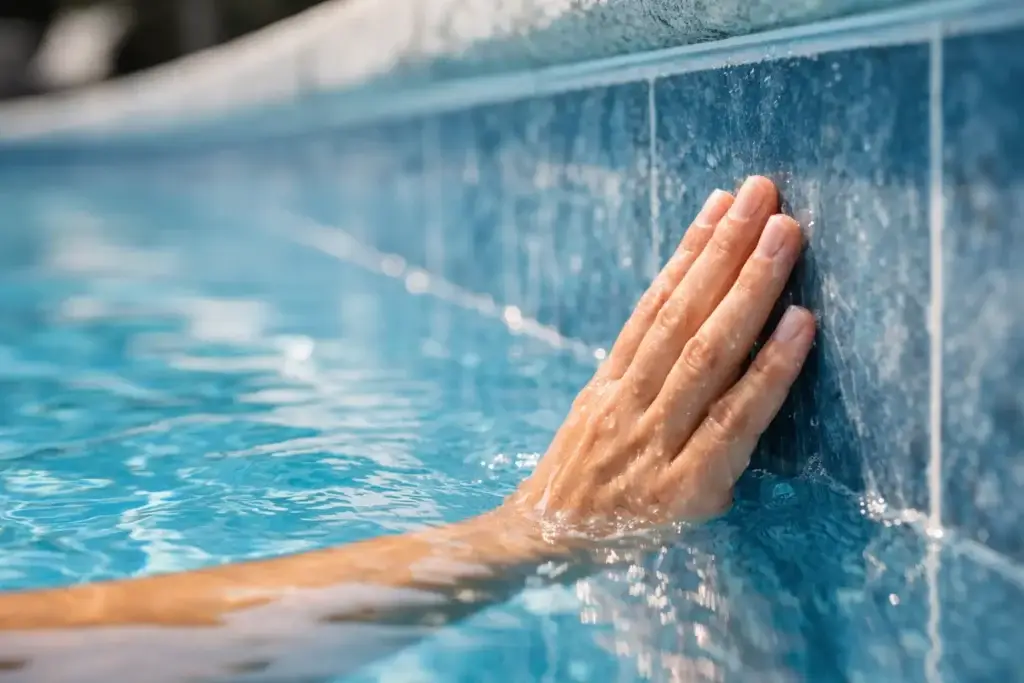
You run your hand along the side of the pool and it does not feel clean. It feels slick, almost greasy, even when the water still looks clear. If you are wondering why pool walls feel slimy, that texture is usually an early warning sign that something in the water or on the surface is starting to get out of balance.
In Southwest Florida, this happens fast. Heat, rain, pollen, sunscreen, and year-round pool use create perfect conditions for buildup. A slimy wall does not always mean your pool is on the verge of turning green, but it does mean the water needs attention before the problem gets bigger and more expensive.
Why pool walls feel slimy in the first place
Most of the time, slimy pool walls come from one of two things: organic growth or residue buildup. The most common cause is the early stage of algae. Before algae becomes visible as green, yellow, or black patches, it often starts as a slippery film on the walls, steps, or corners.
That film develops when sanitizer levels are not keeping up with what is entering the pool. In Florida, your chlorine works overtime. Sunlight burns it off, afternoon storms dilute it, and organic debris gives it more to fight. Once chlorine falls behind, even briefly, microscopic growth can begin attaching to the pool surface.
The second common cause is buildup from body oils, sunscreen, cosmetics, and other contaminants. These substances do not always make the water look dirty right away, but they can leave a coated feeling on the walls. This is especially common in heavily used pools, spas, and rental properties where bather load is high.
Sometimes the answer is both. A pool can have a residue problem and an algae problem at the same time, which is why a quick visual check does not tell the whole story.
The most likely causes of slimy pool walls
Early algae growth
If the walls feel slick and the pool has not been brushed consistently, algae is the first suspect. It often starts in low-circulation areas like steps, behind ladders, along the tile line, and in corners. Water can still look mostly clear while algae is already forming a film.
This is one reason regular brushing matters so much. Brushing does not just make the pool look better. It breaks up the surface where algae wants to attach, so your sanitizer can do its job.
Low or ineffective chlorine
Sometimes chlorine is technically present, but it is not effective enough. This can happen when stabilizer levels are off, pH is too high, or the pool is carrying more contaminants than the sanitizer can handle. Homeowners often test once, see a number that seems acceptable, and assume chemistry is fine. In reality, the relationship between chlorine, pH, and stabilizer matters just as much as the chlorine reading itself.
A pool with poor chemical balance can feel slimy before it looks obviously dirty. That is why water testing needs to go beyond a guess or a single strip reading.
Poor circulation and filtration
If water is not moving properly, contaminants settle and sanitizer does not distribute evenly. Dead spots in the pool let film develop on surfaces faster. A dirty filter, clogged baskets, short pump run times, or aging equipment can all contribute.
This is one of those it-depends situations. You can have perfectly decent chemistry on paper and still end up with slimy spots if circulation is weak in certain areas.
Oils, lotions, and environmental residue
Sunscreen, body oil, hair products, and even airborne pollutants can create a slick coating. In residential pools, this tends to build gradually. In commercial or rental pools, it can happen quickly with frequent use.
Southwest Florida adds another layer with pollen, storms, and fine debris that enter the water almost year-round. Even if the pool is screened, contaminants still make their way in.
Clear water does not always mean clean walls
This is where pool owners get tripped up. They look at the water, see the bottom, and assume everything is fine. But surface feel tells a different story.
A pool can be clear and still be starting to grow algae. It can also be clear while carrying oils and fine organics that are sticking to the walls. Clarity is only one part of the picture. Texture matters too.
If the walls feel rough, you may be dealing with calcium scale. If they feel slimy, you are more likely dealing with growth or residue. That difference matters because the fix is not the same.
Why this is so common in Southwest Florida pools
Florida pools do not get much of an off-season. That means the water is constantly exposed to heat, sunlight, storms, humidity, and organic debris. Those conditions speed up chemistry swings and make preventive care more important.
Heavy rain can dilute sanitizer. Warm water encourages growth. Afternoon sun burns through chlorine faster. Add in leaves, dust, pollen, and routine pool use, and a clean pool can start slipping out of balance in just a few days.
For seasonal residents, the risk is even higher. If a home sits empty and no one is checking chemistry or brushing walls, small issues can turn into full algae problems before anyone notices.
What to do when pool walls feel slimy
Start with a full water test, not just a quick glance. You want to know chlorine levels, pH, alkalinity, and stabilizer, because all of these affect how well your sanitizer performs.
Next, brush the entire pool thoroughly. Focus on walls, steps, corners, benches, and behind ladders. If the slimy feeling is algae film, brushing helps break it loose so the sanitizer can reach it.
Then check circulation. Make sure the pump is running long enough, skimmer and pump baskets are clear, and the filter is not overdue for cleaning. If your equipment is struggling, the water will struggle too.
Depending on the test results, the pool may need chemical adjustment or shock treatment. The right treatment depends on what is actually causing the problem. More chlorine is not always the whole answer if pH is off or circulation is poor.
If the walls feel slimy again a day or two later, that usually means the underlying issue was not fully corrected. The film may have been removed temporarily, but the water conditions still support regrowth.
When it is more than a simple brushing issue
A one-time slimy patch is one thing. Repeated slimy walls are another. If this keeps happening, there is usually a maintenance gap somewhere.
It could be inconsistent brushing. It could be chemistry that drifts between visits. It could be a salt system that is not producing properly, a filter that needs attention, or a pump schedule that is too short for the weather and pool usage.
This is where experienced service makes a difference. The goal is not just to react to slime when it appears. The goal is to prevent the conditions that cause it.
How regular service helps prevent slimy walls
Consistent pool care keeps small issues from turning into expensive ones. That means routine testing, chemical balancing, brushing, vacuuming, filter checks, and keeping circulation working the way it should.
For many homeowners, the problem is not effort. It is consistency. Pool chemistry changes quickly here, and missing a week can be enough to let algae get started. Commercial properties and rentals face the same issue on a larger scale, especially when appearance and guest safety matter every day.
A detail-driven service schedule helps catch the warning signs early. That includes water that feels off before it looks off. Florida Detail sees that pattern all the time in Port Charlotte, North Port, Punta Gorda, and surrounding areas, especially during hot, wet stretches when pools need closer attention.
The bottom line on why pool walls feel slimy
Slimy walls are your pool telling you something is starting to build up, grow, or fall out of balance. Most often, it is early algae or residue that has not become visible yet. The good news is that this is usually fixable before it turns into cloudy water, staining, or a green pool.
If your pool walls do not feel clean, trust that signal. Clear water is nice, but clean, balanced, well-maintained water should feel right too. Catch it early, correct the cause, and your pool stays the way it should – safe, inviting, and ready to use.