
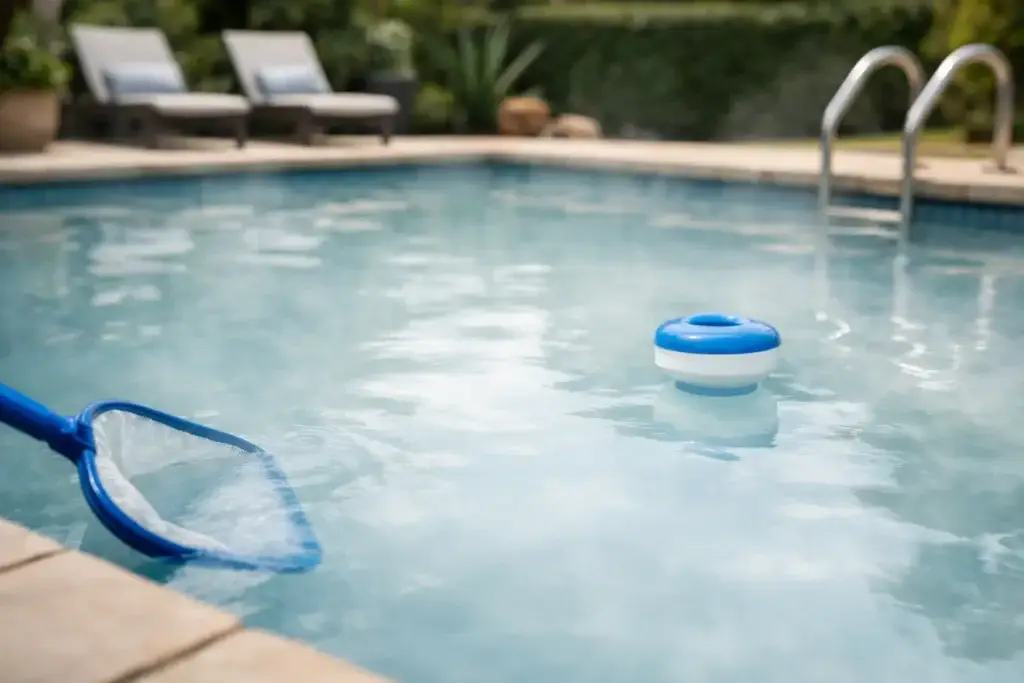
You walk outside, expect that clean blue look, and instead the water looks dull, hazy, or flat-out milky. If you’re asking, why is my pool water cloudy, the short answer is this: something is out of balance, not filtering well, or building up faster than your pool can handle.
In Southwest Florida, that can happen quickly. Heat, rain, pollen, sunscreen, heavy pool use, and year-round debris all put pressure on your water chemistry and equipment. Cloudy water is usually an early warning sign. Catch it fast, and it’s often a manageable fix. Let it sit, and it can turn into algae, staining, or bigger equipment problems.
Why is my pool water cloudy all of a sudden?
Cloudiness usually comes from tiny particles suspended in the water. They’re too small to settle to the bottom and too fine to clear out if your chemistry or filtration is off. That’s why the water can look dirty even when you don’t see leaves or obvious debris.
Sometimes the cause is simple, like a filter that needs cleaning. Other times it’s a chemistry issue, such as low chlorine, high pH, or poor circulation. In many Florida pools, it’s a combination of both.
A pool can also go cloudy fast after a summer storm, a weekend with a lot of swimmers, or a missed stretch of maintenance. If the water was clear a few days ago and now looks hazy, that shift matters. Pools rarely cloud up for no reason.
The most common causes of cloudy pool water
Poor water balance
Water chemistry is usually the first place to look. When chlorine drops too low, contaminants start to build. When pH gets too high, chlorine becomes less effective and minerals can start to fall out of solution, making the water look cloudy.
Total alkalinity and calcium hardness matter too. If they’re out of range, the water can become unstable or scale-forming. That cloudy look may actually be tiny mineral particles floating throughout the pool.
This is where many pool owners get frustrated. The water may not look green, so it doesn’t seem like algae. But chemistry that is slightly off can still make the water look bad and feel less clean.
A dirty or struggling filter
Your filter is supposed to remove the fine particles that make water look dull. If it’s clogged, undersized, overdue for cleaning, or simply not running long enough, those particles stay in the pool.
Cartridge filters can load up faster than people expect, especially during pollen season or after storms. Sand and DE systems also need regular attention. A filter may still be running, but that doesn’t mean it’s filtering effectively.
Cloudy water often shows up when the circulation system is technically on but not doing enough. That includes weak flow, dirty baskets, blocked lines, or worn equipment that reduces turnover.
Early algae growth
Algae doesn’t always start as a green swamp. In the early stage, it can make the pool look hazy or washed out before you see obvious color. If chlorine is low and circulation is weak, algae gets a foothold fast, especially in Florida heat.
Brushing the walls and steps can reveal what’s going on. If you notice a slimy feel or a slight film, cloudy water may be the first sign of algae developing.
Fine debris and environmental buildup
Southwest Florida pools deal with windblown dust, grass clippings, pollen, insects, and organic material on a regular basis. Add sunscreen, body oils, and lotions from swimmers, and the water can lose clarity even when it still looks mostly blue.
After heavy rain, runoff and diluted chemistry make things worse. Rainwater can throw off balance, wash in contaminants, and reduce sanitizer levels all at once.
Too many chemicals or the wrong chemical response
More chemicals do not always mean cleaner water. In fact, overcorrecting can create new problems. Shocking too aggressively, adding clarifier when the issue is chemical imbalance, or using several products at once can cloud the water further.
This is one of the biggest trade-offs for do-it-yourself pool care. Quick fixes sound appealing, but if the diagnosis is wrong, the water can get worse before it gets better.
What to check first when pool water turns cloudy
Start with your water test. Chlorine, pH, alkalinity, and calcium hardness give you the clearest picture of what’s happening. If chlorine is low or pH is high, that is often the first correction point.
Next, check circulation. Make sure the pump is running properly, the skimmer basket and pump basket are clear, and the filter is not overdue for cleaning. Look at return flow in the pool. Weak movement usually points to a problem worth addressing right away.
Then look at timing. Did the cloudiness show up after rain, a pool party, a landscaping visit, or a missed cleaning cycle? The timeline often helps identify whether you’re dealing with debris, chemistry, or early algae.
If the water is cloudy and getting worse by the day, don’t wait too long to act. A small clarity issue is easier and cheaper to correct than a neglected pool heading toward a full cleanup.
How to clear cloudy pool water
The right fix depends on the cause. If chemistry is off, balance comes first. If filtration is the weak point, cleaning or servicing the filter matters just as much as adjusting chemicals. If algae is beginning to form, you need to treat the underlying growth, not just the cloudy appearance.
That’s why one-size-fits-all advice can be misleading. Some pools need a careful chlorine correction and extra filtration time. Others need brushing, vacuuming, filter cleaning, and close follow-up testing over several days. In more stubborn cases, cloudy water points to a deeper maintenance issue that has been building for a while.
For homeowners who don’t want to babysit test kits, chemical readings, and filter pressure, this is usually the point where professional service starts to make sense. Good pool care is less about reacting once the water looks bad and more about preventing the water from getting there in the first place.
Why cloudy water keeps coming back
If you clear the water once but the haze keeps returning, there is usually an unresolved root issue. That might be inconsistent chemistry, short pump run times, poor filtration, hidden algae, or simply not enough routine brushing and vacuuming.
In this part of Florida, weather is part of the equation too. Warm water, frequent rain, and year-round use mean your pool does not get much of an off-season break. A maintenance approach that works in cooler climates may not hold up here.
Recurring cloudiness is also common in vacation homes and rental properties. When the pool is used heavily but watched lightly, chemistry can drift and debris can build before anyone notices. By the time the water looks cloudy, the problem has already been developing.
When cloudy pool water is a sign to call for service
If you’ve tested the water, cleaned the filter, adjusted chemistry, and the pool still looks cloudy after a couple of days, it’s time for a closer look. The same goes for pools with visibility issues, strong odor, recurring algae, or water that gets dull soon after treatment.
A professional can usually spot patterns that homeowners miss, such as circulation dead zones, overloaded filters, chemical demand that points to contamination, or signs that the water is heading toward algae bloom. That kind of hands-on attention is where detail matters.
For homeowners in Port Charlotte, North Port, Punta Gorda, and nearby communities, consistent pool service is often the difference between a pool that stays clear and one that keeps cycling through problems. At Florida Detail, we see cloudy water for what it usually is – not just a cosmetic issue, but a signal that the pool needs proper care before a small problem turns expensive.
How to prevent cloudy pool water in the first place
The best prevention is consistent maintenance. Regular testing, proper chemical balancing, brushing, vacuuming, basket cleaning, and filter service all work together. Skip one part long enough, and clarity starts to slip.
It also helps to respond quickly after storms, heavy swimmer use, or visible debris buildup. Florida pools don’t usually reward wait-and-see maintenance. Small changes in water quality can escalate fast in the heat.
If your goal is simple – clean, clear, ready-to-use water without having to manage every detail yourself – the smartest move is to stay ahead of the problem instead of chasing it after the water turns cloudy. A clear pool is easier to keep clear than a cloudy pool is to rescue.