
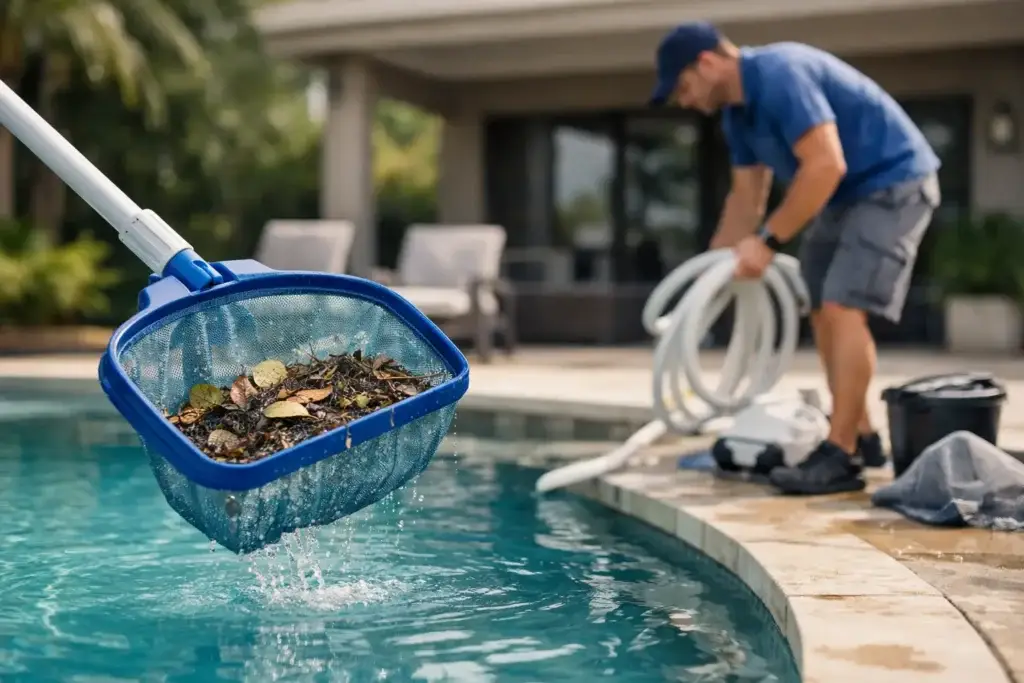
A clean pool can look fine from the patio and still be one windy afternoon away from trouble. In Southwest Florida, leaves, palm fronds, seed pods, bugs, and storm runoff can pile up fast. That is where a pool debris removal service stops being a convenience and starts being real protection for your water, surface, and equipment.
Most pool owners notice debris when it is floating on top. The bigger issue is what happens after it sinks, breaks down, and starts affecting the rest of the pool. Organic material feeds algae, throws off water chemistry, stains surfaces, and makes your filtration system work harder than it should. If your pool is collecting debris faster than you can skim it, the problem is no longer cosmetic.
What a pool debris removal service actually does
People often think debris removal means someone shows up with a net, scoops out leaves, and heads to the next house. Good service goes further than that. Debris has to be removed from the surface, from the bottom, from skimmer baskets, from pump baskets, and sometimes from filter systems that are already starting to choke on the load.
A proper visit usually includes skimming, vacuuming or targeted removal from the floor, brushing problem areas where debris settles, and checking the places where circulation slows down. Corners, steps, benches, attached spas, and areas near screens or landscaping are common collection points. If the pool has had heavy debris for a while, the service may also need to address the chemistry shift that came with it.
That is one reason debris removal and full pool maintenance often go hand in hand. Removing the mess is only part of the job. Keeping it from turning into cloudy water, algae, or equipment strain is the part that saves money later.
Why debris builds up faster in Florida pools
Pools in this part of Florida stay in use year-round, which means they also stay exposed year-round. Summer storms, windy days, nearby trees, construction dust, and heavy rain all bring material into the water. Even screened enclosures help only to a point. Fine debris still gets through, and once water starts carrying pollen, dirt, and organic matter into the pool, your cleaning routine can fall behind quickly.
This is especially true for seasonal residents and rental properties. If no one is checking the pool closely each week, debris can sit longer than it should. A few missed cleanings can turn a manageable issue into staining, algae growth, or blocked circulation.
Commercial and shared-use pools have another challenge. They may not get buried under leaves the same way a residential backyard pool does, but they still deal with constant fine debris, heavy bather load, and stricter cleanliness expectations. A guest-ready pool has to look clean every time someone walks up to it, not just after a weekend cleanup.
Signs you need a pool debris removal service
If you are skimming often but never seem caught up, that is a clear sign. Debris should be manageable with routine care. When it starts returning faster than you can remove it, something needs to change.
You may also notice dirt lines, stains on the floor, clogged skimmer baskets, weak return flow, or water that starts looking dull even when the pump is running. Another common clue is a pool that looks clean from the top but feels gritty underfoot or shows buildup on steps and ledges.
After a storm is another obvious time to call. Storm debris is different from normal day-to-day leaf drop because it often includes larger material, extra sediment, and runoff contamination. That kind of cleanup can overwhelm baskets and filters fast. Waiting too long only gives that debris more time to break apart and spread.
A neglected pool that has gone green or cloudy also needs more than simple cleanup. At that point, debris removal is part of a bigger corrective process. The leaves and sludge have to come out, but the water also needs treatment, circulation checks, and often a more aggressive restoration plan.
The hidden cost of leaving debris in the pool
The biggest mistake pool owners make is assuming debris is harmless if the pump is still running. Debris does not just disappear because it settles out of sight. It breaks down. That breakdown consumes sanitizer, increases phosphates and organics, and creates conditions algae likes.
There is also the mechanical side. Skimmer baskets fill up. Pump baskets pack tight. Filters trap more than they are meant to handle. Circulation drops, which makes the chemistry less stable and leaves dead spots in the pool. Then the pool gets harder to clean, not easier.
Surface damage is another concern. Wet leaves sitting on plaster, vinyl, or other finishes can leave stains. Fine debris can also collect in low-circulation spots and create discoloration that takes more than brushing to remove. What started as a cleanup issue can become a restoration issue.
That is why a pool debris removal service is often cheaper than waiting. It protects more than appearance. It protects the system behind the appearance.
One-time cleanup or ongoing service?
It depends on how your pool collects debris and how much time you want to spend managing it. Some pools only need occasional help after storms, heavy seasonal drop, or long periods without use. Others need regular attention because of nearby trees, open exposure, or a schedule that does not leave room for consistent upkeep.
If your pool is in a high-debris setting, one-time cleanups can become a repeating fix for a recurring problem. In that case, ongoing service usually makes more sense. Regular visits keep baskets clear, surfaces brushed, chemistry in range, and small messes from becoming expensive ones.
For homeowners, the biggest benefit is consistency. You do not have to guess whether the water is still balanced after a debris-heavy week or whether the filter is struggling. For property managers and rental owners, regular service protects presentation and reduces the chance of guest complaints or emergency calls.
How debris removal fits into full pool care
Debris removal is one piece of keeping a pool safe, clear, and usable. It works best when it is part of a structured maintenance routine. That includes testing water, balancing chemicals, brushing surfaces, vacuuming sediment, checking equipment, and cleaning filters when needed.
Without that bigger picture, debris keeps winning. You can remove leaves today and still end up with cloudy water tomorrow if the sanitizer is low or circulation is poor. On the other hand, perfect chemistry will not solve a pool full of decaying organic matter. Clean water and clean surfaces have to be managed together.
That is why many pool owners eventually move from occasional cleanup to a recurring service plan. It is less about outsourcing one chore and more about preventing the chain reaction that starts when debris is left alone.
Choosing the right pool debris removal service
Look for a company that treats debris as a pool health issue, not just a visual one. You want clear communication, dependable scheduling, and a service approach that includes the water and equipment side of the problem when needed.
It also helps to work with a local team that understands the conditions your pool deals with here. In places like Port Charlotte, North Port, and Punta Gorda, debris patterns change with storms, heat, tree cover, and year-round use. A one-size-fits-all approach does not hold up well in that environment.
A detail-driven company should be able to tell you whether your pool needs a one-time cleanup, weekly support, or a broader maintenance plan. That kind of honesty matters. Not every messy pool needs a full restoration, but not every dirty-looking pool can be fixed with a quick skim either.
Florida Detail Pools works with property owners who want the pool handled right the first time. That means removing visible debris, addressing what is happening below the surface, and keeping the pool ready for regular use instead of constant catch-up.
If your pool is asking for more attention than you have time to give, that is usually the answer right there. The best time to get ahead of debris is before it turns your clean pool into a repair, algae, or restoration job.