
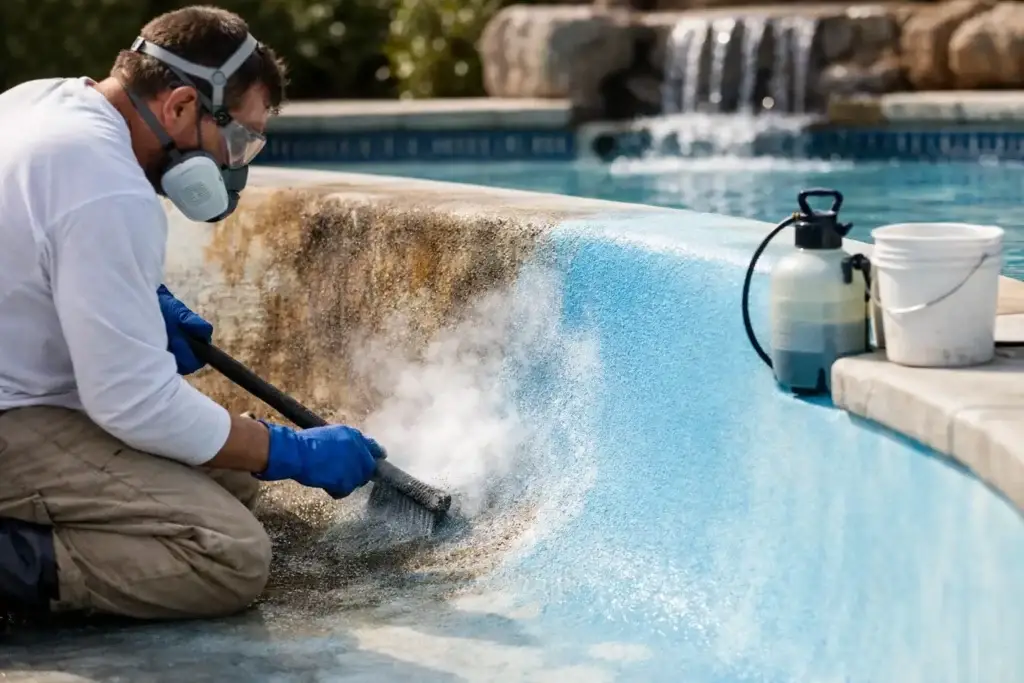
A pool can look clean from ten feet away and still have deep staining, stubborn algae marks, and a rough, worn surface that brushing alone will not fix. If you have been asking what does acid wash a pool do, the short answer is this: it strips away a thin top layer of plaster to remove embedded stains, discoloration, and leftover algae contamination.
That sounds simple, but acid washing is not basic cleaning. It is a restorative service used when a pool finish has visible staining that regular chemicals, vacuuming, brushing, and filtration cannot solve. In Southwest Florida, where heat, rain, organics, and year-round pool use create plenty of opportunities for algae and surface discoloration, knowing when acid washing helps and when it is too aggressive matters.
What does acid wash a pool do, exactly?
An acid wash uses a strong acid solution on a drained plaster or marcite pool surface. The acid reacts with the outermost layer of the finish and removes a very thin layer of material along with many of the stains stuck in it.
That is why an acid wash can dramatically improve a pool’s appearance. It can lighten dark staining, remove mineral scale in some cases, reduce algae shadowing, and make an older surface look much brighter. For a neglected pool, it can be the difference between a surface that looks permanently dirty and one that feels fresh again.
But there is a trade-off. Because acid washing removes part of the surface, it is not something you want done casually or too often. It is more like resurfacing maintenance than weekly cleaning. Done at the right time, it is useful. Done too often, it shortens the life of the plaster.
When acid washing helps most
The best candidate for an acid wash is a plaster pool with visible staining that has soaked into the finish. This usually shows up as widespread discoloration, algae staining after a green pool cleanup, rust-like marks, leaf stains, or mineral deposits that have not responded to less aggressive treatment.
In practical terms, acid washing is often considered after a pool has been neglected, left green for too long, or allowed to develop heavy staining from metals, debris, or poor chemical balance. It can also help when a drained pool has visible scale lines or patchy discoloration that makes the whole pool look older than it is.
For property owners getting a home ready to sell, preparing a seasonal rental, or trying to restore a community pool’s appearance, acid washing can offer a noticeable visual reset. It is a cosmetic and corrective service, not routine upkeep.
What acid washing does not do
This is where many pool owners get tripped up. Acid washing does not repair structural cracks, plumbing leaks, failing plaster, broken tile, or equipment problems. It also does not fix the underlying reason the pool got stained in the first place.
If a pool keeps getting algae because circulation is poor, sanitizer is inconsistent, or the filter is overdue for service, an acid wash will not solve that. It may remove the visible evidence, but the root problem is still there. The same goes for metal staining caused by source water or chemical imbalance. If the water chemistry is not corrected after the wash, staining can return.
That is why a good service company looks beyond the surface. A brighter pool is great, but long-term results depend on keeping chemistry balanced, surfaces brushed, and equipment running the way it should.
How the process works
Most acid washes begin with draining the pool completely. Once the surface is exposed, technicians inspect the finish to see how much staining is present and whether the plaster is in good enough condition for the treatment. If the surface is already very thin, soft, or deteriorated, acid washing may do more harm than good.
The acid solution is then applied carefully across the plaster. As it reacts, it removes a thin layer of the surface and lifts much of the staining with it. Afterward, the pool is neutralized, cleaned out, and prepared for refill.
Once the pool is refilled, the water chemistry has to be managed closely. Fresh fill water and freshly exposed plaster need attention. If startup chemistry is handled poorly, you can end up with new staining, scaling, or surface issues that undercut the whole job.
This is one reason acid washing is not a do-it-yourself weekend project for most pool owners. Between handling corrosive chemicals, managing drainage, protecting the surface, and balancing the water afterward, there is a lot that can go wrong.
Is acid washing safe for every pool?
No. Acid washing is typically for plaster, marcite, or similar cement-based pool finishes. It is not a one-size-fits-all treatment.
Fiberglass pools, vinyl liner pools, and some specialty finishes require different care. Even among plaster pools, age matters. An older pool with a worn finish may not have much surface left to remove. In that case, a spot treatment, stain treatment, bead blasting, or full resurfacing may be the better answer.
That is why the right question is not only what does acid wash a pool do, but also whether your pool should be acid washed at all. The honest answer depends on the finish type, the severity of the staining, and the condition of the surface underneath.
Common reasons pools in Southwest Florida need it
Our area puts pools through a lot. Heat speeds up algae growth. Summer storms bring debris, runoff, and chemistry swings. Vacation homes can go unmonitored for stretches of time. Rental properties may see heavy use without consistent upkeep. All of that adds up.
When chemistry slips or debris sits too long, stains can work their way into the finish. Black algae and other persistent growth can leave marks even after the water clears. Hard water and evaporation can also leave scale and mineral deposits that dull the surface.
For pool owners in Port Charlotte, North Port, Punta Gorda, and nearby communities, acid washing is often part of restoring a pool that has been ignored, not maintaining one that has been cared for properly. Regular cleaning and balancing are still the first line of defense.
How often should a pool be acid washed?
Not often. Because it removes a layer of plaster, acid washing should be used sparingly. Some pools may go many years without ever needing one. Others may need it after a severe algae event or long period of neglect.
If a pool is being acid washed every year or two, that usually points to a bigger issue. Either the pool is not being maintained consistently, the finish is nearing the end of its life, or the wrong treatment is being chosen for the problem.
A dependable maintenance plan is what helps owners avoid getting to that point. Weekly cleaning, brushing, vacuuming, filter care, and water testing all reduce the chance that stains and algae become embedded in the first place.
Acid wash or chlorine wash?
Sometimes a pool does not need a full acid wash. A chlorine wash may be enough if the main problem is organic staining or algae residue rather than mineral scale or deep discoloration.
A chlorine wash is less aggressive on the plaster and can be the smarter choice when the goal is to sanitize and remove organic material without taking off as much of the surface. Acid washing is stronger and more invasive. The right option depends on what caused the stain.
This is where experience matters. If you treat a metal stain like algae, you waste time. If you acid wash a pool that only needed a lighter treatment, you remove finish unnecessarily.
The real value of acid washing
The value is not just that the pool looks brighter. It is that an acid wash can restore pride in a pool that has gotten away from the owner. A badly stained finish makes the whole backyard feel neglected, even if the water is technically clean.
Used at the right time, acid washing gives a pool a fresh start. For homeowners, that means a more inviting space to enjoy. For property managers and rental owners, it means a better-looking asset that is easier to present and maintain. For commercial properties, it helps support the clean, guest-ready appearance people expect.
At Florida Detail, that is how we look at it. Acid washing is not about selling an extra service. It is about using the right restoration method when regular maintenance is no longer enough, then keeping the pool in shape so it stays that way.
If your pool surface still looks stained after the water is balanced and the debris is gone, the finish may be telling you it needs more than routine care. The best next step is not guessing – it is having the surface evaluated so you can choose the fix that protects the pool as much as it improves it.