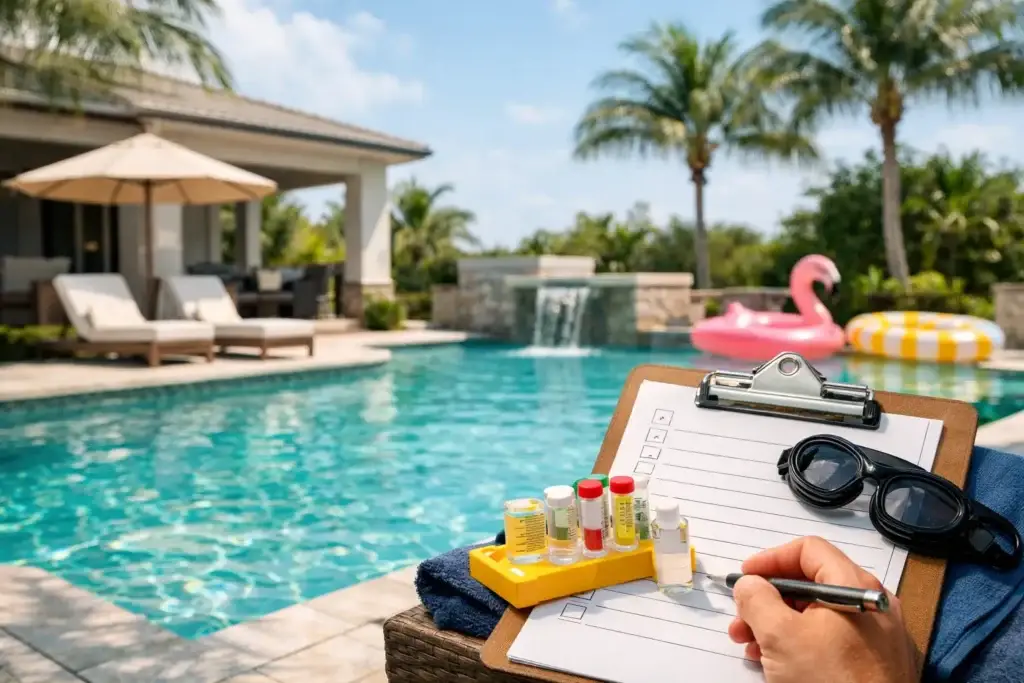
If you own a seasonal property or short-term rental in Southwest Florida, a good vacation home pool checklist is not optional. It is the difference between showing up to clear, inviting water and dealing with algae, stains, clogged baskets, or equipment that quit while the house sat empty. In a market like Port Charlotte, North Port, and Punta Gorda, pools do not get a break just because the owner is away.
A vacation pool has a different job than a full-time residential pool. It has to stay clean during vacant stretches, then look guest-ready fast. It also has to handle weather swings, heavy rain, heat, windblown debris, and inconsistent use. That means your checklist needs to cover more than skimming leaves. It needs to protect water quality, surfaces, and equipment before small issues turn into expensive ones.
What a vacation home pool checklist should cover
The best checklist is built around three priorities: water safety, appearance, and equipment reliability. If one of those gets ignored, the other two usually follow. Water that is out of balance can stain plaster, damage a salt cell, and create cloudy conditions. A dirty pool can overwhelm the filter. Neglected equipment can leave you with standing water that turns green in a hurry.
For most vacation homes, the checklist also needs to match how the property is used. A private second home with long vacancy periods needs a stronger focus on prevention. A rental property with back-to-back guest stays needs tighter turnover checks and a fast response plan. The basics are similar, but the timing is different.
Before you leave the property
The smartest time to prevent pool problems is before the home sits empty. Start with the water itself. Test and balance chlorine, pH, alkalinity, and stabilizer so the pool is not already drifting in the wrong direction when no one is there to catch it. If you have a salt system, confirm the cell is clean and producing properly. If your chemistry is only borderline acceptable when you leave, Florida heat and rain can push it out of range quickly.
Next, clean the pool thoroughly. Brush walls, steps, benches, tile line, and trouble spots where algae likes to get started. Vacuum or remove settled debris from the floor. Empty skimmer and pump baskets. Backwash or clean the filter if needed. This step matters because organic debris left behind keeps breaking down in the water and creates extra demand on your sanitizer.
Then check the equipment pad. Make sure the pump is priming correctly, the timer or automation is set properly, and there are no visible leaks around valves, unions, or the filter housing. Confirm the water level is normal and the autofill, if you have one, is working as intended. A small leak or bad timer setting can become a major problem by the time you return.
The weekly vacation home pool checklist
Even when the house is empty, the pool should be checked weekly. In Southwest Florida, every-other-week service is often not enough, especially in warm months or rainy stretches. Water can turn fast, and equipment problems rarely improve on their own.
A weekly visit should include testing and adjusting chemicals, skimming surface debris, emptying baskets, brushing problem areas, and checking circulation. The pool should also be inspected for early algae growth, cloudy water, insects, deck debris, and signs the cleaner is not moving as it should. If there is a spa, it needs its own water check and cleaning as well.
This is also the right time to look at the pool like a guest would. Is the water clear enough to see the main drain? Is there buildup at the waterline? Are there leaves collecting in corners? Vacation homes need maintenance that protects both the system and the first impression.
Equipment checks that save you money
A lot of expensive pool calls start with small equipment issues that were easy to spot early. That is why every vacation home pool checklist should include a regular look at the system, not just the water.
Watch for weak return flow, strange pump noise, dirty filter pressure readings, air bubbles in the pump basket, and signs of leakage. Check that valves are set where they should be. Make sure heaters, automation panels, and salt systems are powered and reading normally. If the property has a screened enclosure, inspect for damage that lets in extra debris.
There is some judgment involved here. Not every pool needs the same filter cleaning schedule, and not every pressure change means something is wrong. But if the system is running longer than usual, water clarity is slipping, or chemical demand keeps climbing, equipment is often part of the story.
Pool chemistry for vacant homes and rentals
Pool chemistry is where many vacation homeowners get caught off guard. A pool can look decent one week and be on the edge of trouble the next. Heat, sunlight, rain dilution, and heavy guest use all change the numbers.
For vacant homes, the goal is stability. You want enough sanitizer to hold through weather and debris, without letting pH, calcium, or alkalinity create scaling or surface wear. For rentals, the goal is stability plus recovery. Sunscreen, body oils, splash-out, and higher swimmer load can throw off chemistry fast, so post-stay checks are just as important as routine service.
It also depends on the pool finish and system. Salt pools still need monitoring. Screened pools usually collect less debris but still need balancing. Heated pools can consume chemicals differently than unheated ones. There is no one-size-fits-all formula, which is why many absentee owners choose scheduled professional care instead of trying to manage readings from a distance.
A vacation home pool checklist for guest turnover
If the property is used as a rental, turnover timing matters as much as the cleaning itself. A pool can technically be functioning and still not be ready for guests. That gap is where complaints happen.
Before a guest arrival, the water should be tested, the pool skimmed, the tile line checked, and visible debris removed from the floor and steps. Deck area appearance matters too. Dirty furniture, leaves around the coping, or mildew on surrounding surfaces can make a clean pool look neglected. If the property includes a spa, make sure the water is clear, circulating, and heated only if the system is meant to be active.
After checkout, inspect for unusual debris, broken equipment, tampered settings, or signs of contamination. Rentals tend to put more wear on baskets, cleaners, and water balance. A quick reset after each stay helps keep one bad week from becoming a restoration job.
Storm season changes the checklist
In Southwest Florida, storm season deserves its own section on any vacation home pool checklist. Heavy rain, strong wind, and power interruptions can create issues even when the pool was in great shape a few days earlier.
After a storm, the pool should be checked for fallen debris, changed water level, circulation problems, and chemistry shifts. Rain can dilute sanitizer and throw off balance. Wind can load the water with leaves, dirt, and plant matter that feed algae. If power was out, the system may need to be restarted and inspected.
This is one area where waiting costs more. The longer storm debris sits, the harder it is on surfaces, filters, and water quality. Fast cleanup usually means simpler cleanup.
When to handle it yourself and when to hand it off
Some owners are comfortable checking an app, testing water occasionally, and asking a neighbor to look at the pool. That can work for short absences and lightly used pools with dependable equipment. But it has limits.
If the home sits empty for long stretches, if the pool serves paying guests, or if you want the property consistently ready without last-minute surprises, regular professional service is usually the safer move. The value is not just in cleaning. It is in catching drifting chemistry, blocked baskets, algae starting on steps, or a filter issue before it turns into downtime.
For local owners and absentee owners alike, a dependable service plan brings structure to something that does not do well with guesswork. That is especially true in Florida, where pools stay active year-round. A detail-driven company like Florida Detail can handle the weekly chemistry, cleaning, equipment watch, and guest-ready appearance that vacation properties require.
A pool should add value to your vacation home, not create work every time you arrive. Keep your checklist practical, keep your schedule consistent, and treat small issues early. That is how you keep the water clear, the equipment running, and the property ready when it matters most.