If you walked out to the pool after weeks away and found cloudy water, stained steps, or a layer of debris sitting where clear blue water should be, you are not alone. In Southwest Florida, a seasonal pool reopening guide matters even in a warm climate, because pools that sit unattended can turn fast. Leaves break down, chemistry drifts, equipment strains, and small issues get expensive when nobody catches them early.
For seasonal residents, vacation homeowners, and rental property managers in Port Charlotte, North Port, Punta Gorda, and nearby areas, reopening a pool is less about pulling off a cover and more about getting every moving part back into working shape. Clean water is only one piece of it. You also need circulation, safe sanitizer levels, clean surfaces, and equipment that is ready to run without surprises.
What a seasonal pool reopening guide should actually cover
A good reopening is not just a quick skim and a chlorine shock. If the pool has been sitting, you need to treat it like a system check. Water condition, surfaces, filter performance, circulation, salt systems, timers, baskets, and visible wear all need attention at the same time.
That is where many homeowners lose time and money. They fix the obvious problem first, usually debris or cloudy water, but miss the reason it happened. A clogged filter, tired pump, scaled salt cell, or poor water balance can keep the pool from clearing even after chemical treatment.
In Florida, where heat and rain both affect water quickly, the reopening process also depends on how long the pool sat and what condition it is in now. A lightly neglected pool can be back in shape with cleaning, balancing, and filter service. A green pool may need a much more aggressive restoration plan.
Start with the pool structure and surrounding area
Before you touch the chemistry, look at the full pool environment. Check the deck, screen enclosure if there is one, waterline tile, steps, skimmer openings, drains, and visible equipment connections. You are looking for cracks, heavy staining, loose fittings, or signs that debris has been collecting for a while.
This first look tells you how deep the cleanup may go. If the waterline is ringed with buildup, if the plaster feels rough, or if algae is visible on walls and steps, a simple chemical adjustment is not going to solve it. The pool needs physical cleaning along with water correction.
It is also smart to clear the area around the equipment pad. Overgrowth, mulch, dirt, and insect activity around the pump and filter can hide leaks or damage. A clean equipment area makes it much easier to spot trouble before the system is under load.
Check water level and circulation before adding chemicals
One of the most common reopening mistakes is pouring chemicals into a pool before confirming that the system can circulate them. If the water level is too low, the skimmer may pull air. If it is too high, skimming performance drops. Either way, circulation suffers.
Get the water to the proper operating level, then inspect the skimmer baskets and pump basket. Empty them fully. Prime the pump if needed and watch how the system starts. Weak flow, air bubbles, unusual noise, or pressure problems are signs that reopening may involve more than routine cleaning.
This is also the time to look at return jets and make sure water is moving consistently. If one area of the pool is dead or sluggish, debris and algae tend to linger there. Good circulation is what allows brushing, vacuuming, and chemistry changes to actually work.
Clean first, then balance
A practical seasonal pool reopening guide always puts cleaning ahead of precision balancing. Organic debris in the water will keep consuming chlorine and throwing off your readings. If you test too early, the numbers may mislead you.
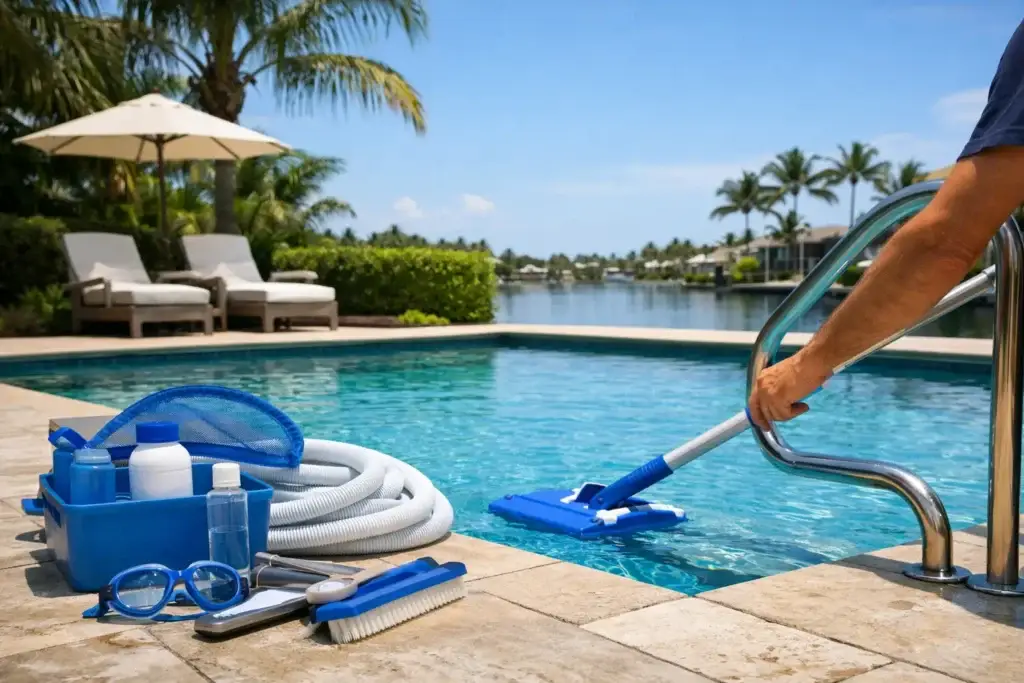
Start by skimming, brushing walls and steps, and vacuuming settled debris. Brush more than you think you need to, especially around corners, benches, waterlines, and shaded spots where algae likes to hold on. If the pool sat for a long time, expect more than one pass.
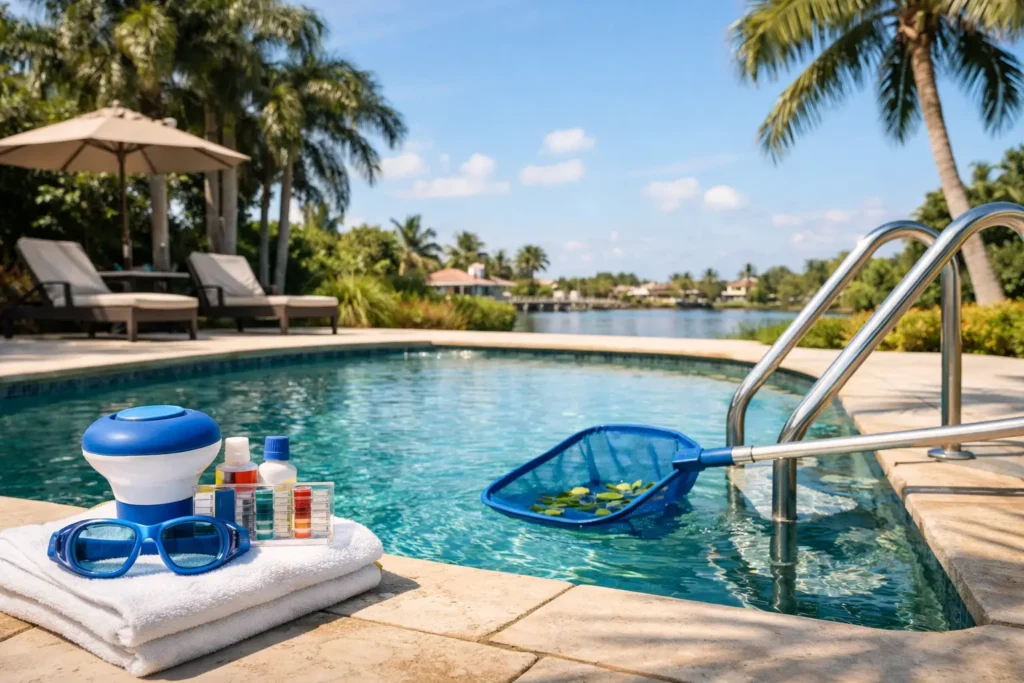
Once the large debris is out and the surfaces are brushed, test the water. In most reopenings, you will need to look at sanitizer, pH, total alkalinity, calcium hardness, stabilizer, and salt level if the pool uses a salt system. The right correction depends on the pool surface, the sanitizer type, and what shape the water is already in.
This is where do-it-yourself reopenings often go sideways. Homeowners add a little of everything at once, hoping the water clears by the next day. Sometimes it does. Often it does not, because each adjustment affects another one. If the pH is off, chlorine works differently. If the stabilizer is out of range, sunlight burns chlorine too fast. If the filter is dirty, dead algae and fine particles stay suspended.
Don’t overlook the filter and salt cell
If a pool will not clear, the filter is one of the first places to look. A reopening should include checking filter pressure, cleaning the filter as needed, and making sure the system is operating at normal flow. A neglected cartridge, sand filter, or DE filter can slow the whole recovery.
Salt pools need another layer of attention. Salt cells can develop scale and wear over time, especially if water balance drifted while the pool was sitting. If the cell is dirty or failing, the pool may look like it has a chlorine problem when the real issue is production. That is why reopening is not just about the water in front of you. It is about the equipment making that water safe.
Timers and automation settings deserve a quick review too. Seasonal residents are often surprised to find the system running on an old schedule that no longer fits current weather, bather load, or property use.
When the pool is green, the plan changes
A green pool is not a standard reopening. It is a restoration job. The difference matters because the time, chemical demand, and labor can be significantly higher.
If algae is visible throughout the pool, you are usually dealing with more than one issue at once – low or ineffective sanitizer, poor filtration, and debris feeding the problem. In that case, brushing, vacuuming, repeated water testing, filter cleanings, and stronger chemical treatment may all be required over several days.
The trade-off here is simple. Trying to save money by under-treating a green pool often stretches the problem out and raises the total cost. A more complete correction up front is usually faster and cleaner, especially before guests arrive or a property goes back into rental use.
Why Florida pools need ongoing care after reopening
The idea of a one-time reopening makes more sense in colder states than it does here. In Southwest Florida, pools stay exposed to heat, rain, windblown debris, and year-round biological growth pressure. Even if the pool is only used seasonally, the water and equipment still need consistent attention.
That is why many owners reopen the pool, get it looking good, and then hand it off to a regular service plan. Weekly cleaning, chemical balancing, brushing, basket emptying, water testing, and equipment checks prevent the same cycle from repeating. It also protects the finish, helps avoid algae outbreaks, and gives someone a chance to catch small mechanical issues before they interrupt use.
For absentee owners and seasonal residents, that reliability matters as much as water clarity. You want to arrive to a pool that is ready, not one that needs another round of cleanup.
A smarter seasonal pool reopening guide for local owners
If you own a pool in Port Charlotte, North Port, Punta Gorda, or surrounding communities, the smartest reopening plan is one that matches the actual condition of the pool. Some need a straightforward clean and balance. Others need filter cleaning, salt cell service, stain treatment, or full green pool restoration before they are truly swim-ready.
That local reality is why detail matters. A pool can look decent from the patio and still have chemistry problems, circulation issues, or equipment wear that will show up a week later. Reopening the right way means being thorough the first time.
At Florida Detail, that is the standard. We Mean, Clean. And when a pool is reopened with the same level of care it needs to stay healthy all season, you spend less time guessing and more time enjoying water that looks right, feels right, and stays that way.
The best time to deal with pool problems is before they become pool emergencies, especially when the next swim, guest check-in, or family weekend is already on the calendar.