If you own a pool in Southwest Florida, the salt pool vs chlorine question usually comes up right after a few frustrating weeks of testing water, chasing algae, or dealing with that strong chemical smell people love to blame on chlorine. The truth is simpler than most pool-store conversations make it sound. Both systems use chlorine to sanitize the water. The real difference is how that chlorine gets into your pool, what equipment is involved, and how much attention the system needs over time.
For homeowners in Port Charlotte, North Port, Punta Gorda, and nearby areas, that difference matters. Heat, rain, heavy pool use, and year-round operation all put pressure on water chemistry. What works for a screened pool with light use may not be the best fit for a vacation rental, a community pool, or a backyard pool that gets used every weekend.
Salt pool vs chlorine: what is the actual difference?
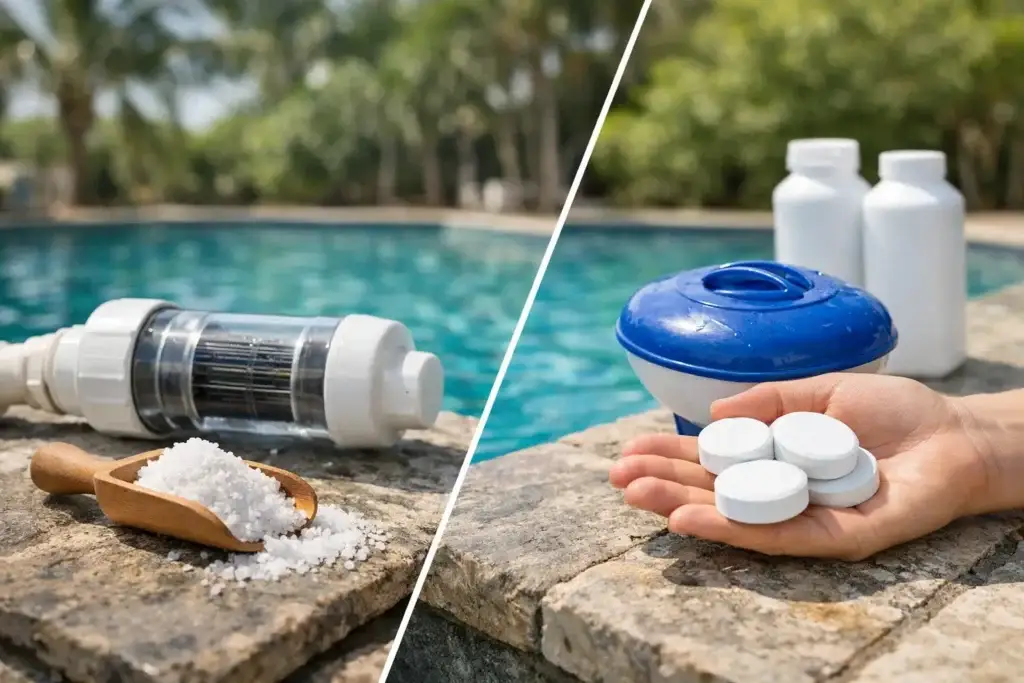
A traditional chlorine pool is sanitized by adding chlorine products directly to the water. That might be liquid chlorine, tablets, or granular shock depending on the setup and service routine. A salt pool uses a salt chlorine generator, often called a salt cell, to convert dissolved salt into chlorine.
That means a salt pool is not chlorine-free. It is still a chlorine pool. It just makes its own sanitizer on site instead of relying entirely on manually added chlorine.
This is where a lot of pool owners get tripped up. They hear “salt pool” and expect ocean water, no chemicals, and almost no maintenance. In reality, the water is much milder than seawater, but the pool still needs regular balancing, cleaning, testing, and equipment checks. If chemistry drifts, a salt pool can turn green just like any other pool.
How the water feels day to day
This is one reason many homeowners lean toward salt. Salt pools usually feel softer on the skin and eyes. They also tend to have less of that harsh pool smell when everything is balanced correctly.
For families who swim often, that can be a real quality-of-life upgrade. You may notice less dry skin, less irritation, and a smoother feel in the water. In a market like Southwest Florida, where pools are used much more of the year than in colder states, comfort matters.
Traditional chlorine pools can still feel great when they are properly maintained. Problems usually show up when chlorine is added inconsistently, pH gets out of range, or chloramines build up. So if someone says all chlorine pools feel rough or smell bad, that is not quite right. Poor balance is usually the bigger culprit.
Cost is where the decision gets more practical
The upfront cost of a chlorine pool is usually lower. If you already have a standard setup, there is no salt system to install, no generator to buy, and no cell to replace. For some pool owners, especially if they are trying to keep startup costs down, that makes traditional chlorine the easier choice.
Salt pools typically cost more at the beginning because of the generator and installation. Over time, though, many owners see lower ongoing chemical costs because the system produces chlorine continuously. That can reduce how much manually added chlorine you need.
There is a trade-off. Salt systems have parts that wear out. Salt cells eventually need replacement, and in Florida conditions they can work hard year-round. If a cell fails, chlorine production stops, and water quality can go downhill fast if the issue is not caught quickly.
So the better value depends on how long you plan to keep the pool, how often it is used, and whether the system is monitored consistently. A salt system can be a smart long-term move, but it is not a free pass on maintenance.
Maintenance is different, not easier
This is probably the biggest misconception in the salt pool vs chlorine debate. Salt pools are often marketed as low maintenance. What they really are is differently maintained.
With a traditional chlorine pool, you are regularly adding sanitizer and keeping a close eye on pH, alkalinity, stabilizer, and calcium hardness. With a salt pool, you still have to test and balance all of that, but now you also need to monitor salt levels, inspect the cell, and clean scale buildup when needed.
Southwest Florida water conditions can be tough on both systems. Heat burns through chlorine faster. Rain dilutes chemistry. Organic debris from palms, oaks, and storms adds demand. On salt systems, calcium scaling inside the cell can reduce efficiency. On traditional chlorine setups, inconsistent dosing can lead to swings that stress the water.
Neither system likes neglect. If your goal is to avoid dealing with chemistry yourself, the better choice is often the one paired with reliable professional service.
Equipment wear and pool surfaces
Salt systems can be harder on certain metal components if the pool is not properly balanced or if bonding and installation are poor. Corrosion concerns are real, especially around handrails, light fixtures, and some heater components. That does not mean salt is a bad option. It means the system needs to be installed correctly and watched closely.
Pool finish and surrounding materials also matter. Natural stone, soft stone coping, and some deck materials may not love repeated salt exposure and splash-out over time. In coastal Florida, where exterior materials already deal with humidity and weather, this is worth thinking through before making the switch.
Traditional chlorine pools avoid some of the salt-related corrosion concerns, but they come with their own equipment and water-balance demands. High chlorine or low pH can damage surfaces and equipment too. There is no maintenance-free side of this comparison.
Which system handles Florida conditions better?
There is no one-size-fits-all answer, but there are patterns.
For a full-time homeowner who wants a more comfortable swimming experience and plans to keep the pool for years, a salt system can make a lot of sense. It delivers steady sanitizer production, which can help with consistency when managed properly.
For a rental property, vacation home, or pool with unpredictable usage, a traditional chlorine setup may be easier to control in some situations, especially if service needs to respond quickly to changing demand or heavy swimmer load. Commercial and high-use pools also often benefit from straightforward chemical control, depending on the equipment and operating requirements.
If your pool gets lots of sun, frequent storms, and year-round use, what matters most is not just the system. It is how closely the water is monitored, how fast problems are corrected, and whether the equipment is maintained before it fails.
Salt pool vs chlorine for service and upkeep
From a service standpoint, both systems need regular eyes on them. That is especially true here, where algae can move fast once chemistry slips.
A chlorine pool may need more direct sanitizer additions, but the equipment is simpler. A salt pool may reduce manual chlorine handling, but it adds generator diagnostics, cell inspections, and replacement planning. If you miss warning signs on either one, you can end up with cloudy water, staining, algae growth, or equipment damage.
That is why many pool owners stop asking which system is easier and start asking which system is easier for them to live with. Those are not the same question.
If you enjoy monitoring your own pool and staying ahead of chemistry, either can work. If you want your water tested, balanced, brushed, vacuumed, and kept swim-ready without having to think about it every week, professional care matters more than the label on the system. That is where a detail-driven maintenance company can make the choice less stressful.
So which one should you choose?
Choose salt if you want softer-feeling water, do not mind the higher upfront equipment cost, and are comfortable with the fact that the system still needs regular maintenance and eventual cell replacement.
Choose traditional chlorine if you want a lower initial investment, simpler equipment, and a system that can be adjusted quickly without relying on a generator. That can be especially practical for certain rental, seasonal, or commercial situations.
For many Southwest Florida pool owners, the right answer comes down to pool usage, surrounding materials, equipment condition, and how hands-on they want to be. A beautiful pool is not built on marketing claims. It is built on clean water, balanced chemistry, and consistent upkeep.
At Florida Detail, we see both types of pools every week, and the healthiest ones all have one thing in common – somebody is paying attention before small issues turn into expensive ones.
If you are stuck between salt and chlorine, think less about which one sounds better and more about which one fits your pool, your property, and your routine. The best system is the one that stays clear, safe, and ready when you want to swim.