
A salt pool usually tells on itself before the cell quits completely. Maybe chlorine levels start drifting even though your settings have not changed. Maybe the water looks a little flatter, a little less crisp, and you find yourself adding chlorine by hand more often. That is often the point where homeowners start looking for salt cell replacement service – not because the pool has gone green yet, but because something is clearly off.
In Southwest Florida, pool equipment works hard year-round. Heat, humidity, long swim seasons, heavy rain, and steady use all put pressure on your system. A salt cell is built to last, but it is not built to last forever. When it starts to fail, water quality can slip fast, and what begins as a small equipment issue can turn into cloudy water, algae growth, and more strain on the rest of the system.
What a salt cell actually does
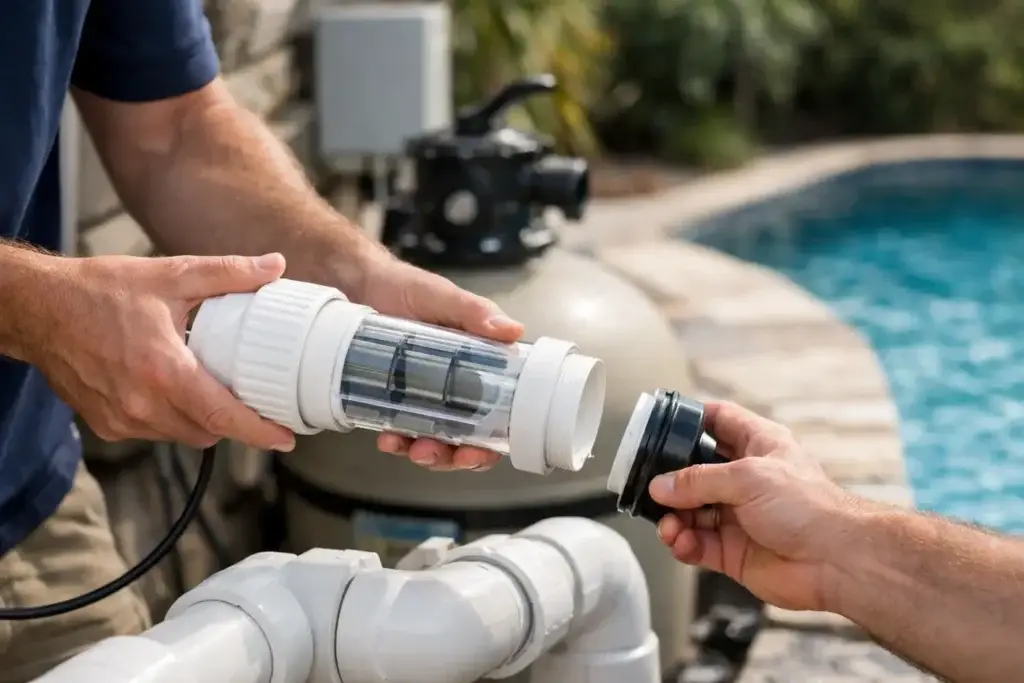
A salt cell is the part of your salt chlorination system that converts dissolved salt into chlorine. That chlorine sanitizes the water, helping control bacteria, algae, and contaminants without the constant need to manually add traditional chlorine products.
For pool owners, the appeal is simple. Salt systems can provide steady sanitation, softer-feeling water, and less day-to-day guesswork. But the cell itself is a wear item. The metal plates inside the unit gradually break down over time, and once they reach the end of their useful life, chlorine production drops no matter how clean the pool looks from the outside.
That is why a failing cell can be easy to miss at first. The pump may still run. The screen may still light up. The pool may still circulate normally. But if the cell is no longer producing enough chlorine, the water chemistry starts losing ground.
Signs you may need salt cell replacement service
Most pools do not go from fine to failing overnight. There are usually a few warning signs before the system stops doing its job.
If your pool is not holding chlorine like it used to, that is one of the biggest red flags. You may also notice algae showing up in corners or on steps even though your filtration schedule has not changed. Some owners see repeated low-salt or check-cell messages on the control panel. Others notice calcium buildup returning quickly, even after cleaning.
A sudden increase in manual chlorine additions is another clue. If you are constantly compensating for low sanitizer levels, the system may not be generating enough chlorine on its own anymore. Sometimes the issue is scaling or a sensor problem. Sometimes it is water balance. And sometimes the cell is simply worn out.
That is where professional testing matters. Replacing a cell too early wastes money. Waiting too long can cost you in chemicals, cleanup, and avoidable water quality problems.
Why salt cells fail sooner than expected
Salt cells have a general lifespan, but real-world performance depends on how the pool is maintained. In Florida, that lifespan can be affected by several factors.
Water chemistry is a big one. When pH, calcium hardness, or stabilizer levels stay out of range, scale can build up on the cell plates and reduce efficiency. If acid cleaning is done too often or too aggressively, that can also shorten the life of the cell. The goal is to remove scale when needed, not to over-clean a component that is already wearing down with use.
Run time matters too. Pools that need longer circulation hours or higher output settings put more demand on the cell. A heavily used residential pool or a commercial pool will generally wear a cell faster than a lightly used backyard pool.
Then there is the simple fact that pool equipment in Southwest Florida does not get much of an off-season. Many systems run month after month with very little downtime. That keeps pools usable and attractive, but it also means equipment ages on a different schedule than it might in cooler climates.
Salt cell cleaning vs. salt cell replacement service
Not every salt system problem means the cell needs to be replaced. Sometimes the cell just needs to be inspected and cleaned properly.
If scale has formed on the plates, chlorine production can drop even though the cell still has life left in it. In that case, careful cleaning may restore performance. But there is a difference between a dirty cell and a dying cell. If the plates are worn, damaged, or no longer producing at the proper level, cleaning will not solve the problem for long.
This is where guesswork gets expensive. Some homeowners keep cleaning a failing cell, hoping to squeeze one more season out of it. Others replace a cell when the real issue is chemistry imbalance or a separate system component. A proper diagnosis helps avoid both mistakes.
What a professional salt cell replacement service should include
A good salt cell replacement service is not just a swap of one part for another. It should start with confirming that the cell is actually the problem.
That means checking salt levels, water chemistry, cell condition, system settings, and related equipment. If the old cell has failed, the replacement should match the system requirements and be installed correctly so the chlorinator communicates and performs the way it should.
After installation, the pool should be tested and the system should be verified under normal operation. Chlorine output, flow, and water balance all need to make sense together. This step matters because a new cell installed into poorly balanced water can start accumulating scale right away.
For homeowners and property managers, the real value is peace of mind. You want the pool back to reliable production, not a temporary fix that leaves you wondering whether the water is really protected.
Why local pool experience matters
Pool care in Port Charlotte, North Port, Punta Gorda, and nearby communities comes with its own pattern of challenges. Afternoon storms can dilute chemistry fast. Heat and sunlight burn through sanitizer. Heavy organic debris, especially in screened and unscreened pools alike, changes demand on the system. Vacation homes may sit unused for stretches, then suddenly need to be guest-ready.
That is why local experience matters when handling salt cell replacement service. The part itself is only one piece of the job. The bigger issue is making sure the pool is set up to stay clear, safe, and stable after the replacement is done.
For example, a cell that failed because of age is one thing. A cell that failed early because the water stayed out of balance is another. If nobody addresses the underlying cause, the new cell may head down the same path.
A detail-driven service company looks at the whole picture – not just the warning light on the panel.
When replacement is the smarter move
There is always a point where trying to stretch an aging cell stops making financial sense. If chlorine production remains inconsistent after cleaning, if the system repeatedly throws errors, or if the cell is near the end of its expected lifespan, replacement is often the cleaner and more reliable choice.
This is especially true for pool owners who do not want to babysit water chemistry. If you travel, manage a seasonal property, or simply want the pool ready when you are, dependable sanitizer production matters. The cost of replacing the cell is often easier to control than the cost of neglected water, algae treatment, staining, or emergency cleanup later.
Commercial and rental property owners have even less room for delay. Guest-facing pools need to stay presentable and sanitary. A weak cell can quietly create water quality issues that become obvious at the worst possible time.
Protecting the new cell after installation
Once a new cell is in place, routine maintenance becomes the key to getting the best lifespan from it. Balanced water helps reduce scale. Regular inspection helps catch buildup before it gets heavy. Consistent service helps keep chlorine demand from getting out of control.
This is one reason many pool owners pair equipment service with ongoing maintenance. When the pool is being cleaned, tested, brushed, and monitored regularly, salt system issues are easier to catch early. The equipment performs better, the water stays more consistent, and expensive surprises become less common.
That practical, watch-it-closely approach is what many homeowners are really paying for. Not just a clean pool on the day of service, but fewer preventable problems over time. That is how Florida Detail approaches pool care – with the kind of consistency that keeps small issues from turning into bigger ones.
If your salt pool is asking for more attention than usual, do not wait for the water to make the decision for you. A timely inspection can tell you whether the fix is a cleaning, an adjustment, or a full replacement, and getting that answer early is usually the easiest way to keep your pool clear, safe, and ready to enjoy.