
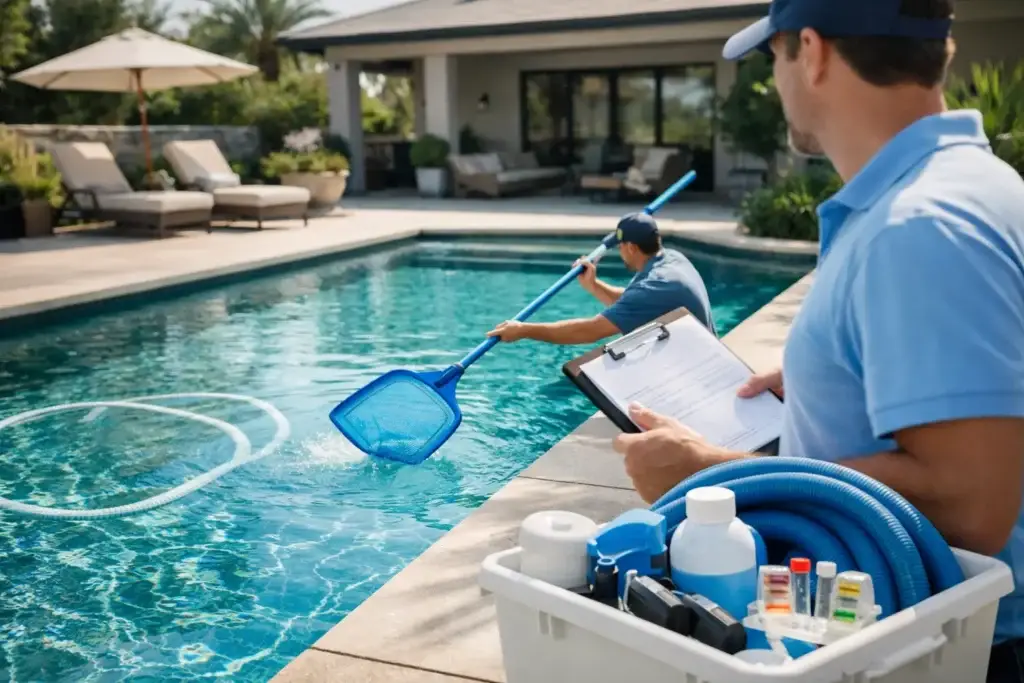
A pool can look fine on Monday and start sliding by the weekend in Southwest Florida. Heat, rain, wind, pollen, sunscreen, and heavy use all work against clean water. That is why residential pool care plans matter – not as a luxury, but as a practical way to keep your pool clear, safe, and ready without turning your spare time into maintenance time.
For many homeowners, the real question is not whether the pool needs attention. It does. The question is how much of that work you want to handle yourself, and how much risk you want to carry when chemistry drifts, debris builds up, or equipment starts underperforming. A good plan takes that uncertainty off your plate and replaces it with steady, visible results.
What residential pool care plans actually cover
Not every service plan means the same thing. Some are built for homeowners who want help with chemistry only. Others are true full-service plans that cover the cleaning, testing, balancing, and routine upkeep that keep a pool in good shape week after week.
At the most basic level, a plan should address water testing and chemical balancing. If chlorine is off, pH swings too high, or alkalinity drifts, you can end up with cloudy water, algae growth, skin irritation, scale, or damage to pool surfaces and equipment. Chemistry problems do not always show up right away, which is part of what makes them expensive when ignored.
A stronger plan also includes physical cleaning. That means skimming debris, brushing walls and tile lines, vacuuming the pool, emptying baskets, and checking filters. In Florida, leaves and organic debris do more than make a pool look messy. They feed algae, stain surfaces, and put extra strain on circulation.
The best plans go one step further and keep an eye on the system itself. Pumps, filters, salt cells, and other components do not fail all at once in most cases. They usually show warning signs first. Regular service visits help catch those issues before they turn into a green pool, bad water quality, or a repair call at the worst possible time.
Choosing the right residential pool care plans for your home
The right plan depends on how you use the pool, what equipment you have, and how hands-on you want to be. A homeowner who enjoys checking baskets and handling light cleaning may only need chemical support and professional testing. Another homeowner may want complete weekly service and not think about the pool at all until it is time to swim.
Seasonal use matters too. In Southwest Florida, even homes that sit empty for part of the year still need regular service. Warm weather does not pause because the owner is away. Water still needs to stay balanced, circulation still matters, and debris still finds its way in. For snowbirds and rental property owners, a structured maintenance plan is often the difference between returning to a healthy pool and returning to a problem.
Pool type also affects what makes sense. Saltwater pools have different maintenance points than traditional chlorine pools. Spas and hot tubs need tighter control because of their smaller water volume and heavier bather impact. Larger pools, screened enclosures, nearby trees, and older equipment can all shift what level of service is worth paying for.
That is why a one-size-fits-all promise usually falls short. Good service plans should match the pool, the property, and the owner’s priorities.
What plan tiers usually look like
Most residential pool care plans fall into three broad levels. The first is chemicals-only or chemistry-focused support. This works for homeowners who do their own brushing, skimming, and vacuuming but want a professional to handle testing and balancing. It can be a smart middle ground for someone who wants to save time on the technical side without giving up all the hands-on work.
The second level is standard recurring service. This is where many homeowners land because it covers the core tasks that keep a pool consistently clean and healthy. Weekly visits typically include testing, balancing, debris removal, brushing, and checking the pool’s overall condition. If your goal is dependable maintenance with less day-to-day thought, this level usually makes the most sense.
The third level is premium full-service care. That is the best fit for homeowners who want complete upkeep, stronger oversight, and less personal involvement. Premium plans may include more detailed cleaning, deeper equipment attention, spa care, filter service scheduling, or added support for pools that get heavier use or need a closer watch.
There is no universally right tier. It depends on whether you value lower monthly cost, lower personal effort, or a higher level of protection against problems.
Why cheaper service is not always cheaper
Pool owners often compare plans by monthly price first, which is understandable. But the real cost of pool care includes what happens between visits and what gets missed. A low-cost plan that does not include enough cleaning, does not stay on top of chemistry, or does not catch equipment issues early can cost more over time than a better-maintained pool ever would.
Cloudy water and algae are the obvious signs of neglected service, but they are not the only ones. Poor balance can shorten the life of plaster, tile, heaters, salt systems, pumps, and filters. It can also lead to staining, scaling, and water that never quite looks right even when it is technically usable.
A dependable plan is really about prevention. You are not just paying for someone to skim leaves. You are paying to avoid restoration work, emergency cleanups, wasted chemicals, and the frustration of a pool that is always one step away from trouble.
What to ask before starting a service plan
Before you choose a provider, it helps to ask practical questions. How often are visits scheduled? What is included every week, and what is billed separately? Are chemicals part of the monthly price? Is filter cleaning built into the plan or handled as needed? If the pool turns green, does that fall under regular service or restoration pricing?
You should also ask how the company handles communication. Homeowners want to know that someone is paying attention, especially if they are not at the property full time. Consistency matters. So does accountability. A good service company does not make you guess whether your pool was serviced properly.
Local knowledge matters too. Pools in Port Charlotte, North Port, Punta Gorda, and nearby communities deal with the same broad Florida conditions, but each property has its own patterns with shade, wind, debris, use, and water demand. A local company that works those neighborhoods every week usually has a better feel for what prevents trouble and what causes it.
When a maintenance plan is not enough
Some pools are already past the point of routine care. If the water is green, the surface is stained, the filter is overloaded, or the equipment has been neglected, regular weekly service may need to start after corrective work. That can mean green pool restoration, acid washing, salt cell replacement, pressure washing around the pool area, or a deeper system reset before ongoing care begins.
That is not a failure. It is just the reality of deferred maintenance. Once a pool gets far enough off track, a standard visit cannot fix months of buildup in a single stop. The good news is that after restoration, a solid maintenance plan can keep the pool from ending up in that condition again.
The value of dependable local service
A pool care plan only works if it is backed by consistency. That means showing up, doing the work thoroughly, and paying attention to the details that affect water quality and appearance. Homeowners are not just buying chemicals or labor. They are buying peace of mind that the pool will stay clean, safe, and swim-ready.
That is why detail-oriented local service tends to stand out. A company like Florida Detail earns trust by taking ownership of the outcome, not just checking off a visit. For homeowners who want reliable upkeep without chasing test results, fighting algae, or wondering what shape the pool is in this week, that kind of structure makes a real difference.
The right plan should fit your pool, your schedule, and your level of involvement. If it does, pool ownership feels a lot more like enjoyment and a lot less like weekend repair work. And in Southwest Florida, that is exactly how it should be.