
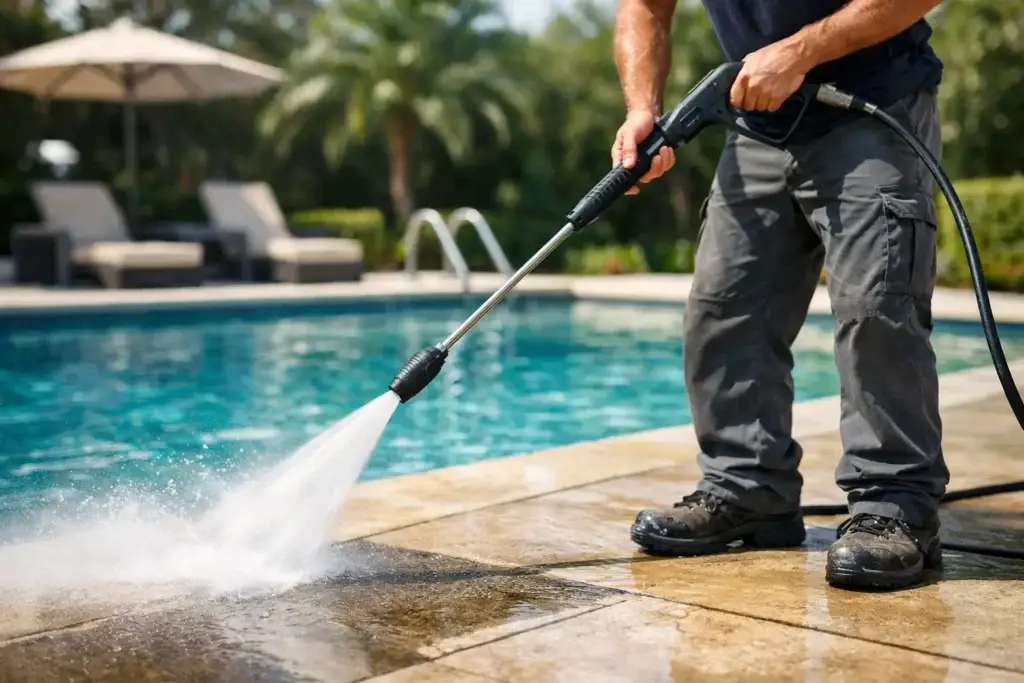
A pool deck can make a clean pool look neglected fast. In Southwest Florida, it does not take long for moisture, shade, pollen, algae, sunscreen residue, and everyday foot traffic to turn a deck slick, stained, and harder to enjoy. That is why pressure washing pool deck surfaces is not just about appearance. It is about safety, surface protection, and keeping the whole pool area looking cared for.
Around Port Charlotte, North Port, Punta Gorda, and nearby communities, pool decks deal with year-round humidity and frequent rain. Those conditions are great for algae and mildew growth, especially in shaded corners and along expansion joints. When buildup sits too long, the deck does more than look dirty. It can become slippery under bare feet, stain unevenly, and start to wear in ways that are more expensive to fix later.
Why pressure washing pool deck surfaces matters
Most homeowners notice the obvious dirt first. Leaves break down, furniture leaves marks, and organic debris collects along edges. But the bigger issue is usually the thin layer you do not think much about at first – algae film, mildew, body oils, spilled drinks, and Florida grime that settles into textured concrete, pavers, or coated surfaces.
That layer changes how the deck feels and performs. A deck that should feel secure underfoot starts to feel slick. A bright, clean finish starts to look dark and blotchy. If you manage a rental property or commercial pool, that appearance matters even more. Guests notice the deck before they notice water chemistry. A clean deck signals that the whole pool area is being maintained properly.
Pressure washing is one of the fastest ways to remove that buildup, but fast does not mean careless. The wrong pressure, the wrong nozzle, or the wrong technique can leave etching, strip coatings, dislodge sand between pavers, or force dirty runoff where you do not want it.
Not every pool deck should be cleaned the same way
This is where a lot of people get into trouble. They hear “pressure washing” and assume more power is always better. It is not. Pool decks vary a lot, and each material responds differently.
Concrete pool decks
Standard concrete is durable, but it can still be damaged by excessive pressure. If the surface is already aging or slightly porous, aggressive washing can rough it up and make future staining worse. On the other hand, too little pressure leaves organic growth behind and the deck still looks dull.
Pavers
Pavers usually clean up well, but they need a more controlled approach. Heavy pressure can disturb the joint sand or create uneven cleaning lines. If that sand is removed and not replaced, the pavers can shift over time. For homeowners who want the deck to look sharp and stay stable, that trade-off matters.
Cool deck and textured coatings
These surfaces are common around Florida pools because they stay more comfortable in the heat. They also require care. A harsh wash can scar the texture, peel weak spots, or remove coating from edges. Cleaning should restore the look, not shorten the life of the finish.
Natural stone and specialty surfaces
Some stone surfaces need lower pressure and more attention to cleaning solutions than brute force. A stain may come out, but the wrong method can leave discoloration or surface wear behind. If you are unsure what kind of finish you have, guessing is not a great plan.
What a dirty pool deck is really telling you
A dirty deck is often a sign that moisture and contaminants are sticking around longer than they should. That could mean the area needs regular cleaning, better drainage awareness, trimmed landscaping, or more consistent maintenance overall.
If algae comes back quickly after rinsing, the issue is not just surface dust. If dark lines remain after a basic wash, you may be dealing with embedded organic staining. If the deck feels chalky or rough after cleaning, the pressure may have been too aggressive in the past. In other words, the deck’s condition gives you clues about what kind of care it needs next.
DIY pressure washing pool deck areas – when it works and when it does not
There are situations where a homeowner can handle basic deck cleaning. If the surface is in good shape, the staining is light, and you know how to use the equipment properly, a careful wash can freshen things up. But this only works when the goal matches the condition of the deck.
A light maintenance cleaning is different from removing heavy algae, rust stains, or months of embedded grime. It is also different from cleaning around screened enclosures, waterline tile spill areas, drains, and decorative finishes. The more variables involved, the more likely it is that a quick weekend project turns into uneven results or accidental damage.
The biggest DIY mistakes are usually simple. People start too close to the surface. They use too much pressure. They clean in inconsistent passes and leave zebra-striping across the deck. Or they focus so much on visible dirt that they miss runoff control, plant protection, and the condition of nearby surfaces.
If your deck is coated, older, stained in patches, or slippery enough to be a safety concern, professional service is usually the better call.
What professional pressure washing should include
A solid cleaning job is about more than spraying water across concrete. It starts with identifying the deck material, the type of buildup, and any vulnerable areas around the pool.
That includes looking for cracked sections, loose coping areas, weak coating spots, drainage patterns, and places where algae builds up repeatedly. From there, the cleaning method should be adjusted to the surface, not forced into a one-size-fits-all approach.
For many pool owners, the real value is consistency. A professionally cleaned deck does not just look brighter for a day or two. It feels safer, photographs better, and complements the rest of the pool area instead of dragging it down. For rental homes and commercial properties, that cleaner presentation can make a real difference in how the property is perceived.
In a service area like Southwest Florida, it also helps to work with a company that understands pool environments specifically. Deck cleaning around a pool is not the same as blasting a driveway. You are working near water features, enclosures, furniture, drains, finish materials, and surfaces that people walk on barefoot.
How often should a pool deck be pressure washed?
It depends on the property. A screened-in lanai deck may stay cleaner longer than an open pool area under heavy tree cover. A vacation rental with frequent guest turnover will usually need more attention than a privately used pool. Homes with shade, high humidity, and recurring algae issues may also need more frequent cleaning.
For many Southwest Florida properties, once or twice a year is a reasonable baseline for pressure washing pool deck surfaces. But that is not a rule for every home. If the deck is getting slick, looking patchy, or making the pool area feel tired even when the water is clean, it is probably time.
The best schedule is the one that prevents buildup from becoming a restoration job. Waiting until the deck is heavily stained usually means more labor, more risk of surface wear, and less satisfying results.
The connection between deck cleaning and full pool care
A clean pool and a dirty deck never match. One makes the other stand out in the wrong way. If you are already investing in weekly cleaning, chemical balancing, brushing, filter care, or seasonal service, the deck should not be the part that gets overlooked.
That is especially true for homeowners who want a pool area that stays guest-ready without constant effort. The visual impact of a freshly cleaned deck is immediate. The practical benefit is just as important. Less slippery buildup means a safer walking surface for family, visitors, and tenants.
For property owners who prefer dependable upkeep over reactive cleanup, combining deck care with regular pool maintenance simply makes life easier. Florida Detail works with many local homeowners who want exactly that – one dependable team that notices the details, keeps the area clean, and helps prevent small issues from turning into expensive ones.
If your pool deck has gone from lightly weathered to obviously dirty, do not wait for someone to slip on it or for the stains to settle in deeper. A cleaner deck changes the whole feel of the backyard, and the right cleaning method helps protect the surface while it does it.