
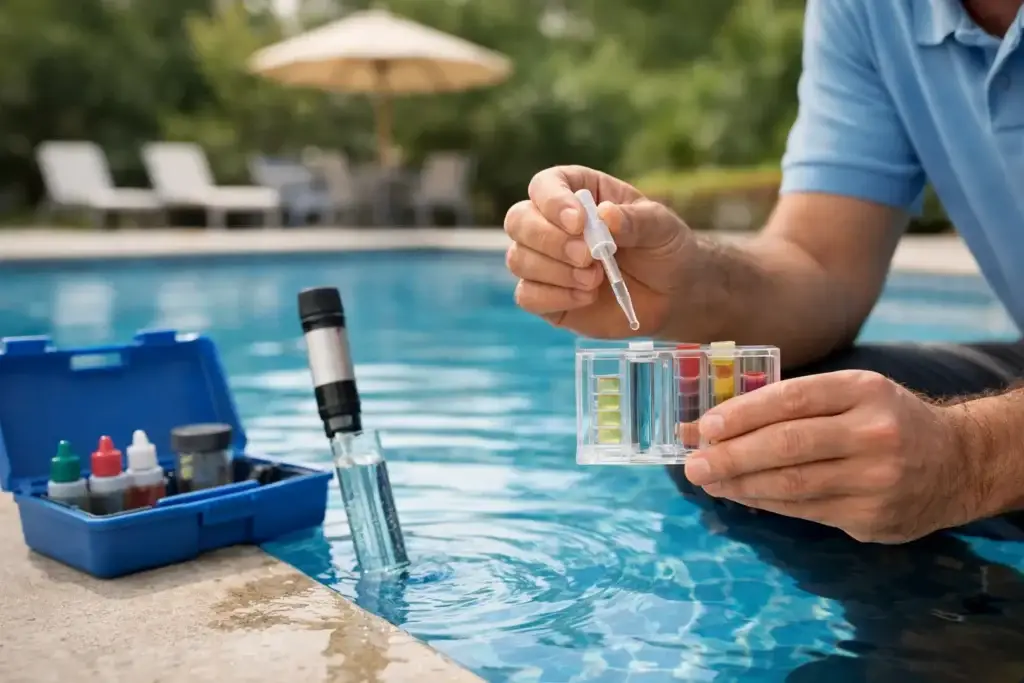
A clear pool can still have a chemistry problem. In Southwest Florida, bright sun, heavy rain, warm water, and frequent use can change pool balance fast – sometimes between one weekend and the next. A professional pool water testing service catches those changes early, before cloudy water, algae, scale, corrosion, or a strong chlorine smell takes over.
For homeowners, that means less guesswork at the pool store and fewer surprise cleanups. For rental, community, and hospitality properties, it means a pool that stays clean, safe, and ready to show. The goal is not simply to get a “good” test reading. The goal is to keep every part of the water working together so the pool looks great and the equipment is protected.
What a Pool Water Testing Service Actually Checks
Water testing is more than dipping a strip into the pool and adding chlorine if the color looks off. A dependable service tests the factors that affect sanitation, swimmer comfort, surface condition, and equipment life. Each reading tells part of the story.
Free chlorine is checked to confirm the water has enough active sanitizer to control bacteria, algae, and other contaminants. But a chlorine reading alone does not tell you whether the sanitizer can do its job. Cyanuric acid, often called stabilizer, helps shield chlorine from Florida sun. Too little stabilizer allows chlorine to burn off quickly. Too much can make chlorine less effective, even when test results appear high.
A full service also evaluates pH and total alkalinity. These two readings influence one another and have a direct effect on comfort and chlorine performance. Water with a pH that runs too high can become dull, encourage scale, and make sanitizer less effective. Water that runs too low can be corrosive to metal components, heaters, fixtures, and pool surfaces.
Calcium hardness matters as well. Low calcium can cause certain pool surfaces to give up minerals to the water, while excessive calcium can leave scale on tile, walls, salt cells, and equipment. Saltwater pools need another layer of attention because salt level and salt cell output must be monitored alongside the usual chemistry.
When needed, a technician may also look for phosphates, metals, total dissolved solids, or signs that the water needs more than a routine adjustment. Those extra checks are particularly useful after a green-pool cleanup, a major storm, ongoing staining, or repeated algae trouble.
Why Weekly Testing Makes Sense in Southwest Florida
Pool chemistry is not static. A pool can test well on Monday and need attention by the weekend, especially during the rainy season or a stretch of intense heat. Rain dilutes chemicals and introduces debris. Sun consumes chlorine. Swimmers bring in sunscreen, body oils, and organic material. Leaves and pollen add more fuel for algae.
That is why a weekly pool water testing service is usually the practical standard for actively used residential pools. Regular testing creates a record of how the pool responds over time. Instead of waiting until water turns cloudy, a technician can make measured corrections while the problem is still small.
The right frequency can depend on the property. A lightly used screened-in pool may hold its balance more consistently than an uncovered pool under heavy tree cover. A vacation rental or community pool with frequent swimmer traffic may need closer attention. Spas also need careful testing because their smaller volume and warmer water allow chemistry to change quickly.
The real value is consistency. Testing at regular intervals helps prevent the expensive cycle of neglect, emergency treatment, and restoration.
Testing Only Works When Someone Acts on the Results
Numbers on a report do not clean a pool. The important part of professional care is knowing what to adjust, how much to add, and what else may be causing the issue.
For example, repeatedly adding chlorine to a pool with excess stabilizer may not solve algae problems. Raising pH without considering alkalinity can lead to another imbalance. Treating visible algae without brushing the walls, vacuuming debris, and checking circulation can leave the underlying cause untouched.
A detail-oriented pool technician connects the test results to the condition of the entire pool. That may include emptying baskets, skimming the surface, brushing walls and steps, vacuuming settled debris, inspecting circulation, and cleaning filters on the proper schedule. These routine tasks help chemicals circulate and work as intended.
This is also where experience saves pool owners time. A professional can spot early warning signs such as rough tile, a weak return flow, a salt cell that is scaling up, or water that is beginning to lose its sparkle. Correcting a small issue is generally easier and less costly than recovering a pool after it turns green or causes surface staining.
The Cost of Waiting for a Problem
Many pool problems start quietly. Water may look mostly clear while chlorine is ineffective or calcium is building on the salt cell. A pool can have a strong chemical odor not because it has too much chlorine, but because contaminants are overwhelming the available sanitizer. By the time the issue is obvious, the cleanup may require more chemicals, more labor, and more downtime.
Neglected balance can affect more than appearance. Scale can reduce heater efficiency and interfere with saltwater systems. Corrosive water can shorten the life of metal components and damage finishes. Persistent algae can stain surfaces and clog filters. For property owners, a pool that is closed or visibly dirty also affects curb appeal, guest confidence, and enjoyment of the property.
Routine testing is preventative maintenance. It protects the water, but it also helps protect the investment sitting behind it.
What to Expect From Professional Pool Testing
A reliable service visit should not feel mysterious. Your pool professional should consistently assess the water and address what it needs as part of the agreed maintenance plan. Chemical requirements vary from pool to pool, so a good provider avoids one-size-fits-all treatment.
After heavy rain, a heat wave, a large gathering, or a visible change in water color, it is smart to let the service provider know. These details help explain why chemistry may have shifted and can guide the response. If the pool has been unused for weeks, that does not always mean it needs less care. Warm, still water and limited circulation can create their own problems.
Homeowners can support the process by maintaining normal water level, keeping equipment accessible, and reporting any changes they notice. A new noise from the pump, a drop in water level, rough tile, cloudy water, or an error light on a salt system is worth mentioning early.
Choose Care Based on How You Use Your Pool
Some owners only need dependable chemical monitoring and balancing. Others want full weekly care that includes water testing, cleaning, brushing, vacuuming, and routine equipment attention. Neither approach is automatically better. It depends on how much hands-on maintenance you want to handle and how much traffic the pool receives.
For a busy household, seasonal residence, rental property, or commercial pool, full-service care often provides the most peace of mind because the water and physical condition of the pool are addressed together. A chemicals-focused plan can work well for owners who prefer to manage cleaning themselves but do not want to manage the science of water balance.
At Florida Detail Pools, the focus is straightforward: clean water, correct chemistry, and consistent care that prevents small issues from becoming major repairs. Whether a pool is in Port Charlotte, North Port, Punta Gorda, or a nearby community, local conditions matter, and service should reflect them.
A pool should be a place to cool off, host family, or welcome guests – not a weekly chemistry project. With regular testing and prompt adjustments, clear water becomes the expected result instead of a lucky break.