
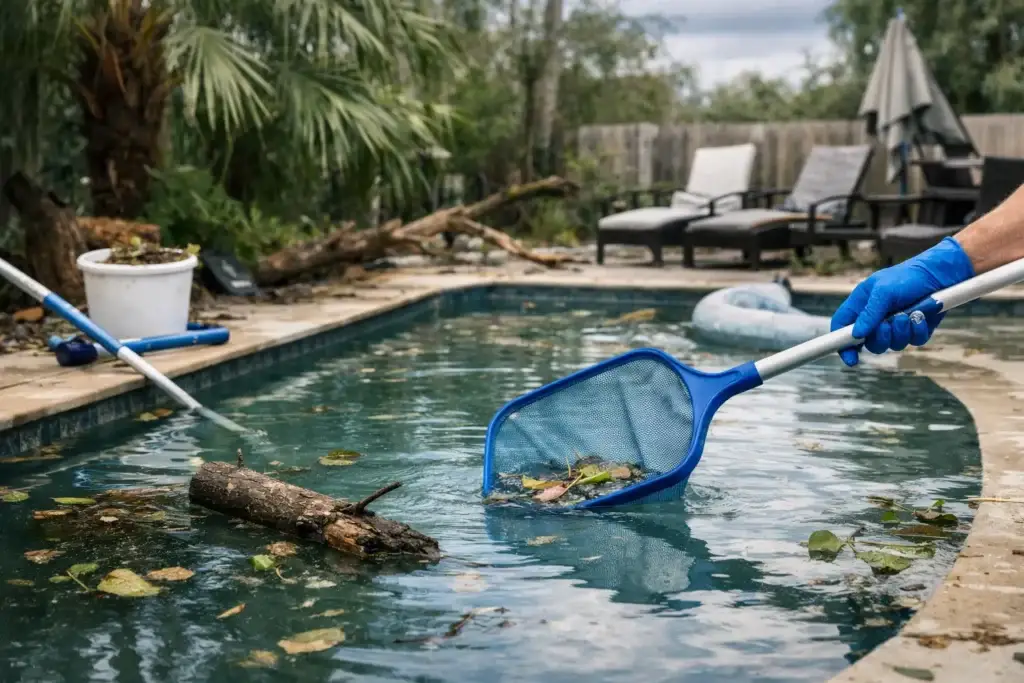
The morning after a Florida storm, the pool usually tells the whole story. Leaves are plastered across the surface, the waterline is stained, branches are floating in the deep end, and what looked fine two days ago suddenly feels like a cleanup project that could get away from you fast. Pool recovery after storm conditions is not just about making the water look better. It is about protecting the finish, the equipment, and the chemistry before a temporary mess turns into algae, staining, or expensive repairs.
In Southwest Florida, heavy rain, wind, and yard debris can change pool water in a hurry. A storm can dilute chemicals, overload the filter, and dump enough organic material into the water to feed algae for days. If the power goes out, circulation may stop right when the pool needs it most. That is why the first 24 to 48 hours matter.
Pool recovery after storm starts with safety
Before you touch the water, make sure the area around the pool is safe. Downed wires, damaged screens, loose branches, and slick decking come first. If the equipment pad was flooded or electrical components got wet, do not assume everything is ready to run. Pumps, timers, automation systems, and heaters should be checked before normal operation starts again.
This is also the time to look for structural concerns. If a tree limb hit the cage, coping, plumbing line, or pool surface, the cleanup plan may need to wait until damage is assessed. Cosmetic mess is one thing. Hidden equipment or shell damage is another.
Once the area is safe, remove large debris by hand or with a leaf rake. Get out branches, palm fronds, toys, and anything else that can block skimmers or sink to the bottom. The goal here is simple – stop the pool from sitting under a layer of decaying organic material.
What storms do to pool water
Rainwater on its own is not the whole problem. The bigger issue is what arrives with it. Storm runoff can introduce dirt, phosphates, lawn debris, mulch, dust, and contaminants that throw chemistry off balance. Even a pool that was perfectly clear before the storm can become cloudy or green within a short window if sanitizer levels crash.
Heavy rainfall often lowers chlorine concentration and changes pH, alkalinity, and stabilizer levels. Windblown debris adds organic waste that consumes chlorine even faster. If the pool was already borderline on chemistry, the storm tends to expose it.
This is why some pools recover quickly with routine cleanup, while others need a much more aggressive reset. It depends on how much debris entered the water, how long circulation was down, how warm the weather is, and what the pool chemistry looked like before the storm arrived.
The right order for cleanup
A lot of pool owners try to fix everything at once. That usually creates more work. The better approach is to clean in stages.
First, remove surface and bottom debris. Skim the top, rake the bottom, and empty skimmer and pump baskets. If baskets stay packed with leaves, water flow drops and the system has to work harder than it should.
Next, brush the walls, steps, tile line, and corners. Storm debris sticks to surfaces, and brushing helps loosen fine dirt before vacuuming. It also keeps algae from gaining a foothold in dead spots where circulation is weak.
Then vacuum or use proper debris removal for what settled on the floor. Fine sediment after a storm can be tricky. In some cases, vacuuming to waste makes more sense than sending all that material through the filter. It depends on how much debris is present and what type of filtration system the pool uses.
After physical cleanup, test the water. Not guess. Not estimate based on how it looks. Test it. Chlorine, pH, alkalinity, stabilizer, and in some cases phosphates and salt levels all matter after a storm event. If the water is cloudy, green, or brown, the treatment plan should be based on results, not hope.
When a pool needs more than basic cleanup
Not every storm cleanup is the same. Sometimes the water is still clear, and the job is mostly debris removal with minor chemical correction. Other times the pool crosses into restoration territory.
If the water has turned green, if you cannot see the bottom clearly, or if the filter is struggling to keep up, basic service may not be enough. A stronger chemical treatment, repeated brushing, filter cleaning, and close follow-up may be needed to bring the pool back safely. Waiting too long only gives algae and staining more time to settle in.
This is especially common in Southwest Florida when high heat follows a storm. Warm water speeds everything up. A pool can go from storm-tossed to fully green faster than many owners expect.
Don’t ignore the filter and circulation system
A storm recovery job is only as good as the pool’s ability to circulate and filter what is left behind. If the pump is running but the baskets are clogged, the filter is dirty, or the return flow is weak, the water will not clear the way it should.
Cartridge filters often need cleaning sooner after a storm because they collect fine debris quickly. Sand and DE filters may need backwashing, depending on pressure and debris load. If pressure rises well above normal, that is a sign the filter is doing its job but needs attention before performance drops.
This is one of the biggest mistakes after a storm – people clean the visible mess, add chemicals, and assume the system will handle the rest. But if the filter is overloaded, cloudy water can linger and chemical efficiency suffers.
Storm cleanup and chemistry go together
There is no shortcut around balanced water. After debris removal, the pool usually needs chlorine adjustment at a minimum. In some cases it needs shock treatment, pH correction, alkalinity balancing, and a follow-up test to confirm it is actually recovering.
The exact treatment depends on conditions. A lightly affected pool may only need minor correction and filtration time. A heavily impacted pool with visible algae may need a more aggressive approach and several days of monitoring. That is where experience matters. Too little treatment wastes time. Too much can create its own problems, especially with pH swings, surface stress, or unnecessary chemical cost.
Salt pools are not exempt either. Rain can dilute salt levels and storms can leave salt cells working harder against dirty water. If a salt system is not producing efficiently, sanitizer levels can fall behind quickly.
Why fast action saves money
Pool recovery after storm cleanup is always easier when it happens early. Debris left to sit breaks down. Metals and organics increase staining risk. Unbalanced water starts affecting plaster, tile, and equipment. What begins as cleanup can become restoration if the pool is ignored for several days in hot weather.
That matters for homeowners, but it matters even more for rental homes, community pools, and commercial properties. Guests and tenants notice pool condition immediately. A murky or debris-filled pool sends the wrong message, and a closed pool can disrupt bookings, routines, and property use.
For many owners, the real value of professional service is not just that someone removes leaves. It is that the pool gets brought back in the right order, with the right chemistry, and with enough attention to keep a short-term storm event from becoming a longer-term problem.
When to call for professional pool recovery after storm service
If the pool is heavily contaminated, the water is changing color, equipment was affected, or you simply do not want to spend your weekend testing, brushing, vacuuming, and second-guessing chemistry, it makes sense to bring in a professional. A detail-driven service team can tell the difference between a routine post-storm cleanup and a pool that is on its way to algae bloom or equipment trouble.
That is especially true for seasonal residents and property owners who are not on site full time. After a major weather event, delays make everything harder. Local service matters because conditions change fast here, and what works in another climate does not always fit a Florida pool under summer heat and storm runoff.
At Florida Detail, that local reality is the job. Clean water, balanced chemistry, debris removal, filter care, and restoration work all have to come together if the pool is going to look right and stay healthy.
A storm can leave a pool looking rough overnight, but it does not have to stay that way. The sooner the mess is removed, the water is tested, and the system is checked, the better the outcome usually is. Clear water comes back faster when the recovery is handled with some urgency and a lot of attention to detail.