
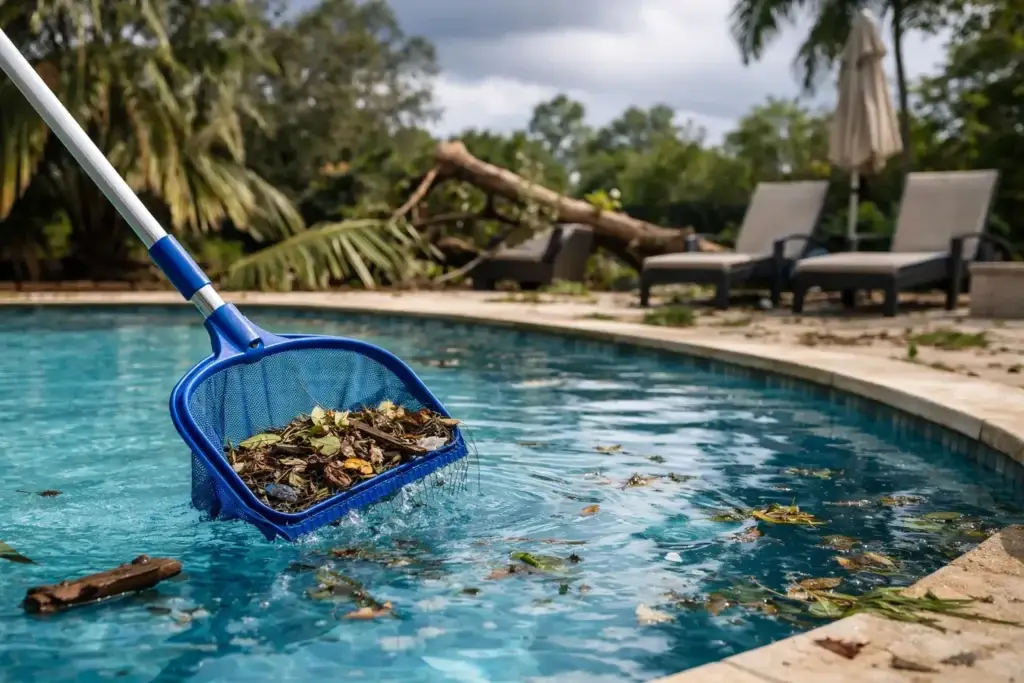
The morning after a Southwest Florida storm, your pool can go from clear and ready to leaf-filled, cloudy, and questionable in a hurry. Good pool cleanup after storm weather is not just about making the water look better again. It is about protecting the finish, the equipment, and the swimmers who will use it once the weather clears.
Storm runoff, heavy wind, and power outages can all change pool conditions fast. A few palm fronds on the surface may be the obvious part, but the bigger issue is usually what you cannot see right away – contaminated water, unbalanced chemistry, overloaded filters, and the early stages of algae. If cleanup gets delayed, a simple mess can turn into staining, green water, or equipment problems that cost more to fix.
Pool cleanup after storm starts with safety
Before you touch the water, take a look around the pool area. Storms can leave downed branches, loose screen pieces, damaged fencing, or electrical hazards near pumps and lights. If you see damaged wires, standing water around electrical equipment, or signs the pump system took a hit, stop there and handle the safety issue first.
It is also smart to check the deck and cage area before beginning cleanup. Sharp debris, broken glass, and washed-in dirt can make a rushed cleanup harder than it needs to be. If the pool water rose unusually high, look for signs that stormwater may have carried extra contaminants into the pool from the yard or nearby drainage.
That first inspection matters. A pool that only caught leaves needs a different response than one that took in muddy runoff or sat stagnant during a power outage.
What to do first after a storm hits your pool
Start by removing large debris by hand or with a leaf rake. Get out branches, palm fronds, seed pods, and anything else floating or sitting on the floor. The goal is to reduce the organic load before it starts breaking down in the water. The longer storm debris sits in a pool, the more it stains surfaces and feeds algae growth.
After that, empty the skimmer baskets and pump basket. These fill quickly after storms, especially in neighborhoods with mature trees or heavy landscaping. If baskets stay packed, circulation drops and the whole cleanup process slows down.
Once the obvious debris is out, bring the system back online if it is safe to do so. Run the pump and check for normal flow. Watch the pressure gauge and listen for anything unusual. If the equipment sounds strained or water flow is weak, the filter may be clogged or the system may have taken on debris somewhere in the line.
At this point, brushing matters more than many pool owners realize. Storm dust, fine dirt, and organic film often cling to walls and steps even when the water looks only mildly cloudy. Brushing loosens that material so the filter can catch it instead of letting it settle into stains or slick spots.
Why storm water changes pool chemistry so fast
Rain itself is only part of the problem. In Port Charlotte, North Port, Punta Gorda, and nearby areas, storms often push in debris, soil, pollen, fertilizer residue, and other contaminants from the surrounding property. That changes more than chlorine levels.
Heavy rain can dilute sanitizer and throw off pH, alkalinity, and salt levels. Wind-driven debris adds organics that consume chlorine faster. If runoff enters the pool, phosphates and other contaminants can create ideal conditions for algae. A pool can look mostly fine in the morning and still be chemically unstable by afternoon.
This is why storm cleanup should always include water testing, not just skimming and vacuuming. Appearance helps, but clear water is not always balanced water.
Test and correct the water before the pool gets worse
Once debris is removed and circulation is running, test the water. Chlorine, pH, total alkalinity, and stabilizer are the big starting points. If you have a salt pool, check salt levels too. In many post-storm situations, chlorine is lower than it should be and pH has drifted.
If the pool took on a heavy debris load or looks dull, cloudy, or greenish, it may need shock treatment. That depends on the condition of the water and how long the pool sat after the storm. More is not always better with chemicals. Overcorrecting can create its own problems, especially on plaster finishes or in pools already dealing with scale or metal issues.
This is where experience helps. Some pools need a straightforward rebalance and extended filtration. Others need stronger corrective treatment, especially after standing water, runoff intrusion, or multiple storm days in a row.
Don’t ignore the filter during pool cleanup after storm events
Your filter does the heavy lifting after bad weather. It catches the fine debris and suspended material that brushing and vacuuming stir up, but storms can overload it quickly. If the pressure rises or circulation slows, cleaning the filter may be necessary before the water clears.
Cartridge filters often need to be rinsed thoroughly after a storm cleanup. Sand and DE filters may need backwashing, depending on pressure and loading. Waiting too long can reduce flow and leave debris circulating instead of being removed.
It depends on the level of storm impact. A light summer shower with a bit of wind may not require much more than basket emptying and a quick check. A stronger storm with yard runoff and heavy leaf drop can turn filter maintenance into one of the most important parts of the job.
When a storm turns into a green pool problem
In Florida, warm water does algae no favors. If the pump stayed off during a power outage, sanitizer dropped too low, or debris sat in the pool for too long, green water can develop fast. That is especially common in the hotter months when storms stack up and pools do not fully recover between weather events.
A true green pool cleanup is not the same as routine storm pickup. It often requires aggressive debris removal, repeated chemical treatment, brushing, vacuuming, and close filter attention over several days. The mistake many owners make is assuming one round of shock will fix everything. Sometimes it does. Often it does not.
The more algae gets established, the more labor and chemistry it takes to restore the pool fully. Acting early usually saves money and gets the water back faster.
What property owners often miss after a storm
A lot of storm-related pool damage is easy to overlook at first. Water level problems can affect skimming. Dirty filter media can strain equipment. Fine sediment can settle into corners and on tanning ledges. Salt cells and baskets can take a beating after repeated debris loads.
Commercial pools and rental properties have an added concern – turnaround time. If guests or residents expect a clean, safe pool, delays in cleanup can quickly become a service issue. What looks like a minor storm mess can become an operational headache if the water stays cloudy or chemistry is off.
For seasonal residents, the risk is different. If you are away when a storm rolls through, debris and low sanitizer can sit longer than you would like. By the time someone checks the pool, routine cleanup may have become restoration work.
When to call for professional help
Some post-storm pools are manageable with prompt attention. Others need professional service right away. If the water is cloudy, green, muddy, chemically off, or not circulating properly, there is a good chance the cleanup will take more than basic skimming.
Professional service is especially worth it when the pool has heavy debris, visible algae, equipment concerns, or repeated storm exposure over a short period. A thorough cleanup should address the whole system – debris, brushing, vacuuming, filter performance, water testing, and chemical correction – not just the surface mess.
That is why many local homeowners and property managers prefer ongoing service after storm season ramps up. Consistent maintenance keeps the pool from falling behind, and when weather hits hard, recovery is faster because the water and equipment were already being watched closely. Florida Detail handles that work with the kind of detail-driven care Southwest Florida pools need.
A storm can leave your pool looking rough overnight, but the right response keeps a temporary mess from becoming a bigger repair bill. The sooner the debris comes out, the water gets tested, and the system gets checked, the better your pool holds up for the rest of the season.