
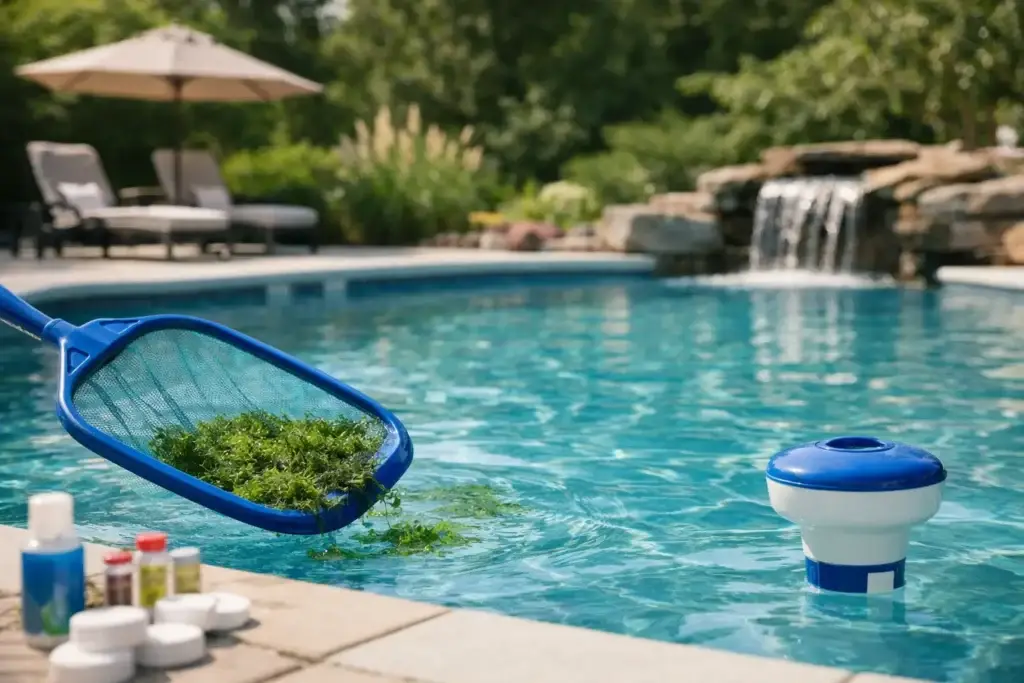
One hot week, one heavy rain, and one missed cleaning visit can turn a clear pool into a green headache fast. If you want to prevent algae in summer, you have to stay ahead of it, especially in Southwest Florida where heat, humidity, storms, and heavy pool use all work against you.
Algae does not usually show up because of one big mistake. More often, it takes hold when a few smaller issues stack up at the same time. Chlorine slips a little low, debris sits too long, circulation drops off, and the water starts warming up day after day. By the time you see green on the walls or cloudiness in the water, the conditions have already been there for a while.
That is why summer pool care has to be preventive, not reactive. It is easier, cheaper, and far less frustrating to keep algae from starting than it is to clear up a bloom once it gets established.
Why algae gets worse in summer
Summer creates the exact conditions algae likes most. Warm water speeds up growth. Afternoon rain can dilute sanitizer levels. Wind blows in leaves, pollen, and organic debris that feed contamination. More swimmers mean more sunscreen, body oils, and overall demand on your chemicals.
In Southwest Florida, pools do not get much of an offseason. That year-round exposure means your water chemistry and equipment have to stay consistent even when schedules get busy or seasonal residents are away. A pool can look fine one week and start slipping the next if no one is watching the details.
Sunlight is another major factor. Strong UV exposure burns off chlorine faster, especially if stabilizer levels are off. If sanitizer cannot keep up, algae gets an opening. That is why summer care is not just about adding more chlorine. It is about keeping the whole system working together.
To prevent algae in summer, start with water balance
Balanced water is the foundation. If your chlorine is low, your pH is drifting high, or your cyanuric acid is out of range, algae prevention gets harder no matter how often you skim the surface.
For most residential pools, chlorine needs to stay consistently in the proper range, not spike one day and disappear the next. pH matters because high pH can make chlorine less effective. Alkalinity and calcium also play a role in overall water stability, while stabilizer helps protect chlorine from the Florida sun.
This is where many pool owners get tripped up. They test after the pool looks off instead of testing to keep it from going off in the first place. Summer calls for regular water testing and small corrections before they turn into larger problems. Waiting until the water is dull, hazy, or green usually means the chemistry has already been out of line for days.
There is also an it-depends factor here. A screened pool, a heavily used pool, a salt pool, and a vacation rental pool may all need slightly different attention. The chemistry targets may be similar, but bather load, debris exposure, and equipment run time can change how quickly the water uses up sanitizer.
Circulation matters more than most pool owners think
Still water is trouble. When circulation is weak, sanitizer does not move evenly through the pool, and dead spots can form in corners, steps, tanning ledges, and behind ladders. Those are the areas where algae often starts first.
Your pump, filter, returns, and timer all matter here. In the summer, many pools need longer run times to keep water moving and filtered properly. If the system is undersized, dirty, or not running long enough, chemistry alone may not be enough to keep the pool clear.
A dirty filter also works against you. Whether you have a cartridge, sand, or DE filter, it has to be cleaned on schedule. If it is clogged, water flow drops. When flow drops, circulation suffers, and debris and contaminants stay in the pool longer. That gives algae a better chance to gain traction.
Pool owners sometimes focus only on what they can see on the surface. The problem is that algae prevention is just as much about what is happening through the equipment pad. A clean-looking pool can still be one chemistry swing or one circulation issue away from trouble.
Brushing and vacuuming are part of algae prevention
To prevent algae in summer, you cannot rely on chemicals alone. Algae likes to cling to pool surfaces before it becomes obvious in the water. Brushing walls, steps, corners, tile lines, and other low-flow areas helps break up early buildup before it turns into visible growth.
Vacuuming matters for the same reason. Debris on the floor does more than make the pool look neglected. It adds organic material to the water and increases sanitizer demand. Leaves, dirt, pollen, and storm runoff all make your chlorine work harder.
This is one reason weekly service is so valuable in Florida. Pools collect a surprising amount of debris even when they are not being used much. During summer storm season, that buildup can happen fast. If no one is brushing, vacuuming, and checking the trouble spots on a regular basis, algae has more opportunities to get started.
Rain, heat, and heavy use can change the plan
Summer pool care is not static. A week of intense rain is different from a week of dry heat. A pool used every day by kids and guests needs more attention than a pool with occasional use. A rental property with back-to-back turnovers has its own demands.
That means prevention sometimes requires adjustments. After heavy rain, the water may need to be tested and rebalanced. After a pool party, sanitizer demand may jump. During stretches of extreme heat, chlorine may burn off faster than expected.
The trade-off is simple. If you do not adjust for conditions, you may save time for a few days and pay for it later with cloudy water, green spots, stain risk, and cleanup costs. Preventive care takes consistency, but restoration always takes more effort.
Warning signs you should not ignore
Algae does not always begin as bright green water. Often, the first signs are subtle. The water may lose some sparkle. The steps may feel a little slick. You may notice a faint green, yellow, or dark patch in shaded areas or around fittings. Sometimes chlorine seems to disappear faster than usual even though usage has not changed much.
Those are signs to act early. Brushing, testing, rebalancing, checking circulation, and cleaning the filter can stop a small issue from becoming a full bloom. If you wait until the whole pool changes color, the solution usually involves stronger chemical treatment, more labor, and more downtime.
Black algae and mustard algae can be especially stubborn. They are not as common as standard green algae, but when they show up, they are tougher to remove and more likely to return if the treatment is incomplete. That is another reason prevention is the better route.
The real value of professional summer pool service
A lot of homeowners can handle some pool care some of the time. The challenge is doing it consistently during the hottest, wettest, busiest part of the year. Summer is when small lapses show up fast.
Professional service helps because it builds routine into the system. Water gets tested regularly. Chemicals get adjusted based on actual conditions. Walls and steps get brushed. Debris gets removed. Filters and equipment get checked before minor issues turn into algae problems or equipment damage.
For seasonal residents, busy families, and property managers, that consistency matters. The goal is not just to fix a pool when it turns green. The goal is to keep it clear, safe, and ready to use without the owner having to chase chemistry every week.
That is where a detail-driven company makes a difference. Florida Detail is built around exactly that kind of dependable upkeep, the kind that protects both the look of the water and the health of the pool system behind it.
A summer routine that actually works
The best way to prevent algae in summer is not with one magic product. It is with a steady routine that covers chemistry, circulation, cleaning, and inspection all at once. When those pieces stay consistent, most algae problems never get the chance to start.
If your pool gets full sun, frequent use, or regular storm debris, the routine may need to be tighter. If it is screened and lightly used, you may have a little more margin. But every Florida pool needs regular attention in summer. Heat does not take a week off, and algae will gladly use any opening it gets.
A clear pool is not just about appearance. It means the water is being managed correctly, the equipment is doing its job, and the pool is staying ready for the people who use it. That peace of mind is what good preventive care delivers, and in a Florida summer, it is worth staying ahead of.