
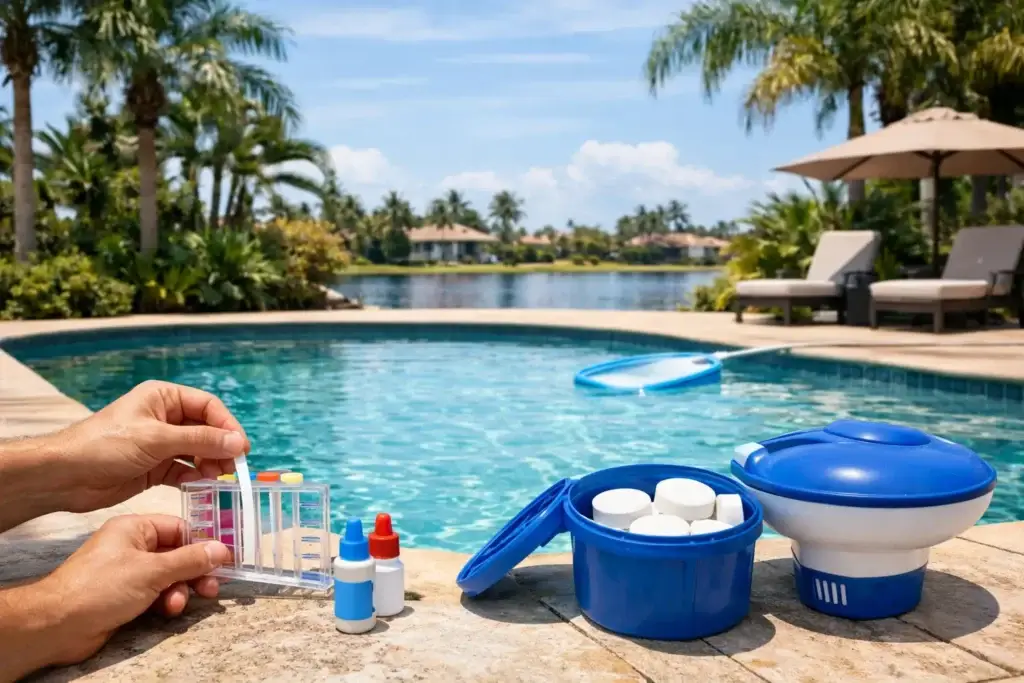
A pool can look clear in the morning and turn cloudy, dull, or green faster than most owners expect. Southwest Florida heat, heavy rain, constant sun, and frequent swimmer use put real pressure on pool water. Knowing how to maintain pool chemistry means staying ahead of those changes instead of waiting for an algae bloom, a strong chlorine smell, or rough-feeling water to tell you something is wrong.
How to Maintain Pool Chemistry Without Guesswork
Pool chemistry is not about adding chemicals until the water looks better. It is about testing the water, understanding what the results mean, and making measured adjustments in the right order. When one level is off, it can affect the others. Low pH can make water corrosive, while high pH can reduce chlorine performance and leave behind scale. Low sanitizer can lead to algae. Too much stabilizer can make chlorine less effective, even when a test seems to show plenty of it.
For most residential pools, a consistent weekly routine is the foundation. During stretches of intense heat, after storms, or when the pool has a lot of guests, testing more often is smart. A pool that receives steady professional care usually stays easier and less expensive to manage than one that is corrected only after a visible problem appears.
Start With Reliable Water Testing
A quality liquid test kit or a dependable digital test method gives a much clearer picture than test strips alone. Strips can be useful for a quick check, but they are more likely to be affected by humidity, age, and user error. For detailed balancing, test the water at least weekly and take the sample from elbow depth, away from return jets and skimmers.
At a minimum, check free chlorine, pH, total alkalinity, calcium hardness, cyanuric acid, and salt level if you have a saltwater pool. Also keep an eye on combined chlorine. A higher combined chlorine reading can indicate that the pool needs more attention, usually from heavy use, organic debris, or an emerging algae issue.
Write down results or keep them in a service log. That habit helps you spot patterns. If pH rises every week, for example, the solution may not be simply adding acid more often. The cause could be aeration from a water feature, a spillover spa, high alkalinity, or the normal behavior of a saltwater chlorine generator.
Keep Sanitizer at a Consistent Level
Chlorine is the primary sanitizer in most Florida pools. It controls bacteria, breaks down contaminants, and prevents algae from gaining a foothold. The right chlorine level depends partly on the pool’s cyanuric acid level, but many pools operate well with free chlorine maintained in a steady, appropriate range rather than swinging from very high to nearly zero.
The key is consistency. Adding a large amount of chlorine only after the water gets cloudy is a recovery plan, not a maintenance plan. In warm weather, chlorine is used up faster by sunlight, rain, pollen, leaves, sunscreen, and swimmers. Check it more frequently during summer and after a busy weekend.
Saltwater pools still rely on chlorine. The salt cell produces it gradually, which can make daily sanitation easier, but the cell must be clean, properly sized, and set to match the pool’s needs. A salt system cannot compensate for poor circulation, an overloaded filter, or a stabilizer level that has crept too high.
If you notice a harsh “chlorine” odor, do not assume the pool has too much chlorine. That smell often comes from chloramines, which form when chlorine has reacted with contaminants. Proper testing identifies whether the water needs additional sanitation, circulation, or a more involved treatment.
Balance pH and Alkalinity Together
pH measures how acidic or basic the water is. For most pools, the target is generally around 7.2 to 7.8. Water below that range may irritate eyes, damage surfaces, and corrode equipment. Water above it can make chlorine less effective, cloud the water, and encourage scale on tile, heaters, and salt cells.
Total alkalinity acts as a buffer for pH. When alkalinity is too low, pH can bounce around from one test to the next. When it is too high, pH tends to climb and becomes difficult to bring down. The best target can vary by pool type, sanitizer system, surface, and water features, so there is no one-number answer for every backyard.
Make adjustments carefully. Add one product at a time, allow the water to circulate, and retest before making another major correction. Pouring in several products at once can create a misleading reading or cause an unnecessary chemical swing. Never mix pool chemicals together, and always follow the product label for handling and dosing.
Watch Calcium, Stabilizer, and Salt Levels
Calcium hardness matters because pool water naturally seeks balance. When calcium is too low, water may pull minerals from plaster, grout, and other surfaces. When it is too high, scale can build up on tile lines, inside heaters, and on salt cells. Southwest Florida water conditions can vary by neighborhood and water source, which is one reason regular testing matters.
Cyanuric acid, often called stabilizer, protects chlorine from being burned off by the sun. That is especially valuable in Florida, where direct sun can consume chlorine quickly. But more is not better. Stabilizer does not evaporate, and it can build up over time when certain chlorine products are used repeatedly. Once it gets too high, the practical solution may involve draining and replacing part of the water under the right conditions.
For saltwater pools, test salt separately from chlorine. Low salt can stop or limit chlorine production, while excess salt can be hard on some equipment and surfaces. Salt cells should also be inspected for scale buildup. Cleaning a cell only when needed helps protect it from unnecessary wear.
Circulation and Cleaning Are Part of Chemistry
Water chemistry does not work alone. A perfectly measured chlorine dose cannot protect a pool if the water is not circulating through the filter. Run the pump long enough each day to turn over the pool water effectively, with extra time during hotter weather, heavy use, or algae treatment. The exact schedule depends on pump size, plumbing, pool volume, and whether you use a variable-speed pump.
Brush walls, steps, benches, tile lines, and corners regularly. Algae often begins in low-flow areas where sanitizer has less reach. Vacuuming debris before it breaks down in the water also reduces chlorine demand. Leaves, pollen, grass clippings, and organic debris are not just a visual problem. They feed algae and make the water harder to balance.
Keep the skimmer and pump baskets clear, and clean the filter according to its type and pressure readings. A dirty filter can reduce circulation and leave the pool looking hazy even when test results appear close to normal. On the other hand, cleaning some filters too often can reduce their ability to trap fine particles, so follow the equipment manufacturer’s guidance instead of guessing.
Respond Quickly After Rain, Heat, and Heavy Use
Florida rain can dilute chemicals, add airborne debris, and change pH or alkalinity. After a heavy storm, empty baskets, check water level, test sanitizer and pH, and inspect the pool for early signs of cloudiness. If the water is already losing clarity, act before algae has time to spread across the walls.
A pool party creates its own chemistry event. Sunscreen, body oils, lotions, food, and bather waste all increase the sanitizer demand. Test the water afterward and give the pool enough circulation time to recover. The same is true after a long stretch of high temperatures, when warm water makes algae more likely and chlorine disappears more quickly.
Green water, staining, foaming, or repeated chemical swings are signs to look beyond a quick dose of chlorine. The issue could involve poor filtration, a failing salt cell, excessive stabilizer, phosphates, a circulation problem, or an imbalance that has been building for weeks. Correct diagnosis saves chemicals and prevents damage to the pool finish and equipment.
For homeowners and property managers who would rather enjoy the pool than manage test results, Florida Detail Pools provides consistent cleaning, water testing, chemical balancing, and equipment-focused care. A dependable service schedule keeps small changes from becoming expensive restoration work.
Clear water is not a lucky break. It is the result of regular testing, clean equipment, steady circulation, and someone paying attention before the water gives you a reason to worry.