
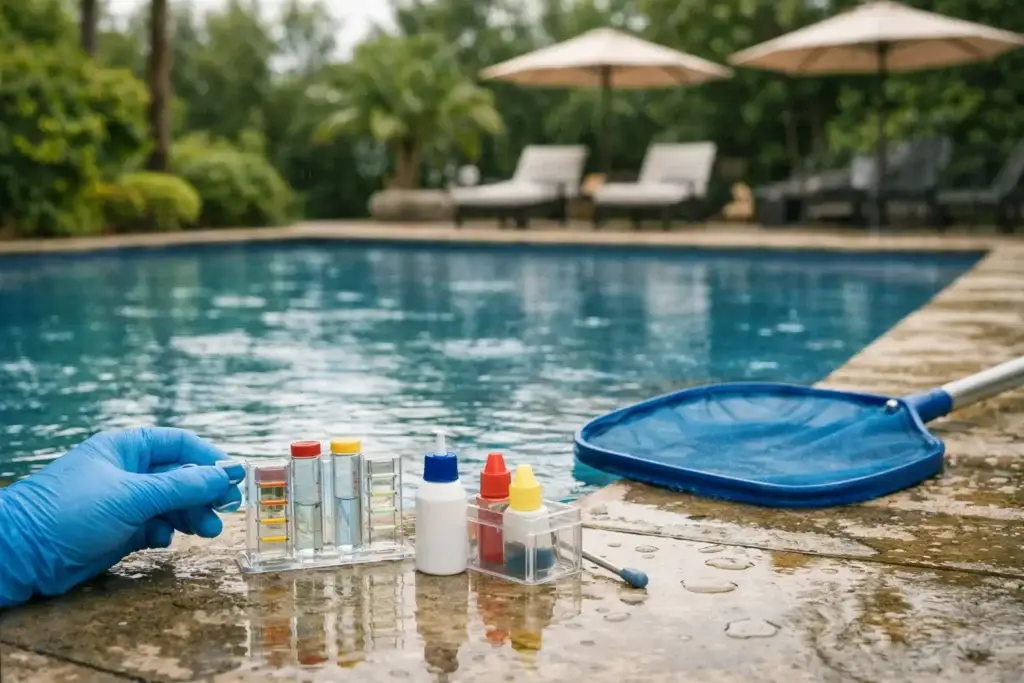
A summer storm can turn a clean pool into a chemistry problem overnight. If you need to balance pool after rain, the goal is not just to make the water look better. It is to restore sanitizer strength, protect surfaces and equipment, and stop algae from getting a head start in Southwest Florida heat.
Rain does more than add water. It brings in debris, pollen, dirt, and other contaminants, and heavy downpours can dilute the chemicals that were doing their job just fine the day before. If your pool is screened in, the impact may be lighter. If it is open and surrounded by trees or landscaping, expect more cleanup and more testing.
What rain actually changes in your pool
The first thing most pool owners notice is appearance. The water may look cloudy, the surface may be covered in leaves, and the basket may fill up fast. What matters underneath is the chemical shift. Rainwater tends to lower total dissolved solids, but it also dilutes chlorine, can push pH around, and adds organic material that chlorine has to burn through.
In Southwest Florida, the bigger issue is what happens after the storm passes. Warm temperatures and strong sun create perfect conditions for low-chlorine water to turn green fast. A pool that is only slightly off on Monday can look very different by Wednesday if nobody catches it early.
That is why balancing after rain is partly about chemistry and partly about timing. If the storm was brief and your system is in good shape, the fix may be simple. If the pool took on a lot of debris or had borderline chemistry before the weather hit, you may need a more involved cleanup.
How to balance pool after rain without making it worse
Start with circulation. Run the pump and let the water move before you start adding anything. If the pool level rose above normal, bring it back down to the proper operating level first. Water that is too high can reduce skimmer performance and make cleanup less effective.
Next, remove debris by hand. Scoop out leaves, palm fronds, seed pods, and anything else floating or sitting on the bottom. Organic debris consumes chlorine as it breaks down, so leaving it in the water works against every chemical adjustment you make.
Then clean the skimmer and pump baskets. After a storm, those baskets can clog quickly, which slows circulation right when you need it most. If the filter pressure is elevated, backwash or clean the filter as needed. A dirty filter will not help you clear cloudy water.
Only after that should you test the water. This order matters. If you test before circulation and cleanup, the numbers may not reflect the full picture, and you may end up chasing the wrong correction.
What to test first after a storm
Free chlorine comes first. In most cases, rain does not destroy chlorine by itself, but dilution and added contaminants reduce how effective your sanitizer is. If free chlorine is low, that is usually the most urgent correction because low sanitizer opens the door to algae and bacteria.
pH is next, because chlorine works best within the right range. Heavy rain can nudge pH downward, but the exact effect depends on your pool chemistry before the storm, recent chemical additions, and how much runoff entered the water. One storm does not affect every pool the same way.
After that, check total alkalinity and stabilizer. Alkalinity helps keep pH from swinging too much, and stabilizer protects chlorine from the sun. In Florida, low stabilizer can become obvious very quickly after a storm because the chlorine you add disappears faster under strong UV exposure.
If you have a salt pool, check salt level too. A major rain event can dilute salt enough to affect chlorine production. It may not happen after every shower, but after extended rain or overflow, it is worth confirming.
The right order for chemical adjustments
Once you have test results, make corrections in a sensible order. Raise chlorine first if it is low, especially if the water looks dull or cloudy. In some cases, a normal dose is enough. In others, the pool may need a stronger oxidizing treatment if debris load is high or algae is starting to form.
Then address pH and alkalinity. If both are off, alkalinity often needs attention before pH settles properly. Small adjustments are usually better than overcorrecting. Dumping in too much product at once can create a second problem and leave you with water that swings in the opposite direction.
Stabilizer should be adjusted more carefully. It is useful, but too much creates its own chlorine management issues. If stabilizer is low after heavy rainfall, bring it back into range gradually instead of treating it like an emergency unless your readings are clearly far below target.
For salt pools, only add salt after confirming the level and making sure the excess rainwater has been drained to normal operating height. Otherwise, you may add more than needed.
When you should shock the pool after rain
Not every storm means you need to shock the pool. A quick afternoon rain with no debris load and normal chemistry may only require testing and a chlorine adjustment. Shocking makes more sense when free chlorine is very low, the water turns cloudy, there is visible organic contamination, or algae is beginning to show.
This is where many pool owners waste time and money. They shock first, skip testing, and hope the water clears on its own. Sometimes it does. Sometimes the pool stays cloudy because the filter is dirty, pH is out of range, or the chlorine demand is still too high from debris left behind.
A better approach is to match the treatment to the condition of the water. If the pool is only slightly off, a measured correction is enough. If the storm pushed the pool into problem territory, stronger treatment and follow-up testing are worth it.
Common mistakes when trying to balance pool after rain
The biggest mistake is waiting too long. In our area, warm water does not give you much grace period. Low chlorine and storm debris can turn into algae faster than many homeowners expect.
Another common mistake is relying on appearance alone. Clear water does not always mean balanced water. A pool can look good and still have weak sanitizer, unstable pH, or early chemistry drift that becomes a bigger issue a few days later.
There is also the temptation to add several chemicals back-to-back without retesting. That often leads to overcorrection. Pool chemistry is not guesswork, especially after heavy weather. Test, adjust, circulate, and retest.
Finally, do not overlook equipment. If your pump is struggling, baskets are packed, or your filter is overdue for cleaning, balancing efforts will be slower and less effective.
Rain, runoff, and why some pools have a tougher recovery
Not all storm impact comes from the sky. Runoff is often the bigger problem. If rainwater from the deck, planter beds, or lawn washes into the pool, it can carry fertilizer, soil, mulch, and other contaminants that throw chemistry off and feed algae.
That is one reason some pools bounce back quickly while others need much more work. A well-maintained pool with good drainage and strong circulation can often recover with routine adjustments. A pool with poor drainage, older equipment, or existing chemical issues may need a full cleanup, filter service, and more aggressive balancing.
Commercial and rental properties have an added layer of pressure because guest-ready water is not optional. One storm can create a chain reaction of cloudy water, clogged baskets, and sanitation concerns if nobody is checking conditions promptly.
When it makes sense to call for help
If the water is green, the chemistry will not hold, or the pool keeps getting cloudy after treatment, it is usually more than a one-step fix. The same goes for pools with recurring algae, neglected filters, or salt systems that are not producing properly after rain events.
This is where a consistent maintenance plan pays off. A dependable service team does not just add chemicals. They test accurately, clean thoroughly, watch equipment performance, and catch the small issues that lead to expensive ones later. For homeowners in Port Charlotte, North Port, Punta Gorda, and nearby communities, that local consistency matters because our pools deal with rain, heat, debris, and year-round use.
Florida Detail sees this all the time – a pool that looked manageable after a storm but needed deeper correction to get truly clean, safe, and stable again. That is the difference between a quick patch and real maintenance.
The best move after rain is simple: act early, test before guessing, and do not let a small storm problem sit long enough to become a green pool problem.