
A pool can look fine on Monday and start turning on you by Friday in Southwest Florida. Heat, rain, wind, heavy use, and year-round swimming put a lot of pressure on your water and equipment. So if you’re asking how often should a pool be serviced, the short answer is this: most pools in our area need professional attention every week.
That weekly schedule is what keeps small problems from turning into green water, stained surfaces, clogged filters, and expensive equipment issues. But the real answer depends on your pool, how often it gets used, what surrounds it, and whether you want hands-on help or complete pool care handled for you.
How often should a pool be serviced in Florida?
For most residential pools in Port Charlotte, North Port, Punta Gorda, and nearby areas, weekly service is the standard. In Florida, pools do not get much of an off-season. Even when swimming slows down, the water chemistry, circulation, and sanitation still need attention.
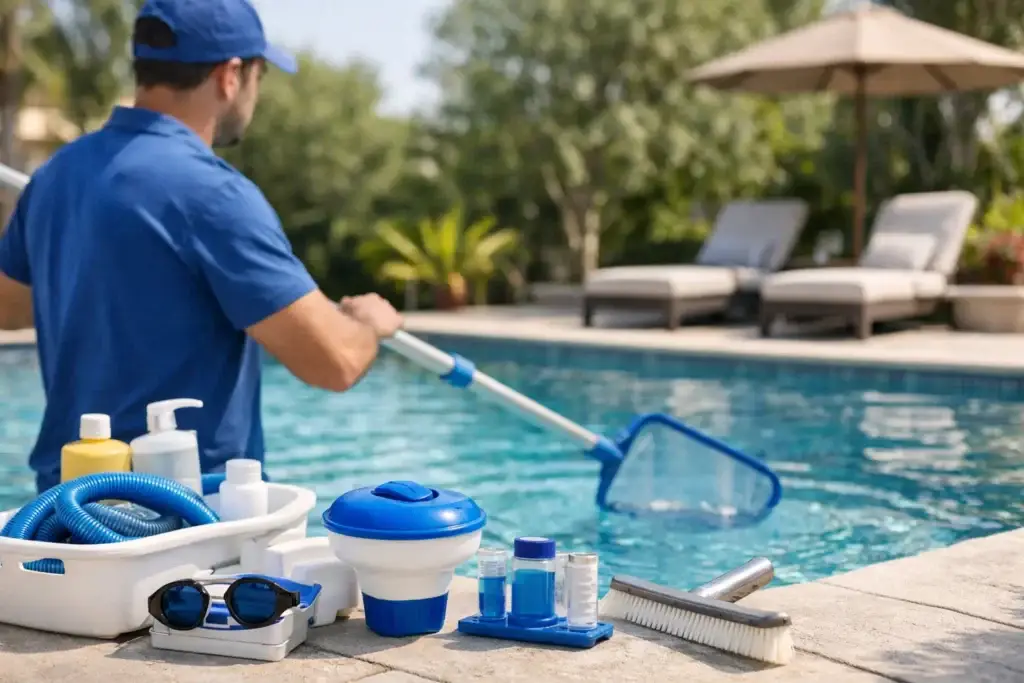
A proper weekly visit usually includes skimming debris, brushing walls and tile, checking baskets, vacuuming as needed, testing the water, and adjusting chemicals. It also gives a trained eye the chance to catch early signs of algae, poor circulation, filter problems, or equipment wear before those issues become much more expensive.
Biweekly service can work in a narrow set of situations, but it is usually better for light-support plans than full maintenance. If the pool is screened in, lightly used, and the owner is staying on top of water level, baskets, and visible debris between visits, a reduced schedule may be possible. Even then, Florida weather can change that fast.
Monthly service is rarely enough for a pool that is in regular use or fully exposed to the elements. By the time a month passes, chemistry can drift badly, debris can build up, algae can begin forming, and circulation problems may already be affecting water quality.
Why weekly pool service is usually the right call
Pool care is not just about whether the water looks blue from the patio. A pool can appear clean while the chemistry is drifting out of range or the sanitizer is no longer doing its job. That is where regular service matters.
Weekly service keeps your pool safer, cleaner, and easier to manage over time. Chemical balance works best when it is corrected in small, steady adjustments rather than big swings. Debris is easier to remove before it settles, stains, or breaks down in the water. Filters and baskets perform better when they are not overloaded. Equipment also tends to last longer when the whole system is not fighting neglected water conditions.
For homeowners, weekly care protects both convenience and investment. For rental properties, HOAs, and commercial pools, it also protects appearance and guest experience. No one wants to explain cloudy water to a guest who expected a clean, ready-to-use pool.
What can change the service frequency?
Not every pool needs the exact same level of attention, but a few factors consistently affect how often service should happen.
If your pool sits under trees, near palms, or in an area that catches a lot of wind, debris loads go up fast. Leaves, seed pods, pollen, and organic matter put extra strain on the sanitizer and filtration system. Pools like this often need weekly service without question, and sometimes extra cleanups after storms.
Usage matters too. A pool used by a couple a few times a week is different from one used daily by a large family, guests, or vacation renters. More swimmers mean more sunscreen, body oils, contaminants, and chemistry demand.
Pool type also plays a role. Saltwater pools still need routine service. They are not maintenance-free, and salt cells, chemistry levels, and overall water balance still need regular checks. Spas and hot tubs usually need even closer monitoring because the smaller water volume changes faster.
Then there is the Florida factor. Afternoon rain, intense sun, heat, and long swim seasons create conditions where chemistry can change quickly. That is one reason pool owners in Southwest Florida usually benefit from consistent professional service instead of a wait-and-see schedule.
Signs your pool needs more frequent service
If you are trying to decide whether your current schedule is enough, the pool usually gives you a few warnings.
Cloudy water is a common one. So is algae starting on steps, walls, or in corners where circulation is weaker. If you are seeing debris return quickly after cleaning, fighting recurring chemical issues, or noticing strong chlorine smell, scaling, or staining, your pool may need more frequent attention or a more complete service plan.
Another sign is when equipment starts struggling. Dirty filters, full baskets, weak suction, and poor water movement all make it harder to keep the pool clear. If service visits are too far apart, the system spends more time catching up than maintaining stable conditions.
For property owners who are out of town part of the year, service gaps can be especially costly. A pool can go from manageable to major cleanup territory surprisingly fast, especially in summer.
Service frequency by pool type
Residential pools
Most backyard pools do best with weekly service. That applies whether the goal is complete hands-off care or dependable support that keeps water balanced and surfaces clean. If you want your pool swim-ready without spending your own time testing, brushing, vacuuming, and tracking chemistry, weekly is the safest and most practical schedule.
Vacation rental and Airbnb pools
These pools often need strict weekly service at minimum, and sometimes more frequent checks depending on guest turnover and usage. Presentation matters, but so does consistency. Rental pools take on heavier bather load and can move out of balance faster than owner-occupied pools.
Commercial and community pools
Commercial pools usually require more frequent service and tighter recordkeeping because of heavier use and health standards. The exact schedule depends on the property type, pool size, and local requirements, but they generally need closer monitoring than a standard residential pool.
Spas and hot tubs
Spas and hot tubs need regular service because the water volume is smaller and heats up faster, which changes chemistry more quickly. Even when the spa looks clean, balance can shift fast enough to create water quality problems between infrequent visits.
What a professional pool service schedule should include
A good service schedule is not just about showing up often. It is about doing the right work consistently.
That means testing and balancing the water, checking chlorine or sanitizer levels, brushing surfaces, removing debris, emptying baskets, and vacuuming or netting as needed. It should also include monitoring filter performance, circulation, and visible equipment condition.
Depending on the plan, service may also include filter cleaning on a scheduled basis, salt cell inspection, spa care, green pool treatment, and seasonal or weather-related adjustments. This is where detail matters. Missing one small issue for several weeks can create bigger cleanup costs later.
That is why many pool owners prefer structured maintenance plans. Some want chemicals-only support. Others want full service where everything is handled. The right choice depends on how involved you want to be, but the schedule still needs to reflect Florida conditions.
Can you service a pool less often if you do some of it yourself?
Yes, but only if you are actually staying consistent. Some pool owners use a lighter professional plan and handle skimming, basket emptying, and basic monitoring between visits. That can work for certain pools, especially screened enclosures or lightly used pools.
The trade-off is that you become part of the maintenance system. If travel, weather, or busy weeks get in the way, the pool can slip quickly. What starts as a money-saving plan can turn into algae treatment, stain removal, or equipment repair.
If your goal is dependable results without the burden of managing chemistry and cleanup yourself, weekly professional service is usually the better value.
The real cost of waiting too long
Pool service is one of those things that feels easy to postpone when the water still looks decent. The problem is that pool issues build quietly. Chemistry drifts, phosphates and organics feed algae, filters load up, and surfaces start collecting scale or discoloration.
Once a pool turns green or falls badly out of balance, you are no longer talking about routine maintenance. You are talking about restoration, extra chemicals, more labor, and lost use of the pool. In many cases, regular weekly care costs less over time than catching up from neglect.
For Southwest Florida pool owners, the most reliable answer to how often should a pool be serviced is weekly. It keeps the water clear, the chemistry steady, and the equipment working the way it should. And if you want your pool to stay clean without becoming another item on your weekly to-do list, consistent service is what keeps everything simple.