
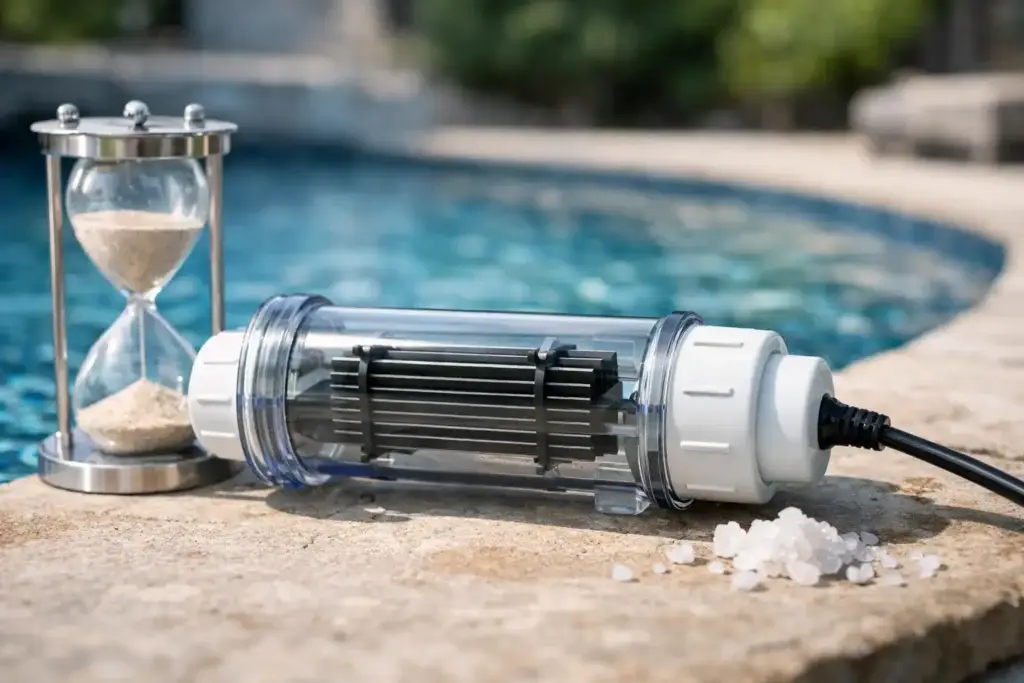
If your pool has a salt system, the salt cell is one of those parts you do not think much about until chlorine levels drop and the water starts looking off. Then the question gets real fast: how long does a salt cell last, and are you looking at a quick cleaning or a full replacement?
For most residential pools, a salt cell lasts about 3 to 7 years. That is the range most pool owners can expect, but the real answer depends on how often the pool runs, how well the water stays balanced, and whether the cell gets cleaned properly over time. In Southwest Florida, where pools run much of the year and heat puts extra demand on chlorine production, cells often work harder than they would in cooler climates.
That does not mean every salt cell burns out early. It does mean lifespan is tied closely to maintenance and local conditions. A well-cared-for cell can give you years of reliable performance. A neglected one can start struggling long before it should.
How long does a salt cell last in a Florida pool?
A good working average is 3 to 5 years for heavily used pools and up to 7 years when the system is sized correctly and the water is kept in line. Pool owners sometimes hear a fixed number and treat it like a guarantee, but salt cells do not wear out on the calendar alone. They wear out based on use.
Inside the cell are metal plates that generate chlorine as water passes through. Every hour the system runs, those plates are doing work. Over time, that coating breaks down. Once enough of it is gone, the cell cannot produce chlorine efficiently, even if the rest of the system is running.
In Port Charlotte, North Port, Punta Gorda, and nearby areas, year-round pool season changes the math. Your equipment does not get much of an offseason here. Long pump run times, high water temperatures, heavy rain, sunscreen load, and afternoon debris can all increase chlorine demand. More demand means more cell operation, and more operation means faster wear.
What affects salt cell lifespan?
The biggest factor is runtime. A pool that needs the system running long hours every day will put more wear on the cell than one with shorter cycles. If the pool is undersized for the cell, that problem gets worse. A salt cell that is too small has to stay at a higher output more often, and that shortens its useful life.
Water chemistry is the next major issue. Salt systems work best when pH, calcium, stabilizer, and salt levels stay within range. When chemistry drifts, scale can form on the cell plates. That buildup blocks performance and forces the cell to work harder. In bad cases, the cell gets cleaned more aggressively than it should, which can also shorten its life.
Cleaning matters, but so does how you clean. A light inspection and proper cleaning when needed can help the cell perform well. Overcleaning with acid, or using acid too strong, slowly strips away the surface coating that makes chlorine production possible. In other words, a dirty cell is a problem, but an overcleaned cell is not a healthy one either.
There is also the simple reality of environment. Florida pools deal with heat, storms, organic debris, and frequent use. Vacation homes and rental properties can be especially tough on equipment because swimmer load changes fast, and chemistry can swing if service is not consistent.
Signs your salt cell is nearing the end
Most salt cells do not fail all at once. They usually get weaker first. You may notice chlorine levels falling even though the salt reading looks normal and the system says it is generating. The pool might start needing supplemental chlorine, especially during hot weather or after heavy use.
Another common sign is repeated low chlorine warnings with no obvious chemistry issue. If the cell is clean, the salt level is correct, and the pump is moving water properly, weak chlorine production often points to an aging cell.
You may also see scale returning quickly, error messages on the control panel, or inconsistent readings that do not match test results. Some systems show low salt when the real issue is that the cell is worn and no longer reading accurately.
Then there is the visual side. If the water starts losing that crisp, clean look, or you find yourself fighting algae sooner than usual, the cell may not be keeping up. That does not always mean the cell is dead, but it is a strong sign the system needs inspection.
Can a salt cell last longer than expected?
Yes, but usually for a reason. Cells tend to last longer when the pool owner or service company stays ahead of the basics. Balanced water, proper salt levels, clean filters, and realistic pump scheduling all help. So does using a cell that is rated larger than the pool’s actual volume.
That last point matters more than many people realize. A larger cell does not mean too much chlorine by default. It means the system can meet demand without running flat out all the time. That lowers wear and gives you more flexibility during summer, storms, and heavy swim weeks.
Routine professional care also helps spot small issues before they become expensive ones. A clogged filter, poor circulation, drifting pH, or a pump schedule that is too short can all make a salt system look like the problem when the bigger issue is overall pool balance.
What shortens a salt cell’s life?
The fastest way to shorten cell life is to let scale build up and ignore chemistry. High calcium hardness, high pH, and poor water balance create the kind of crusty buildup that blocks the plates and reduces chlorine production. Once that happens, owners often respond by cleaning the cell repeatedly, which adds another layer of wear.
An undersized system is another common issue. If your pool is large, gets full sun, or sees frequent use, a small cell will struggle. It may still work for a while, but it will spend more time at high output and wear out sooner.
Poor maintenance habits also play a role. Dirty filters, weak water flow, sensor issues, and skipped inspections can all stress the system. Sometimes the cell gets blamed when the whole pool pad needs attention.
And of course, age catches up with every cell. Even with excellent care, the coating on the plates is consumable. There is no maintenance plan that makes a salt cell last forever.
How to get the most life out of your salt cell
Keep the water balanced consistently, not just when something goes wrong. Salt systems like steady conditions. Big swings in pH or calcium create trouble faster than most pool owners expect.
Check the cell periodically for scale, but do not clean it unless it actually needs cleaning. If there is buildup, follow the manufacturer guidance and avoid stronger acid mixes than recommended. Gentle and occasional is better than frequent and harsh.
Make sure the pump runtime and chlorinator output are set for the season. Summer in Southwest Florida is not the same as a mild winter month. Settings that work in January may not keep up in July.
It also helps to size the system with room to spare. If replacement time has come, choosing a cell with a higher capacity can pay off in both performance and lifespan.
Repair or replace?
If the cell is dirty or the system is showing a misleading error, cleaning or minor service may solve the issue. If the cell is several years old, chlorine production is weak, and the rest of the equipment checks out, replacement is usually the smarter move.
A worn-out cell does not become more reliable with repeated resets and adjustments. It just makes water care more frustrating. If you are adding chlorine by hand to prop up a salt pool week after week, the system is telling you something.
For homeowners who want dependable, clear water without babysitting the chemistry, timely replacement is often the cheaper option compared to algae treatment, water recovery, or equipment strain caused by poor sanitizer levels.
A salt cell is a hardworking part, and in Florida it earns its keep. If you are wondering how long does a salt cell last, think in terms of 3 to 7 years, with the lower end common for hard-running pools and the higher end possible with steady care. When the water stops looking right, it is worth checking the cell early instead of waiting for a bigger pool problem to show up.