
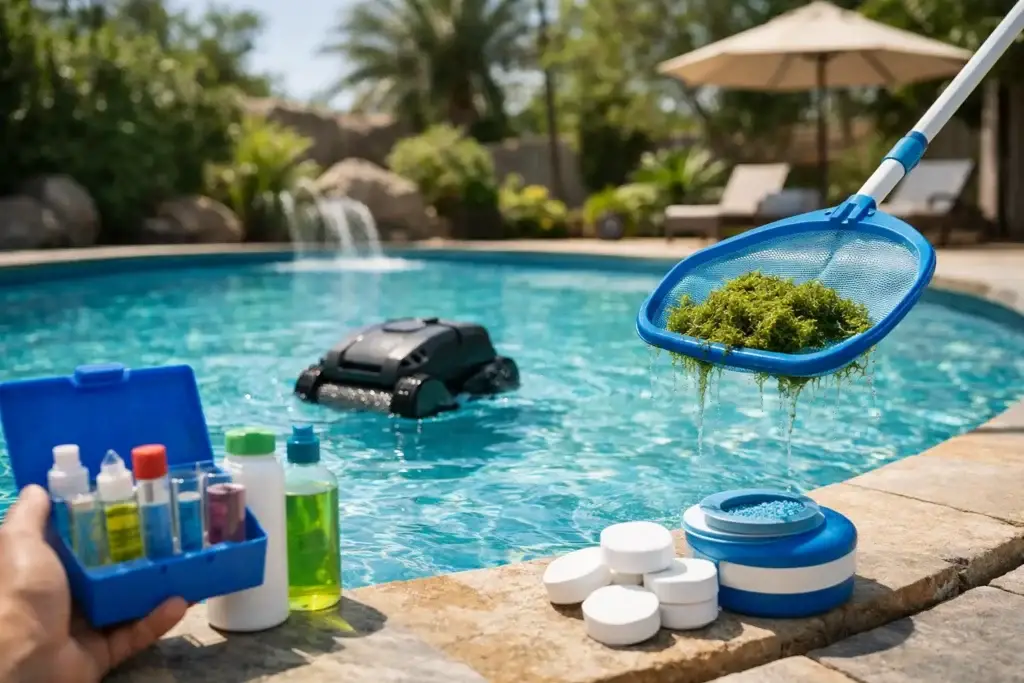
That light green dust on the steps usually starts before most pool owners notice it. In Southwest Florida, heat, rain, pollen, and heavy pool use can turn clear water cloudy fast, which is why knowing the best ways to prevent algae matters long before a full bloom shows up.
Algae prevention is not about one miracle product. It comes down to consistent water chemistry, steady circulation, regular cleaning, and catching small issues before they turn into expensive ones. When one part slips, algae takes advantage. When the basics stay tight, the pool stays clear, safer to swim in, and far easier to maintain.
The best ways to prevent algae start with balanced water
If chlorine is too low, algae gets an opening. If pH climbs too high, chlorine becomes less effective, even when test results look like there is enough in the water. That is one of the biggest reasons homeowners feel like they are adding chemicals but still losing the battle.
For most residential pools, the goal is steady sanitizer levels, balanced pH, proper alkalinity, and the right stabilizer range for Florida sun. Too little stabilizer and chlorine burns off quickly. Too much and chlorine can struggle to work efficiently. There is no one-size-fits-all number for every pool because screened enclosures, bather load, rainfall, and pool type all change demand.
This is where routine testing matters more than guesswork. Strips can help with a quick check, but they are not always precise enough when a pool starts trending the wrong way. A pool that looks fine on Monday can begin growing algae by the weekend if sanitizer drops and nobody catches it.
Brush the surfaces, not just the water
A lot of algae starts on walls, steps, tile lines, corners, and behind ladders before it shows up as obvious green water. Chlorine moves through the water, but surfaces still need physical attention. Brushing breaks up the early film that allows algae to cling and spread.
This is especially important in dead spots where circulation is weaker. Deep ends, tanning ledges, tight corners, and around fittings often collect the first signs. If you only skim debris and never brush, the pool can look decent from a distance while algae starts taking hold where the eye does not immediately go.
The right brush matters too. Plaster pools can usually handle a more aggressive brush, while vinyl and fiberglass need more care to avoid damage. Scrubbing harder is not always better. Using the right tool consistently is what gets results.
Keep water moving every day
Algae loves stagnant water. Poor circulation means sanitizer is not getting where it needs to go, and debris sits longer in the pool. Good flow helps distribute chemicals, supports filtration, and reduces the low-movement areas where algae likes to begin.
That means your pump run time matters, but so does the condition of your system. Dirty filters, clogged baskets, blocked returns, and failing equipment all reduce circulation. Some homeowners increase chlorine when the real problem is that the pool is not moving water properly.
Return jet direction also plays a role. If all returns push water in one ineffective pattern, certain sections of the pool may stay too still. A professional eye can usually spot these trouble areas quickly. In many cases, algae prevention is less about adding more product and more about correcting how the pool operates day to day.
Remove debris before it feeds growth
Leaves, pollen, grass clippings, and organic material do more than make a pool look messy. They consume chlorine as they break down, and that leaves less sanitizer available to control algae. In Southwest Florida, storms and windy days can load a pool up fast, even in a screened enclosure.
Skimming and vacuuming are not cosmetic chores. They are part of chemical control. The more debris left sitting in the pool or trapped in baskets, the harder chlorine has to work. That extra demand often shows up first as dull water, then wall dust, then visible algae.
Pool owners sometimes focus on the water itself and forget the deck area. Blowing dirt, mulch, and yard waste away from the pool helps reduce what ends up in the water after rain or wind. Cleaner surroundings usually mean a cleaner pool.
Do not ignore the filter
A pool filter does not kill algae, but it plays a big part in keeping conditions unfavorable for growth. Once small particles and early contaminants build up, filtration efficiency drops. Water can stay hazy, circulation can suffer, and sanitizer has a harder job.
Different filters need different maintenance. Cartridge filters need cleaning on schedule. Sand filters need proper backwashing and occasional media evaluation. DE filters need more hands-on service. What matters is not just having a filter, but keeping it able to do its job.
If the pool has repeated algae issues, the filter should always be part of the conversation. Sometimes the chemistry is close, but the system is overdue for cleaning. Other times the filter is undersized, worn out, or paired with flow issues that make maintenance harder than it should be.
Use algaecide carefully, not as a shortcut
Algaecide can help, but it should support a solid maintenance routine, not replace one. Used correctly, it can add a layer of prevention during high-risk times like summer heat, heavy rain, or periods when a property sits empty. Used incorrectly, it can create false confidence while the real issues keep building.
This is where trade-offs matter. Some algaecides are better for prevention than cleanup. Some are not ideal for every pool surface or equipment setup. Adding more product is not always the answer, especially if pH, chlorine, circulation, or filtration are already off.
For many pools, steady chlorine and regular service are enough without heavy dependence on specialty products. For others, especially rental or seasonal properties with irregular use, a preventative algaecide program may make sense. It depends on the pool, the environment, and how consistently the pool is being monitored.
Stay ahead of rain, heat, and heavy use
Florida pools do not get much of an off-season. Summer heat, afternoon rain, and year-round sun keep pressure on pool chemistry. A strong storm can dilute chemicals, wash in debris, and shift water balance almost overnight. A weekend of guests can do the same.
That is why the best ways to prevent algae are proactive, not reactive. Waiting until the water turns or the walls feel slippery means the pool is already behind. A quick chemistry check after storms, extra brushing during hot stretches, and prompt basket cleaning after windy days can make a noticeable difference.
Seasonal residents and property managers face an extra challenge here. Pools that sit unattended are more vulnerable, not less. Warm water does not care whether the house is occupied. If the pool is not being checked consistently, algae has time to get established before anyone notices.
Consistency beats occasional effort
Many algae problems come from maintenance gaps, not total neglect. Missing a week of service during rainy weather, delaying filter cleaning, or assuming clear water means balanced water can be enough to start the slide. Once algae takes hold, cleanup costs more in chemicals, labor, and wear on equipment.
Consistent weekly care is what protects the pool as an asset. It keeps the water clear, helps surfaces stay cleaner, reduces staining risk, and lowers the chance of a minor issue turning into a green pool restoration. That matters for full-time homeowners, seasonal residents, and commercial properties that need to stay guest-ready.
For local pools in Port Charlotte, North Port, Punta Gorda, and nearby communities, prevention usually comes down to reliable routine work done with attention to detail. That is where a dependable service schedule earns its keep. Florida Detail sees it every week – the pools that stay on track are almost always the ones that avoid major algae trouble.
If you want a pool that stays clear without becoming your second job, the smartest move is to treat algae prevention as regular upkeep, not emergency cleanup. Clear water is easier to keep than it is to get back.