
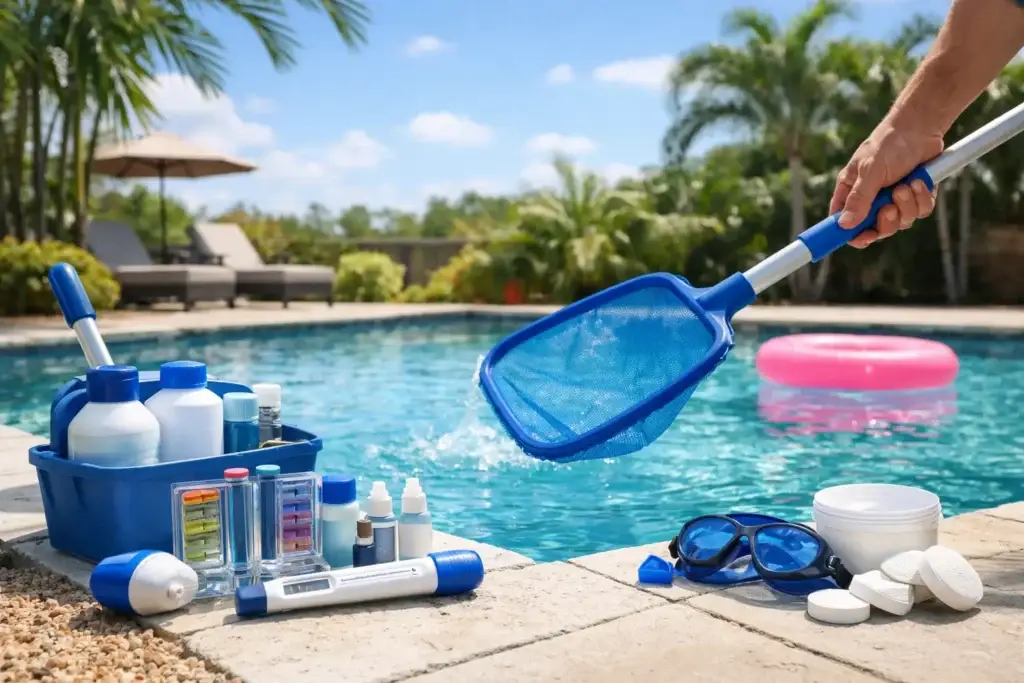
A pool can look fine on Monday and turn cloudy, leaf-filled, or green by the weekend in Southwest Florida. Heat, heavy rain, afternoon storms, pollen, palms, and year-round swim time put steady pressure on your water and equipment. The best pool maintenance schedule is not about doing everything at once. It is about handling the right work at the right interval so small issues never become expensive repairs or a full green-pool cleanup.
For most residential pools in Port Charlotte, North Port, Punta Gorda, and nearby communities, weekly professional service is the foundation. Owners can add a few simple checks between visits, especially after storms or a busy weekend. Commercial and rental pools often need more frequent attention because bather load changes the water faster.
Why Florida Pools Need a Different Schedule
A pool in a northern climate may sit covered for months. A Florida pool works all year. Warm water encourages algae growth, rain dilutes sanitizer, and wind carries in leaves, soil, and organic debris that feed water problems. Saltwater pools are not maintenance-free, either. They still need balanced chemistry, clean filters, and regular inspection of the salt cell.
The goal is not just clear-looking water. Proper maintenance keeps sanitizer working, protects plaster and tile from imbalanced water, reduces strain on pumps, and helps heaters and automation equipment last longer. Clear water is the visible result. Consistent care is what gets you there.
The Best Pool Maintenance Schedule: Weekly Service
Weekly pool care is the schedule most Southwest Florida homeowners need. It prevents algae before it takes hold and keeps debris from settling into corners, staining surfaces, or clogging equipment.
A thorough weekly visit should begin with testing the water. Chlorine or other sanitizer, pH, alkalinity, stabilizer, calcium hardness, and salt level when applicable all affect how the pool performs. Water chemistry is a balancing act. Adding chemicals without testing can create a different problem, such as scale, corrosion, cloudy water, or irritated eyes and skin.
Next comes the visible cleanup. Skimming the surface, emptying skimmer and pump baskets, brushing walls and steps, and vacuuming the floor remove material that can turn into algae food. Brushing matters even when a pool looks clean. Algae often begins in shaded corners, along tile lines, behind ladders, and around steps where circulation is weaker.
Your service should also include a quick equipment check. The pump should be running normally, return jets should have good flow, and the water level should sit around the middle of the skimmer opening. A noticeable drop in water level, air bubbles in the pump basket, a loud pump, or weak circulation deserves attention early. Waiting can turn a simple repair into an equipment failure.
For a pool that sees heavy use, sits beneath large trees, or serves a rental property, twice-weekly cleaning may make more sense. The schedule should fit the pool’s actual conditions, not a one-size-fits-all promise.
What to Check Between Weekly Visits
Homeowners do not need to become pool technicians to protect their pool between services. A five-minute look every few days can prevent surprises.
Check that the water is circulating and that the surface is mostly free of leaves. If a storm drops a large amount of debris into the pool, remove it promptly rather than letting it sink. Organic debris uses up chlorine as it breaks down, which can give algae an opening.
After a major rainstorm, look for cloudy water, a low chlorine reading if you use a home test kit, or water that has risen too high. Rainwater changes chemistry and can wash fertilizers, dirt, and other contaminants into the pool. Do not guess with a large dose of chemicals. If the water changes color, turns hazy, or develops a slick feeling, schedule a professional test and treatment.
If you have a screen enclosure, inspect it periodically for tears. A small opening can quickly become a daily leaf and bug problem. Also keep landscaping trimmed back from the pool area when possible. That one habit reduces debris, pollen, and staining risk.
Monthly Tasks That Protect Equipment
Some pool work does not belong on an every-week schedule, but it should never be forgotten. Each month, take a closer look at the equipment pad and pool surfaces.
Inspect the filter pressure gauge. A rising pressure reading generally means the filter is collecting debris and needs cleaning. The exact timing depends on the type of filter, how much debris the pool receives, and its normal operating pressure. Cleaning too often can be unnecessary, while waiting too long restricts circulation and makes the pump work harder.
Look at tile, grout, skimmer openings, handrails, and the waterline for buildup or staining. Early calcium scale is much easier to manage than heavy deposits. If you use a salt system, inspect the cell and confirm the salt level is where the manufacturer recommends. A salt cell can develop scale even when the pool water looks perfect.
This is also a good time to inspect pool lights, timers, valves, and any visible plumbing for leaks or wear. Commercial pools and vacation rentals benefit from documented monthly checks, particularly when multiple people are responsible for the property.
Seasonal Pool Maintenance in Southwest Florida
Florida does not have a traditional pool-closing season, but seasonal changes still affect your maintenance needs.
Summer: More Heat, Rain, and Swim Load
Summer is usually the most demanding season. Higher temperatures burn through sanitizer more quickly, and frequent storms can dilute chemical levels. Pools used daily by families, guests, or renters may need additional testing and chemical adjustments between regular visits.
Run time for the circulation system may also need to increase during the hottest months. The right setting depends on pool size, pump type, plumbing, and equipment configuration. Variable-speed pumps offer flexibility, but they still need a thoughtful schedule that provides enough circulation without wasting energy.
Fall: Leaves and Organic Debris
Fall often brings more leaves, seed pods, and landscaping debris. Keep baskets clear and consider more frequent skimming if your pool is under trees. Leaves left on a pool floor can stain plaster and create concentrated algae spots.
Winter and Spring: Do Not Let Your Guard Down
Cooler weather may slow algae growth, but it does not eliminate the need for service. A lighter bather load can make it tempting to reduce maintenance too far. The water still needs sanitation, circulation, and balanced chemistry.
Spring is also when pollen, windblown dust, and renewed pool use can quickly change conditions. If you plan to host visitors or return to a seasonal home, arrange service before the pool has been sitting neglected for weeks.
When the Schedule Needs to Change
The best routine is flexible. A screened pool with modest use may stay stable with standard weekly service. An uncovered pool near mature trees, a home with dogs and kids in the water every day, or a short-term rental can need extra visits, more brushing, and closer chemical monitoring.
Water features, spas, heaters, and salt systems add their own maintenance needs. Spas require particular attention because their smaller water volume and warmer temperature allow chemistry to change quickly. If a spa is connected to the pool, make sure its circulation and sanitizer needs are not being overlooked.
A green pool, heavy staining, or persistent cloudiness is no longer routine maintenance. It may require a targeted algae treatment, deep filter cleaning, acid wash, or other restoration work. Acting early saves money and helps avoid permanent surface damage.
A Better Schedule Starts With Consistency
Pool care is easy to postpone when the water still looks blue. That is often when preventative work matters most. Reliable weekly cleaning, accurate water testing, and regular equipment checks protect one of the largest features of your home or property.
Florida Detail Pools builds maintenance plans around the pool in front of us, from chemicals-only support to detailed full-service care. The practical goal stays the same: clean water, dependable equipment, and a pool that is ready when you are. A consistent schedule means you spend less time reacting to problems and more time enjoying the view from your own backyard.