
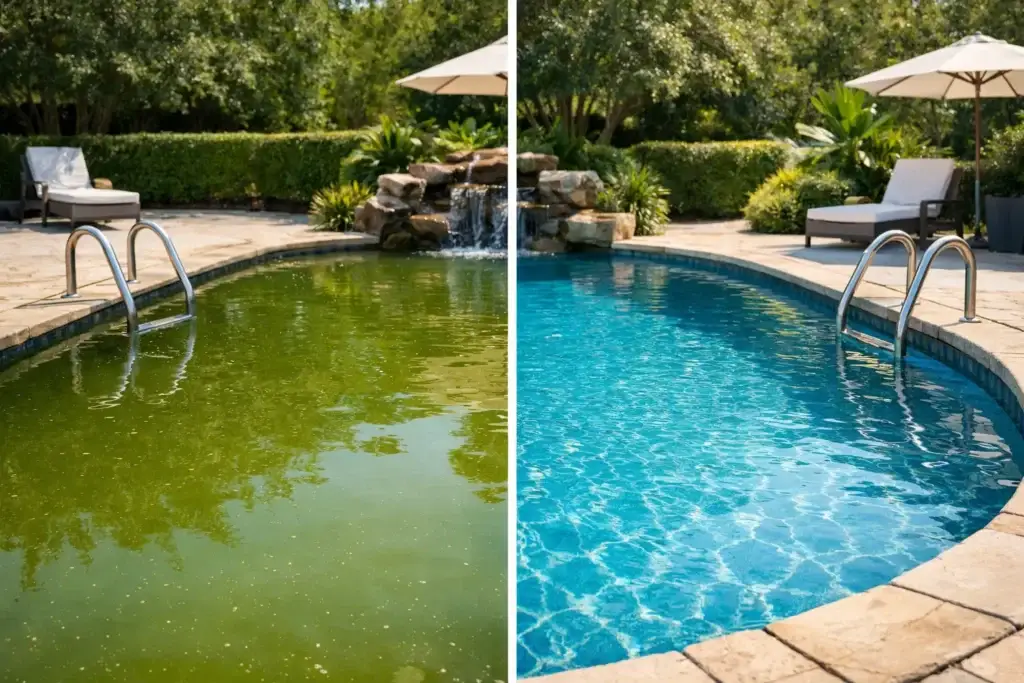
A green pool always looks worse overnight than it did the day before. One missed week turns into cloudy water, slick walls, clogged filters, and a backyard feature nobody wants to use. That is why before after green pool restoration matters so much. The change is dramatic, but the real story is what happens between those two photos and what it takes to keep the water from sliding right back.
In Southwest Florida, pools do not get much downtime. Heat, rain, organic debris, and year-round use create the perfect setup for algae when chemistry drifts off target. For homeowners, seasonal residents, and property managers, the problem usually starts small. The water loses its sparkle, the steps look dull, and then the pool turns green fast.
What before after green pool restoration really shows
The before picture gets attention because it is easy to recognize. Murky green water, debris on the floor, staining along the walls, and no visibility beyond a few inches. In severe cases, the water can look dark green or nearly black, with a strong odor and a slimy feel on the surface and tile line.
The after picture looks simple by comparison. Clear water, visible main drain, clean walls, balanced chemistry, and a pool that looks safe to swim in again. But the difference is not just cosmetic. A true restoration means algae has been treated at the source, suspended contaminants have been filtered out, and the water has been brought back to a stable condition.
That distinction matters. A pool can look better before it is actually healthy. Some pools clear enough to appear usable while algae is still hanging on in corners, on steps, behind lights, or inside the filtration system. Good restoration work is not about a quick visual improvement. It is about getting the water clean and keeping it there.
Why pools turn green so quickly in Florida
Most green pools are the result of algae growth, but the reason algae takes over is usually a mix of factors rather than one single mistake. Low sanitizer levels are a big part of it. Once chlorine falls behind, algae finds an opening and spreads fast, especially in warm water.
Heavy rain also changes the equation. It can dilute chemicals, wash in contaminants, and shift pH and alkalinity enough to weaken sanitation. Add leaves, pollen, dirt, sunscreen, and inconsistent circulation, and the pool starts feeding the problem.
There is also the equipment side. A dirty filter, failing pump, or poor circulation pattern can slow down recovery and make routine care less effective. That is one reason two green pools that look similar in photos may need very different restoration plans.
The work behind the after photo
A proper restoration starts with seeing the pool for what it is, not just what the water color suggests. Green can mean mild algae, but dark green or cloudy blue-green can point to a heavier contamination load, neglected chemistry, or filtration issues that have been building for weeks.
The first stage is usually debris removal and water testing. If leaves and organic waste are left in the pool, they continue to consume chlorine and slow down the cleanup. From there, chemical treatment is adjusted based on the actual condition of the water, not guesswork.
Brushing is part of the process too. Algae clings to surfaces, especially plaster, steps, corners, grout lines, and shady areas. If those surfaces are not scrubbed thoroughly, the pool may improve briefly and then bloom again.
Filtration does a lot of the heavy lifting after treatment starts. As algae dies off, the filter needs to capture the fine material that clouds the water. That often means repeated cleaning, monitoring pressure, and giving the system enough runtime to do its job.
Vacuuming also depends on the condition of the pool. Some debris can be vacuumed through the system, while heavier buildup may need a different approach to avoid overloading the filter. This is where detail-oriented service makes a difference. The pool does not come back by dumping in chemicals and hoping for the best.
How long green pool restoration takes
This is where expectations need to stay realistic. Some pools improve dramatically within a day or two, especially if the algae is caught early and the equipment is in good shape. Others take several days, and severely neglected pools can take longer.
The timeline depends on how far gone the water is, how much debris is present, how well the circulation system works, and whether staining or scale is also part of the problem. A pool with mild green water and decent filtration may clear quickly. A pool with thick algae, poor circulation, and a filter that has not been cleaned in months will not.
Weather can slow things down too. Afternoon storms, heavy bather load, or fresh contamination can all interfere with the cleanup process. That is why honest service matters more than promising a miracle turnaround.
Before after green pool restoration is not always just about algae
Some pools look green because metals, staining, or suspended particles are changing how the water reflects light. Others have algae and staining at the same time. When that happens, restoring the water is one step, but the surfaces may still need separate treatment.
This is where homeowners can get frustrated. The water clears, but the finish still looks older or dirtier than expected. That does not always mean the restoration failed. It may mean the pool has underlying surface issues that became more visible once the water improved.
Acid washing, stain treatment, tile cleaning, or filter service may be needed depending on the condition of the pool. The right answer depends on the surface type, the age of the finish, and how long the neglect lasted. Good pool care means knowing when a green pool is a chemistry problem and when it is also a surface restoration problem.
What a successful restoration should leave behind
The obvious result is clear water, but that should not be the only benchmark. A successful restoration should leave the pool balanced, circulating properly, and easier to maintain moving forward.
That means sanitizer should hold instead of disappearing immediately. Walls should feel clean, not slick. The filter should be functioning as it should. Water should be transparent enough to see the floor clearly, which is not just about appearance but also safety.
For residential owners, this means the pool is ready to enjoy again without ongoing guesswork. For rental homes and commercial properties, it means the water looks guest-ready and meets a more dependable standard. That matters when the pool is part of the property’s value and first impression.
How to keep the after from becoming the next before
This is the part many pool owners learn the hard way. Restoring a green pool is usually more expensive, more time-consuming, and more frustrating than preventing algae in the first place. Once the pool is back, it needs consistent care.
Regular testing and chemical balancing are the foundation. So is brushing, vacuuming, skimming, and checking equipment before small issues turn into expensive ones. In Florida, where pools stay active through every season, long gaps in service create opportunities for water quality to slip fast.
That is why recurring maintenance matters. Weekly professional care helps catch chlorine loss, filter strain, debris load, and circulation problems before the water changes color. It also protects the finish, equipment, and overall appearance of the pool.
For part-time residents, this is especially important. A pool can go from clear to swampy while the owner is away, especially in summer. For property managers, consistency matters even more because one neglected week can affect bookings, resident satisfaction, and liability.
Florida Detail Pools sees this pattern often. The pools that stay clean are usually not the ones that got lucky. They are the ones with a maintenance routine strong enough to prevent the same problem from returning.
When to call for help instead of trying to fix it alone
Some green pools can be addressed with basic treatment if the problem is caught early. But when the water is opaque, debris is heavy, surfaces are slippery, or chemistry is clearly out of control, a do-it-yourself approach often turns into wasted time and repeated chemical costs.
The bigger issue is misreading the cause. If the filter is struggling, the salt cell is failing, or the water balance is off in multiple directions, adding more product may not solve much. It can even create a second problem, especially when pH, stabilizer, or calcium levels get pushed too far.
Professional restoration gives you a clearer path. The pool is assessed as a whole system, not just treated by color. That usually means faster results, fewer setbacks, and a better chance of keeping the pool stable after the cleanup is finished.
The best before and after photos are satisfying because they show a visible turnaround. But the bigger win is not the picture. It is getting your pool back to a condition where it looks clean, feels safe, and stays that way with the right care behind it.