Understanding the Mustard Algae Problem
If you’ve ever noticed a yellowish, dusty film on your pool walls or floor, you’re dealing with mustard algae. It’s one of the most stubborn algae types in Florida pools — especially in sun-soaked areas like Port Charlotte, Punta Gorda, and Rotonda.
Unlike green algae, mustard algae:
- Survives even in well-chlorinated water.
- Resists normal brushing and chemical treatments.
- Often hides in pool corners, behind ladders, and in pool filters.
Why It’s So Common in Florida Pools
Florida’s hot, humid, and rainy climate provides the perfect breeding ground for mustard algae. But several local factors make it worse:
1. Warm Water Temperatures
Year-round sunshine in Charlotte County keeps pool water warm — typically between 78°F and 90°F. Unfortunately, algae loves that range. Warm water accelerates spore reproduction, causing quick regrowth even after cleaning.
2. Heavy Rain and Storms
Frequent storms in Port Charlotte and North Port bring:
- Phosphates and nitrates from runoff water
- Unbalanced pool chemistry due to rainwater dilution
- Reduced chlorine effectiveness
This combination creates ideal conditions for algae to bloom again, often just days after cleaning.
3. Shaded or Screened Pools
Florida homes often use screened pool enclosures to protect from bugs and debris. But this shade can reduce sunlight exposure, making chlorine less active — allowing mustard algae to thrive in the darker, cooler corners of your pool.
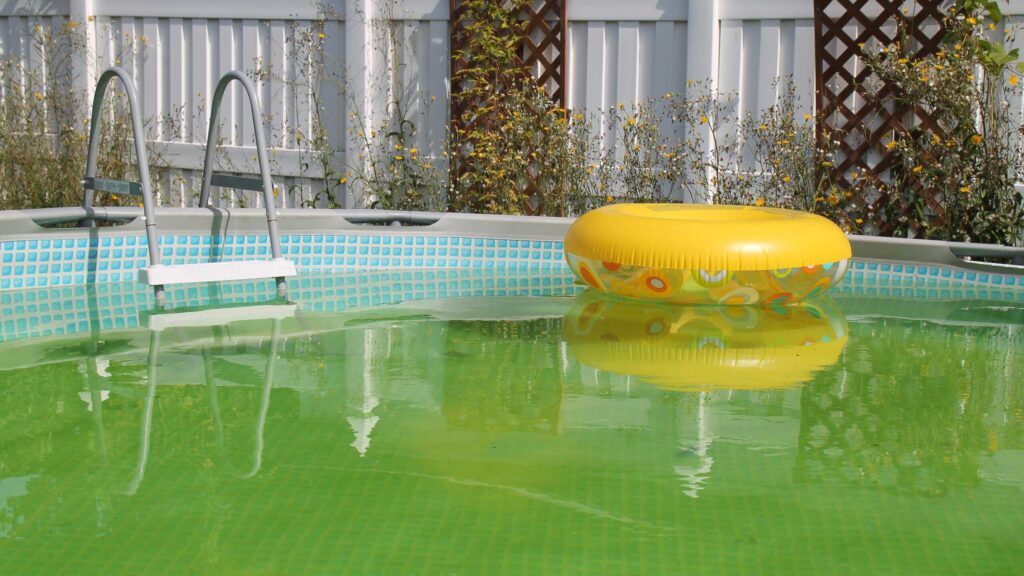
How Mustard Algae Survives Chlorine
Mustard algae is resilient because it can form a protective outer layer, allowing it to survive:
- Chlorine up to 3 ppm
- Standard pool shock treatments
- Weeks of filtration
It’s not uncommon for pool owners in Rotonda West or Punta Gorda Isles to believe their pool is clean — only for yellow spots to return days later.
How to Identify Mustard Algae (vs. Other Algae)
| Type | Color | Location | Resistance Level |
|---|---|---|---|
| Green Algae | Bright green | Walls and steps | Moderate |
| Black Algae | Dark spots | Cracks in plaster | Very high |
| Mustard Algae | Yellow or golden dust | Shady areas, walls, floor | Extreme |
👉 Pro tip: If brushing removes the spots easily but they reappear quickly, it’s most likely mustard algae.
Step-by-Step Guide: Removing Mustard Algae
Here’s how professionals at Florida Detail and trusted local pool companies handle it:
1. Deep Cleaning
- Brush all surfaces (walls, ladders, lights, returns).
- Vacuum and backwash your pool filter.
- Clean pool toys, floats, and swimsuits — they often carry algae spores.
2. Adjust Chemistry
Check and adjust:
- pH: 7.2–7.4
- Alkalinity: 80–120 ppm
- Chlorine: 10–15 ppm (for shocking phase)
3. Use a Mustard Algae-Specific Shock
Standard shocks don’t always work. Use a mustard algae shock designed for high chlorine resistance, available from most Port Charlotte pool supply stores.
4. Run the Filter 24–48 Hours
Continuous filtration helps remove dead algae and prevents spores from settling.
5. Follow-Up Treatment
Even after clearing, re-shock weekly for two weeks to ensure no spores remain.
Prevention Tips for Florida Pool Owners
- Maintain Chlorine Levels: Keep chlorine steady around 2–4 ppm.
- Brush Weekly: Especially shaded spots and behind steps.
- Rinse Accessories: Toys, goggles, and even swimsuits can reintroduce algae.
- Check Filters Regularly: Clean or replace cartridges as needed.
- Use a Phosphate Remover: Algae feed on phosphates commonly found in Florida rainwater.
Local Case Example: Port Charlotte Homeowner Story
A homeowner in Deep Creek, Port Charlotte, noticed mustard algae returning every two weeks despite brushing and shocking. After consulting a pool cleaning in Charlotte County expert, they discovered the algae was hiding in the pool filter and under removable steps. Once these areas were treated, the problem disappeared completely.
When to Call a Professional
Persistent mustard algae isn’t a DIY-friendly problem. If you’ve already shocked, scrubbed, and balanced — yet the algae keeps returning — contact local experts such as:
These professionals often use enzyme-based treatments and UV sanitation systems that prevent recurrence.
The Role of Professional Maintenance
Companies like Florida Detail specialize in long-term maintenance. Their experts use precise testing and eco-friendly cleaning methods that go beyond standard DIY chemicals. For ongoing service plans in Punta Gorda or North Port, check the Services page.
Learn More from Local Pool Experts
If you manage your own pool, consider exploring UnlimitedManiac.com — a great resource for local SEO and Florida pool business marketing. It covers everything from algae control strategies to digital marketing tips for pool contractors.
For deeper cleaning insights, see related blogs on Florida Detail:
- Eco-Friendly Pool Chemicals That Work in Hot, Sunny Season
- Why Your Pool Filter Clogs After Heavy Florida Rains
- Automatic Pool Cleaners vs Manual Skimming
Final Thoughts: Don’t Let Mustard Algae Win
Florida’s environment makes mustard algae a tough opponent — but not unbeatable. With consistent maintenance, proper chemical balance, and professional guidance, your pool can stay crystal-clear all year.
👉 Call to Action:
Visit FloridaDetail.com to explore trusted local pool service providers in Port Charlotte, North Port, Rotonda, and Punta Gorda — and finally say goodbye to persistent mustard algae for good.


