Maintaining the perfect pool chemistry in Florida’s hot and humid climate can feel like a balancing act. Whether you’re swimming in Port Charlotte, Punta Gorda, or North Port, the water quality in your pool depends heavily on the type of sanitizing system you use.
Saltwater and chlorine pools both rely on chlorine to keep the water clean, but how that chlorine is created and managed makes a big difference in how you care for your pool.
Let’s dive into why pool chemistry differs between saltwater and traditional chlorine pools, especially for homeowners in Charlotte County and Rotonda West.
Understanding the Basics of Pool Chemistry
Before comparing, it’s important to understand the three key components of pool chemistry:
- Sanitizer (Chlorine or Salt) – Kills bacteria and prevents algae growth.
- pH Balance – Determines the acidity or alkalinity of the water.
- Stabilizers and Minerals – Help chlorine last longer under Florida’s intense sunlight.
Saltwater Pools: How They Work
Saltwater pools aren’t chlorine-free — they simply generate their own chlorine through electrolysis, converting salt (sodium chloride) into chlorine gas using a salt cell generator.
This system provides a steady, mild level of chlorine, which many homeowners find gentler on the skin and eyes.
Key Characteristics of Saltwater Pool Chemistry
- Stable Chlorine Production: Chlorine is created on-demand, leading to consistent sanitation levels.
- Lower Chlorine Odor: Less chloramine buildup results in fewer “pool smell” issues.
- Higher pH Drift: Salt cells naturally raise pH, requiring more frequent acid balancing.
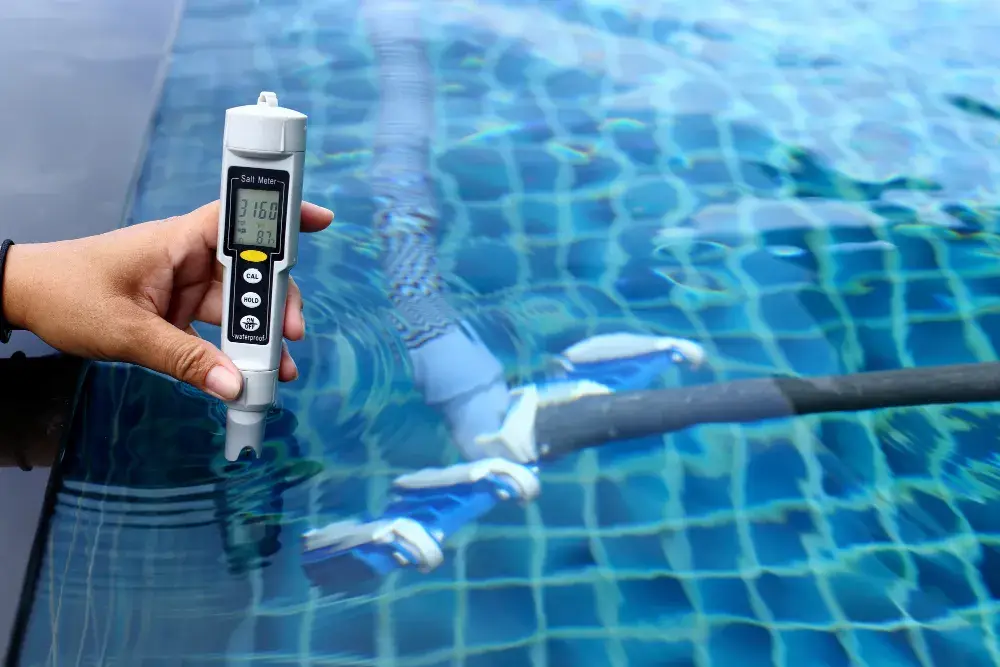
- Softer Water Feel: Salt levels (around 3,000 ppm) make the water feel silky and smooth.
Pro Tip: Florida’s warm climate speeds up salt cell wear. Routine inspection and cleaning every few months keeps your generator running efficiently.
For expert local maintenance, visit Florida Detail or learn more about pool cleaning in Charlotte County here.
Chlorine Pools: The Classic Option
Traditional chlorine pools rely on manual or automatic chlorine addition—either tablets, liquid, or granular form.
This setup gives homeowners full control, but it also means more frequent testing and adjusting—especially after heavy Florida rains or long sunny weeks in Punta Gorda.
Key Characteristics of Chlorine Pool Chemistry
- More Fluctuating Chlorine Levels: Rainwater and evaporation affect concentration quickly.
- Lower Initial Cost: No salt cell or generator needed.
- Requires Regular Shock Treatments: Especially during algae season (May–September).
- Can Be Harsher on Skin and Equipment: If over-chlorinated or pH is unbalanced.
For homeowners looking for reliability and affordability, chlorine pools remain popular — but maintenance schedules are key.
Explore our full pool care services for guidance on managing your chlorine system in Rotonda or North Port.
Florida’s Climate: The Real Game-Changer
Here’s where local chemistry gets interesting — Florida’s coastal humidity, UV exposure, and seasonal storms all affect water balance differently than in other regions.
What Makes Florida Pool Chemistry Unique
- High UV exposure breaks down chlorine faster — stabilizers (CYA) are essential.
- Frequent rainfall dilutes sanitizer levels.
- Warm water accelerates algae growth, especially after summer storms.
- Mineral-heavy well water in some Charlotte County areas raises calcium hardness levels.
In saltwater pools, these conditions can shorten salt cell lifespan or create scaling inside the cell. In chlorine pools, the same issues can lead to chlorine loss and cloudiness.
Comparing Maintenance Needs
| Factor | Saltwater Pool | Chlorine Pool |
|---|---|---|
| Chlorine Source | Generated via electrolysis | Manually added |
| pH Stability | Rises faster | Easier to maintain |
| Odor/Irritation | Lower | Higher if unbalanced |
| Cost Over Time | Higher setup, lower ongoing cost | Lower setup, higher ongoing cost |
| Maintenance Frequency | Weekly checks | 2–3 times per week |
| Best Suited For | Homeowners seeking comfort & automation | Budget-conscious or rental properties |
Real-Life Example: Port Charlotte Homeowners
Many Port Charlotte residents choose saltwater systems for long-term savings and comfort. One homeowner noted that after switching, “our eyes no longer burn, and we use far less shock each month.”
Meanwhile, traditional chlorine pool owners in Punta Gorda love the control and simplicity—especially those renting vacation homes to snowbirds who may not want to adjust a salt system.
Common Mistakes to Avoid
- Ignoring pH Drift – Especially common in saltwater pools.
- Not Cleaning Salt Cells Regularly – Leads to low chlorine production.
- Overusing Stabilizer (CYA) – Makes chlorine ineffective under Florida’s sun.
- Skipping Rain Tests – After heavy rainfall, retest pH and chlorine immediately.
- Forgetting About Metals and Minerals – Can stain your pool finish over time.
If you need a professional inspection, check out PoolCleaningInPortCharlotte.com for local technicians who specialize in saltwater balance and chlorine calibration.
Local Insight: Charlotte County Water Tips
- In North Port, city water tends to be softer—ideal for saltwater pools.
- Rotonda West homeowners often use well water, which can increase calcium and metal content.
- Punta Gorda pools near the coast may face salt creep and corrosion—regular sealing and inspection are a must.
For maintenance recommendations and local chemistry advice, visit UnlimitedManiac.com — a trusted Florida SEO and pool service marketing resource.
Conclusion: Choose the System That Fits Your Lifestyle
Both saltwater and chlorine pools can thrive in Florida’s climate when properly maintained.
If you prefer low-maintenance comfort, saltwater systems are ideal. But if you enjoy hands-on control and lower startup costs, chlorine might suit you better.
No matter your choice, Florida Detail offers expert local resources to help you protect your investment, keep your pool sparkling, and ensure safe swimming year-round.
👉 Explore more pool care blogs, learn about our services, or contact us today to connect with a trusted local professional in Charlotte County.


