If you live in Port Charlotte, Punta Gorda, North Port, or Rotonda, you already know what Florida weather can do to your backyard pool.
A sudden downpour can leave your once-sparkling water looking cloudy, greenish, or even foamy within hours.
But why does this happen?
The answer lies in how heavy rainfall dilutes, disrupts, and destabilizes your pool chemistry — especially during Florida’s humid storm season.
🌧 How Rainwater Affects Pool Chemistry
When a big storm rolls through Charlotte County, it brings more than just water. Rain introduces contaminants, debris, and even microscopic pollutants that can throw off your carefully balanced pool water.
Here’s what typically happens:
- Dilution: Heavy rainwater lowers chlorine, calcium, and alkalinity levels.
- pH Drop: Rain has a naturally acidic pH (around 5.0–5.5), which pulls your pool’s pH below the ideal 7.4–7.6 range.
- Debris Contamination: Leaves, dirt, and organic material enter the pool and feed algae growth.
- Filtration Overload: Filters work harder to process storm runoff, leading to reduced efficiency.
In Florida’s tropical climate, one thunderstorm can undo weeks of good maintenance — especially if your pool isn’t shocked or balanced immediately afterward.
🧪 The Science Behind the Imbalance
Think of your pool like a chemistry lab — every chemical plays a role.
Rainwater, being low in minerals and alkalinity, acts as a diluting agent.
When too much rain enters the pool:
- Chlorine becomes less concentrated, reducing sanitation.
- pH drops, creating acidic water that can irritate skin and corrode surfaces.
- Total Alkalinity falls, leaving the pool unstable and prone to wild pH swings.
- Calcium hardness decreases, increasing the risk of etching on plaster or tile.
💡 Pro Tip: After every major rainfall, test your water within 24 hours — especially if you live in Rotonda or Punta Gorda, where summer rainstorms are frequent and intense.
🌴 Florida Weather Makes It Worse
Florida’s subtropical climate means frequent storms, high heat, and long wet seasons.
In Port Charlotte and North Port, daily afternoon showers are the norm from May through September.
That repeated dilution cycle causes chemical “rollercoasters”:
- Chlorine gets wiped out by rain, then burned off by UV light the next day.
- The water turns cloudy as organic matter feeds bacteria.
- Algae spores thrive in the humid air and warm pool surfaces.
If not corrected quickly, these fluctuations can cause green water, scaling, or even surface damage over time.
⚖️ Signs Your Pool Chemistry Is Off After Rain
After a storm, watch for these common signs that your chemistry has gone out of balance:
- Cloudy or milky water
- Greenish tint or visible algae patches
- Strong chlorine or musty odor
- Slippery walls or pool floor
- Eye or skin irritation when swimming
🧠 Local Tip from Florida Detail: Don’t rely on looks alone! Clear water can still be chemically unstable. Always test chlorine, pH, and alkalinity after rainfall.
💧 How to Fix Pool Chemistry After Heavy Rain
Here’s what professional pool cleaning in Charlotte County teams do after every major storm:
- Skim and Clean Debris
Remove leaves, dirt, and insects immediately to prevent organic decay. - Drain Excess Water
Lower the water level to the midpoint of your skimmer opening. - Test the Water
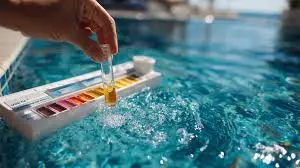
Check pH, chlorine, alkalinity, and calcium hardness using a reliable kit. - Rebalance Chemicals
- Adjust pH to 7.4–7.6.
- Add alkalinity increaser if below 80 ppm.
- Add chlorine shock (preferably liquid chlorine for quick recovery).
- Run the Filter
Let it circulate for at least 24 hours to evenly distribute chemicals. - Shock if Needed
If algae are visible or chlorine reads low, shock the pool overnight.
Quick Fix Tip: Many Port Charlotte pool service companies recommend liquid chlorine shock after large rainfalls since it works fast and doesn’t raise calcium levels.
🧼 Preventing Future Chemical Imbalances
You can’t stop the rain — but you can protect your pool from its side effects.
🛡 Try These Preventive Steps:
- Install a pool cover during storm warnings.
- Maintain proper cyanuric acid levels to stabilize chlorine.
- Keep trees trimmed to minimize debris.
- Use automatic pool cleaners for post-rain cleanup.
- Schedule monthly service visits from professionals like NorthPortPoolCompany.com or PoolCleaningInPortCharlotte.com.
🌤 Florida Detail experts also recommend brushing your pool walls weekly and cleaning filters more often during storm season.
🌐 Local Florida Example
In Rotonda, a homeowner noticed constant algae bloom after every rain.
When tested, their pH measured 6.8 and chlorine dropped to near zero — perfect conditions for algae. After balancing and adding stabilizer, their water clarity returned within 48 hours.
This is a textbook example of how Florida’s rainfall can wreak havoc on pool chemistry — and how timely correction saves money and stress.
🔗 Helpful Internal Links
- Learn more about pool cleaning in Charlotte County
- Visit our Home Page for expert tips
- Book a maintenance consultation via our Contact Page
- Related blog: Pool Shock Options: Calcium Hypochlorite vs Liquid
💡 Extra SEO Resources
If you manage a local pool business in Charlotte County, check out UnlimitedManiac.com for expert marketing insights and content strategies that boost pool service visibility online.
Other helpful Florida pool directories:
🏖 Final Thoughts
Florida’s weather is beautiful — but unpredictable.
When rain pours down, it brings chemistry chaos to your pool.
The good news? With a little knowledge and proactive care, you can keep your water clear, safe, and perfectly balanced — rain or shine.
For expert local help, connect with a trusted pool professional through Florida Detail today. Serving homeowners across Port Charlotte, North Port, Rotonda, and Punta Gorda — one perfectly balanced pool at a time.


