
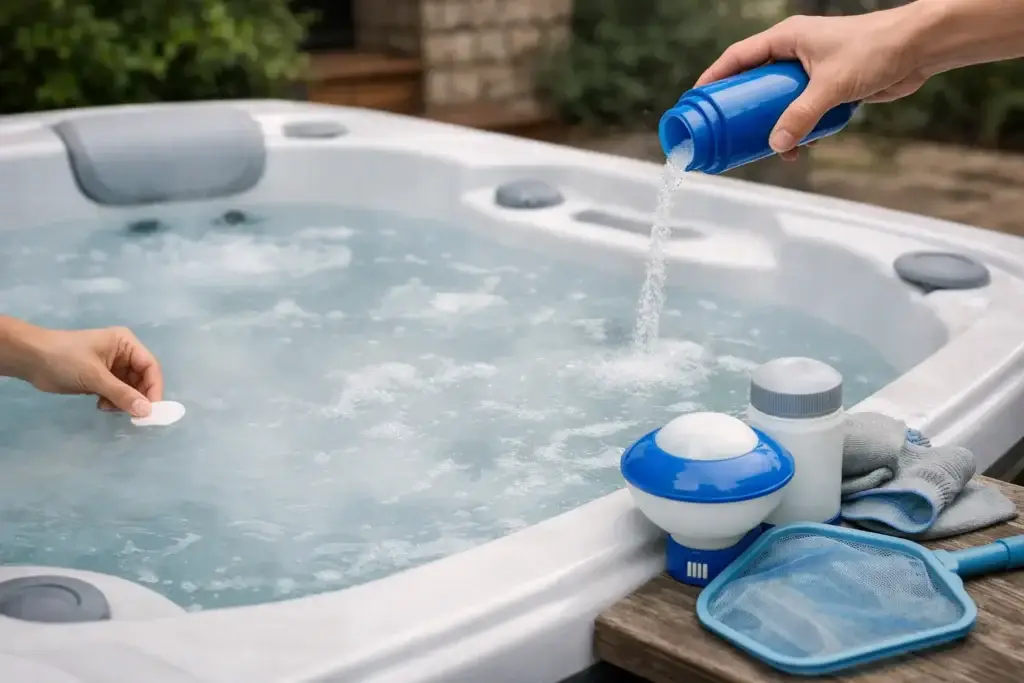
A spa can look fine at breakfast and turn dull, hazy, or milky after one evening of use. If you are asking, why is spa water cloudy, the answer is usually not one big failure. Cloudiness is often the visible result of small maintenance issues piling up: unbalanced water, weak sanitizer, dirty filters, heavy bather use, or circulation that is not keeping up.
Because a spa holds far less water than a pool and runs at a much higher temperature, the water chemistry can change quickly. In Southwest Florida, heat, frequent use, sunscreen, rain, and debris can all add to the problem. Clear water is not just about appearance. It is a sign that the water is being filtered, circulated, and sanitized properly.
Why Is Spa Water Cloudy? Start With the Water Balance
Cloudy water often begins with chemistry that has drifted out of range. Sanitizer is the first thing to check. Chlorine or bromine must be present at a proper level to control bacteria, algae, and the invisible organic material left behind by swimmers. When sanitizer runs low, those contaminants remain in the water and create a dull or cloudy look.
pH and alkalinity matter just as much. High pH can cause minerals, especially calcium, to fall out of solution. The result may look like white haze or a cloudy blue cast. Low pH can be rough on equipment and surfaces, while low alkalinity makes pH difficult to control. A spa may clear temporarily after adding a chemical, then turn cloudy again because the underlying balance was never corrected.
Calcium hardness is another factor, particularly where source water contains minerals. Water with excessive calcium can form fine suspended particles and scale. Water that is too soft can be aggressive toward equipment. The right correction depends on a complete test result, not a guess based on appearance alone.
Contaminants Build Up Faster Than Most Owners Expect
Every person who uses a spa adds body oils, lotions, cosmetics, detergent residue, sweat, and other organic material. Sunscreen is especially common in Florida and can quickly leave water looking flat or cloudy. A few guests after a day at the beach or pool can place a heavy demand on a small spa.
Even when chlorine or bromine is technically present, it may be busy reacting with contaminants instead of providing effective sanitation. This is why heavily used spas sometimes need oxidation or shocking after use. The right product and dosage depend on the spa system, sanitizer type, and test readings.
Cloudiness after a party, a rental turnover, or a weekend of frequent use is not unusual. What matters is responding promptly. Letting the water stay cloudy allows the problem to grow and can make cleanup more expensive.
Dirty Filters Can Keep Spa Water Hazy
A spa filter does the hands-on work of trapping fine debris, oils, and particles. When it is loaded with buildup, water cannot move freely through it. Poor flow means poor filtration, and poor filtration leaves contaminants floating in the water instead of being removed.
Rinsing a cartridge filter is helpful, but it does not always remove oils and embedded residue. Filters also need periodic deep cleaning with an appropriate filter-cleaning process. If a cartridge is worn, damaged, or permanently clogged, replacement may be the practical answer.
A common mistake is adding more chemicals before checking the filter. Clarifiers, shock, and sanitizer cannot make up for a filter that is too dirty to do its job. The best approach is to restore proper flow first, then correct the chemistry based on a full test.
Circulation Problems Need Attention Too
Cloudy water can also point to a circulation issue. A closed valve, clogged skimmer, failing pump, air leak, timer problem, or blocked line may keep the spa from turning over enough water. If the jets have lost strength, the water feels unusually still, or the pump sounds different, inspect the equipment before assuming it is only a chemical issue.
A spa does not need to have zero jet action to have a circulation problem. Reduced flow can be enough to prevent the filter from catching up. This is especially true after heavy use, storms, or a stretch of hot weather.
How to Clear Cloudy Spa Water Safely
The fastest fix is rarely dumping several products into the water at once. That can create a new imbalance, make the water foam, or cause additional cloudiness. A methodical process gets better results.
First, stop using the spa until the water is clear and properly sanitized. Test the water for sanitizer, pH, total alkalinity, calcium hardness, and stabilizer when applicable. Test strips can offer a quick signal, but a reliable water test provides better direction when cloudiness keeps returning.
Next, remove visible debris and clean the filter. If the filter is heavily soiled, rinse it and use the proper deep-cleaning method before reinstalling it. Check the skimmer basket and make sure the circulation system is running as it should.
Then adjust water balance in the right order. Alkalinity is commonly addressed before pH because it helps stabilize pH. Sanitizer should be brought back to its correct operating range, and a suitable oxidizing treatment may be needed if bather waste or combined chlorine is part of the problem. Run the circulation system after treatment so the water and chemicals can mix thoroughly.
If the water remains cloudy after balance, filtration, and circulation have been addressed, a spa clarifier may help gather very fine particles so the filter can capture them. Clarifier is a finishing tool, not a substitute for clean filters or adequate sanitizer. Too much of it can gum up a filter and make matters worse.
Sometimes draining and refilling is the sensible choice. If the water is old, has persistent foam, has been heavily used, or has repeatedly resisted correction, starting fresh may save time and chemicals. The spa should be cleaned carefully during the drain-down, then refilled and balanced before use.
Cloudy Water That Needs More Than a Quick Fix
Milky water, slimy surfaces, a strong chemical odor, recurring foam, or colored water deserve closer attention. A strong chlorine smell does not always mean there is too much chlorine. It can mean chlorine has reacted with contaminants and is no longer working as effectively as it should.
Green, yellow, or brown water may involve algae, metals, staining, or debris. White flakes can be calcium scale. A persistent oily ring around the waterline points to bather products and organic buildup. Each issue calls for a different response, which is why treating every cloudy spa the same way can waste product and delay results.
Commercial and rental-property spas need especially consistent oversight. More users mean more contaminants, faster chemistry swings, and less room for error. Keeping logs of testing, filter cleaning, and treatments helps prevent a guest-ready spa from becoming a same-day service problem.
Preventing Cloudy Spa Water From Returning
The most reliable prevention plan is simple: maintain proper sanitizer and balanced water, keep the filter clean, ensure consistent circulation, and respond quickly after heavy use. Cover the spa when it is not in use to limit leaves, pollen, insects, and storm debris. Ask swimmers to rinse off first when possible, especially after sunscreen or lotions.
Regular professional service takes the guesswork out of that routine. Florida Detail Pools provides detail-focused spa and pool maintenance for homeowners and property managers who want clean, safe water without having to chase changing test results every week.
A cloudy spa is usually the water telling you that one part of the system needs attention. Catch it early, test before treating, and keep filtration and circulation on schedule. That is how a spa stays clear, comfortable, and ready when you want to use it.