
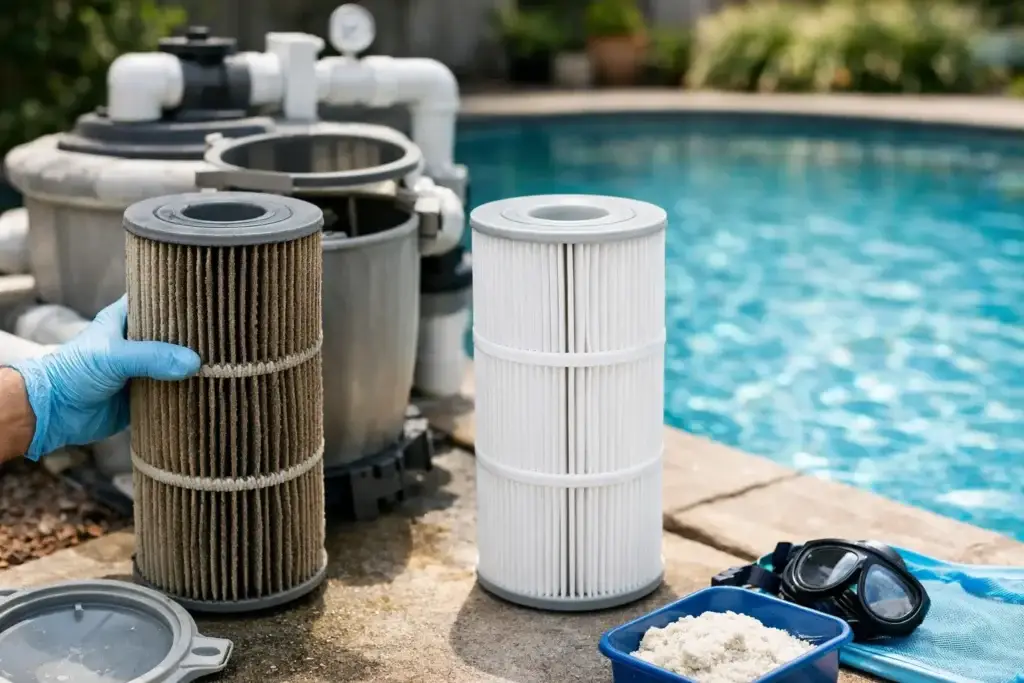
A pool can look clear on the surface and still have a filter that is working too hard. That is usually how trouble starts. If you are asking when should a pool filter be cleaned, the honest answer is not just “on a schedule.” It depends on filter pressure, debris load, weather, swimmer use, and how much your pool deals with here in Southwest Florida.
That matters because the filter is not a minor piece of equipment. It is one of the main reasons your water stays clean, balanced, and safe. When the filter gets overloaded, circulation drops, debris stays in the water longer, and your sanitizer has to do more work than it should. That is when you start seeing dull water, algae risk, and unnecessary strain on the system.
When should a pool filter be cleaned?
The best rule is to clean the filter when the pressure gauge rises 8 to 10 PSI above the clean starting pressure. That is a more reliable signal than cleaning by the calendar alone. Right after a proper cleaning, take note of the normal pressure reading. Once it climbs well above that baseline, the filter is telling you it needs attention.
There is still some value in a routine schedule, especially for busy households or rental properties, but pressure is the real indicator. A filter can load up faster after storms, heavy leaf drop, pollen, algae treatment, or a week of frequent swimming. It can also stay cleaner longer during lighter-use periods. The gauge gives you a clearer answer than guesswork.
In Southwest Florida, filters often need more attention than pool owners expect. Between wind, rain, fine debris, year-round use, and long warm seasons that encourage algae growth, a filter can go from fine to overloaded pretty quickly.
Why local conditions change the timing
Pool care in Port Charlotte, North Port, and Punta Gorda is not the same as pool care in places with a short swim season. Here, pools stay active for much more of the year. Even if the pool is not full of swimmers every week, the equipment is still fighting heat, humidity, rain, organic debris, and water chemistry shifts.
Summer storms are a big factor. One hard rain can wash in dirt, landscaping debris, and phosphates. If your pool cage is open in any area, or your yard gets a lot of tree drop, your filter takes the hit. The same goes for pools near construction or exposed lots where fine dust finds its way into the water.
Saltwater pools are not exempt either. They still need strong circulation and a clean filter to keep sanitizer production effective. If the filter is clogged, the whole system becomes less efficient.
The signs your pool filter needs cleaning
The pressure gauge is the first thing to trust, but it is not the only clue. Water often starts showing you the problem before it gets severe.
If your pool looks hazy, return jets feel weaker, debris lingers longer than normal, or algae keeps trying to come back, the filter may be overdue. You may also notice your pump running longer with less visible improvement. In some cases, the pressure is high because the filter is packed with debris. In other cases, low flow can point to a deeper issue, so pressure and performance should be looked at together.
Another common sign is after cleanup work. If the pool has just been vacuumed after heavy debris, treated for algae, or cleared up after a storm, the filter has likely collected a large amount of waste in a short time. That is not the moment to assume your usual cleaning interval still applies.
Filter type makes a difference
Not every pool filter is cleaned the same way, and not every type follows the same timing.
Cartridge filters
Cartridge filters are common on residential pools because they filter well and do not require backwashing. But they do need to be opened, inspected, and cleaned thoroughly. For many pools, that may mean every few months, though heavy debris or post-storm conditions can shorten that window.
A quick rinse is not always enough. Oils, fine particles, and chemical residue can stay trapped in the pleats. Over time, that buildup reduces performance even if the cartridge does not look terrible at a glance.
Sand filters
Sand filters are usually cleaned by backwashing when pressure rises above normal range. They are durable and straightforward, which is why many pool owners like them. Still, they are not maintenance-free. If backwashing is delayed too long, water flow suffers and the filter bed does not do its job as well.
Sand also has a lifespan. If the media is old, channeling can develop, and the filter may stop catching smaller particles efficiently.
DE filters
DE filters offer fine filtration, but they also require more precise maintenance. When pressure rises, they typically need backwashing and recharging with fresh DE powder. From time to time, they also need a full teardown and internal cleaning.
These systems do a great job when maintained correctly, but if they are neglected, they can become messy, inefficient, and harder on the equipment.
Why waiting too long costs more
A dirty filter does not just make the water look a little off. It can create a chain reaction. Poor circulation means chemicals are distributed less evenly. Dead spots in the pool become more likely. Debris stays in suspension longer or settles where it should not. Algae gets a better chance to take hold.
That leads to more brushing, more vacuuming, more chemicals, and more frustration. It can also put extra strain on the pump because the system is trying to push water through a clogged filter. Over time, that can shorten equipment life and turn a simple maintenance task into a repair issue.
For commercial pools, short-term rentals, and community properties, the stakes are even higher. Cloudy water and weak circulation are not just cosmetic problems. They affect guest experience, safety, and confidence in the property.
Calendar-based cleaning still has a place
If you want a practical starting point, a routine schedule can help, as long as it is adjusted based on actual conditions. Many cartridge filters need inspection and cleaning every 3 to 6 months. Sand and DE filters often need more frequent monitoring because backwashing may be required sooner depending on pressure and debris load.
But no fixed schedule is perfect. A screened pool with light use may go longer. A pool under trees, used every weekend, or hit by repeated summer storms may need service sooner. That is why the best approach combines regular checks with pressure-based cleaning.
If you own a seasonal property, this matters even more. A pool can go from stable to neglected quickly when no one is watching the system. Filters do not care whether the home is occupied full-time or not. They still load up when the weather turns or the water chemistry drifts.
The value of professional filter maintenance
Filter cleaning sounds simple until it is not. Opening the system safely, checking the pressure baseline, inspecting cartridges or grids, spotting worn parts, and cleaning the filter without damaging it all take some care. A rushed job can leave debris behind or create avoidable wear.
Professional service also helps catch the bigger picture. Sometimes the filter is dirty because the pool is dealing with another issue – poor brushing habits, circulation problems, a chemistry imbalance, an aging salt cell, or a developing algae problem. Cleaning the filter without addressing the cause only buys a little time.
That is where consistent maintenance pays off. A detail-driven service team is not just reacting when the water turns cloudy. It is watching the equipment, the pressure, the debris pattern, and the chemistry together. That is how you keep a pool looking right and running right.
At Florida Detail, that hands-on approach matters because local pools need local attention. The conditions here are tough on water and equipment, and filter care is one of the places where consistency makes a visible difference.
A simple rule for pool owners
If you remember one thing, make it this: clean your pool filter when the pressure rises 8 to 10 PSI above its clean reading, and check it sooner after storms, heavy use, or algae cleanup. That one habit can prevent a lot of cloudy-water headaches.
A clean filter helps everything else work better. The water clears faster, chemicals perform the way they should, and your system does not have to fight through unnecessary buildup. If your pool has been looking a little off lately, the filter is one of the first places worth checking before a small issue becomes a bigger one.