
A pool can look fine on Monday and turn cloudy, gritty, or green before the weekend in Southwest Florida. That is why the decision between weekly service vs DIY pool care is about more than convenience. It affects the water your family swims in, the condition of your equipment, and how much of your own time goes into keeping the pool ready.
DIY maintenance works well for some hands-on owners. Professional weekly service is often the better fit for owners who want dependable results without chasing chemical readings, clogged filters, windblown debris, or early algae growth. The right choice comes down to your pool, your schedule, and how much responsibility you want to carry.
Why Florida Pools Need Consistent Attention
A pool in Port Charlotte, North Port, Punta Gorda, or the surrounding area does not get much of an offseason. Heat, heavy rain, humidity, afternoon storms, pollen, leaves, and frequent use all put pressure on water chemistry and circulation. Even a covered or lightly used pool still needs regular checks.
Rainwater can dilute sanitizer levels. High temperatures burn through chlorine faster. Organic debris consumes chemicals and gives algae something to feed on. When circulation is weak or a filter is overdue for cleaning, a small water-quality issue can turn into a larger cleanup job quickly.
Weekly attention is not about making the pool look nice for one day. It is preventative care. The goal is to keep the water balanced, protect surfaces, support equipment, and catch trouble while it is still inexpensive to fix.
Weekly Service vs DIY: The Real Difference
The biggest difference is not whether someone skims leaves. It is who owns the ongoing responsibility for water health and equipment condition.
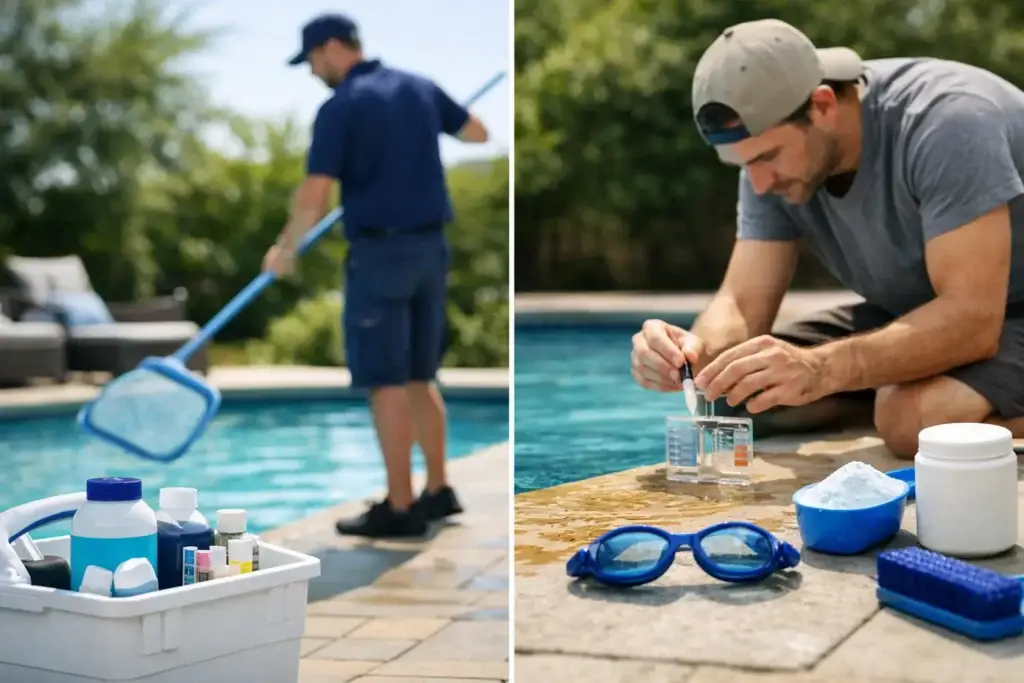
With DIY care, the owner handles testing, chemical additions, brushing, vacuuming, skimming, emptying baskets, filter maintenance, and troubleshooting. You decide when a reading is off, what product to use, how much to add, and whether a change is a normal fluctuation or a warning sign.
With a professional weekly service plan, a trained technician follows a consistent maintenance routine. The pool is cleaned, water is tested and balanced, surfaces are brushed, debris is removed, and visible equipment concerns can be identified before they become costly surprises. The work is scheduled, documented through the service process, and not dependent on whether you had time that week.
That consistency matters most when life gets busy, you travel, or the property is a rental, seasonal home, or commercial location where a neglected pool can quickly affect guests and tenants.
When DIY Pool Care Can Make Sense
DIY maintenance can be a reasonable option for an owner who enjoys learning the process and has the time to stay on top of it. A smaller pool with light use, newer equipment, and a reliable testing routine is generally easier to manage than an older pool under heavy use.
The key word is routine. Good DIY pool care is not an occasional Saturday cleanup. It requires regular water testing, prompt chemical adjustments, brushing in areas where algae can take hold, and attention to circulation. It also means knowing that clear water is not automatically balanced or sanitary water.
DIY may be a good fit if you are comfortable handling pool chemicals, understand your test results, and are willing to research equipment issues when something changes. Some owners also choose a middle ground, using a chemicals-only support plan while completing the physical cleaning themselves.
The challenge is that pool chemistry is connected. Adding more chlorine may not solve a recurring algae problem if pH, stabilizer, phosphates, circulation, or filtration is contributing to the issue. Buying products one bottle at a time can also become more expensive than expected when the underlying cause has not been corrected.
What Weekly Pool Service Protects
Professional service is not simply paying someone else to do the chores. It protects the parts of pool ownership that are easy to overlook until they fail.
Balanced Water and Safer Swimming
Water needs the right sanitizer level, pH, alkalinity, calcium hardness, and stabilizer range for your specific pool system. When those levels drift, swimmers may notice irritation, the water may lose its clarity, or surfaces and equipment may be exposed to unnecessary wear.
A weekly technician sees patterns over time. That makes it easier to recognize when a chemical demand is unusual, when a salt system is not producing as it should, or when repeated imbalances point to a larger issue. Consistent testing is far more effective than waiting for water to change color.
Cleaner Surfaces and Better Algae Prevention
Brushing walls, steps, tile lines, corners, and behind ladders matters. Algae often begins where circulation is weaker and where a quick skim cannot reach. Vacuuming and debris removal also reduce the organic material that clouds water and consumes sanitizer.
In Southwest Florida, a missed week can matter. A stormy stretch, a heat wave, or a yard full of shedding trees can create a bigger workload fast. Regular cleaning keeps the pool inviting and reduces the chance that a simple visit turns into green pool restoration or acid washing.
Longer Equipment Life
Pumps, filters, heaters, salt cells, and plumbing work hard in a year-round pool environment. Dirty filters restrict flow. Low water levels can strain equipment. Improper chemistry can contribute to scaling, corrosion, and premature wear.
Weekly service does not eliminate every repair, but it provides regular eyes on the system. Catching weak flow, a full pump basket, unusual pressure, a failing salt cell, or a small leak early can help protect a major investment.
The Time Cost Most Owners Underestimate
DIY pool care is often framed as free because there is no service invoice. But the work still has a cost: your time, your supplies, and the risk of fixing a problem late.
A proper weekly routine can take anywhere from 30 minutes to more than an hour, depending on the pool, weather, debris load, and equipment needs. Add time for driving to buy chemicals, cleaning filters, researching test results, and dealing with an unexpected algae bloom. For owners with busy schedules, that time adds up.
There is also the cost of being unavailable. If you leave town for two weeks during summer, who checks the pool after heavy rain? If a rental property has guests arriving Friday, who handles cloudy water on Thursday? A recurring maintenance plan creates a reliable answer instead of a last-minute scramble.
Comparing Cost Without Guesswork
The cheapest option on paper is not always the least expensive over a full year. DIY owners pay for test supplies, sanitizer, balancing chemicals, algaecide when needed, filter cleaner, brushes, nets, and replacement parts. They may also pay more when a chemistry mistake, neglected filter, or delayed repair turns into a restoration project.
Weekly service has a predictable monthly cost, and plan options can match different needs. A chemicals-only plan may work for a hands-on owner who wants professional water balancing. Full-service care is designed for owners who want the cleaning, testing, brushing, vacuuming, and chemical management handled consistently.
The better value depends on what you are actually comparing. If DIY means testing once in a while and reacting only when water looks off, professional care usually prevents more cost and frustration. If you maintain your pool carefully every week and enjoy the work, DIY can be a practical choice.
Who Benefits Most From Professional Weekly Service?
Professional care tends to make the strongest sense for seasonal residents, retirees who would rather spend their time enjoying the pool, busy families, and property investors managing homes from a distance. It is also a practical choice for commercial properties, community pools, and vacation rentals where clean, safe, guest-ready water is part of the property standard.
Older pools and pools with recurring issues also benefit from experienced maintenance. If you have dealt with repeated algae, cloudy water, staining, salt cell concerns, or inconsistent circulation, the answer may not be another round of shock. It may be a more disciplined maintenance approach and a closer look at the system.
Florida Detail Pools works with local owners who want that dependable rhythm: clear water, clean surfaces, and less guesswork week after week. The goal is simple: We Mean, Clean.
Choose the Level of Help That Keeps You Consistent
There is no prize for doing every part of pool care yourself. There is also nothing wrong with staying hands-on if you have the knowledge and time to do it properly. The smart decision is the one that keeps your pool clean, balanced, and maintained through Florida heat, storms, travel, and busy weeks.
If you are unsure, watch your pool routine honestly for a month. Are you testing on schedule, brushing thoroughly, cleaning the filter when needed, and responding quickly to changes? If not, dependable weekly service may be the easier way to protect your water, your equipment, and your weekends.