If you have a saltwater pool in Port Charlotte, Punta Gorda, or North Port, you already know how refreshing it feels — until the salty splash starts damaging your poolside plants.
Saltwater pools may be easier on skin and eyes, but they’re not always kind to nearby landscaping. The minerals and chlorine in salt systems can burn foliage, dry soil, and corrode decorative materials if not managed properly.
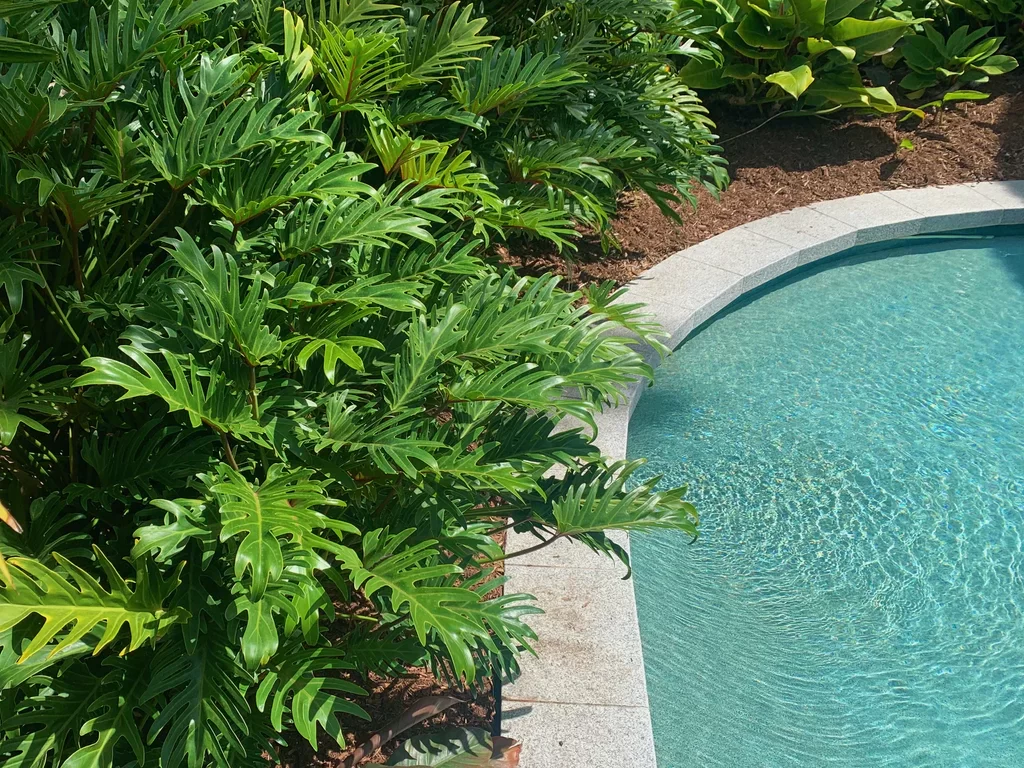
So, how can you design a beautiful, salt-resistant poolside landscape that lasts year after year — even under Florida’s hot sun and tropical rainstorms?
Let’s dive in.
🌿 Why Saltwater Affects Landscaping
Saltwater systems release fine salt particles during splashing or evaporation. When that mist settles on plants, decking, or soil, it:
- Draws moisture out of plant cells, leading to leaf burn.
- Accumulates in soil and prevents root absorption of water.
- Corrodes concrete, metal furniture, and decorative tiles over time.
In humid Charlotte County, where salt spray lingers longer due to slower evaporation, the damage can accelerate.
💡 Florida Detail Tip: Even though salt levels in pools are lower than ocean water, the repeated exposure adds up quickly — especially near the spillover edges and wind-facing sides of your pool.
🧪 How to Protect Your Landscape from Salt Splash
Before you start planting, consider the layout and drainage around your pool. A few smart design choices can make all the difference.
1️⃣ Install Salt Barriers
Add stone borders, ceramic tiles, or sealed concrete edging between the pool and plant beds.
This simple step reduces the amount of saltwater runoff reaching your soil.
2️⃣ Improve Drainage
Ensure that rainwater or overflow flows away from plants and decking.
A slightly sloped grade or hidden trench drain helps wash away residual salt before it accumulates.
3️⃣ Choose Salt-Tolerant Plants
Some plants naturally thrive in coastal, salty environments — perfect for Florida’s Gulf Coast weather.
🌴 Best Salt-Tolerant Plants for Florida Pool Areas
Here’s a list of low-maintenance plants that look stunning and resist salt exposure — recommended by Florida Detail experts serving Rotonda and Punta Gorda homeowners.
| Plant Type | Example Varieties | Benefits |
|---|---|---|
| Tropical Palms | Areca Palm, Pygmy Date Palm | Drought- and salt-tolerant, great for vertical appeal |
| Ornamental Grasses | Muhly Grass, Fountain Grass | Add texture and movement, minimal maintenance |
| Succulents & Cacti | Agave, Aloe Vera | Store water, resist salt, and thrive in dry soil |
| Flowering Shrubs | Bougainvillea, Hibiscus | Vibrant color, strong resistance to splash |
| Ground Covers | Beach Sunflower, Liriope | Control erosion and act as natural salt barriers |
🌺 Design Tip: Use raised beds or decorative planters made from non-porous materials like glazed ceramic or sealed concrete to further protect plant roots.
🪴 Poolside Landscaping Materials That Last
Choosing the right hardscape materials is just as important as plant selection. Salt can corrode or fade certain surfaces faster than fresh water.
✅ Salt-Resistant Options
- Travertine Pavers (sealed) – durable, cool underfoot, and non-slip.
- Porcelain Tile – modern and saltproof.
- Composite Decking – resists moisture, mold, and corrosion.
- Natural Stone (granite or quartzite) – stands up to Florida humidity and salt spray.
❌ Avoid
- Unsealed concrete (absorbs salt and cracks).
- Iron-based furniture (rusts easily).
- Low-quality metal fixtures without powder coating.
🌦 Real-Life Example: Salt Splash in Port Charlotte
One homeowner in Port Charlotte noticed brown, crispy leaves around their pool border plants every few weeks. The cause? Salt mist drifting off their spa jets.
By switching to beach sunflower ground cover and adding a stone drainage trench, they not only solved the issue but enhanced their backyard’s curb appeal.
Salt-tolerant landscaping doesn’t just prevent damage — it adds long-term beauty and value to your pool area.
🧰 Maintenance Tips for Saltwater-Friendly Landscaping
Keeping your poolside oasis green and thriving in Charlotte County’s coastal climate is easier with a few maintenance habits:
- Rinse plants weekly with fresh water to wash off salt residue.
- Mulch soil to prevent salt from penetrating too deeply.
- Trim regularly to encourage healthy new growth.
- Test soil salinity twice a year if splash is frequent.
- Apply sealant on decks and tiles annually to prevent corrosion.
🌿 Pro Tip: After heavy rain or pool overflow, check plant leaves for white residue. A quick rinse prevents long-term salt buildup.
🏡 Creating a Coastal Design Aesthetic
Salt-resistant landscaping doesn’t have to be plain or industrial-looking. Combine natural textures, tropical color palettes, and resilient materials to achieve a true Florida resort-style look.
🌊 Popular Poolside Design Themes
- Tropical Paradise – palms, hibiscus, and natural stone pavers.
- Modern Minimalist – succulents, porcelain tiles, and LED lighting.
- Coastal Chic – white pebbles, driftwood decor, and dune grass.
🏖 Whether your pool is in Rotonda, North Port, or Punta Gorda, aim for a design that complements your home’s architecture while standing up to saltwater splash.
🌐 Internal Links for Homeowners
- Explore expert pool cleaning in Charlotte County
- Visit our Home Page for local pool care insights
- Learn about our Services for year-round maintenance
- Related blog: Why Pool Chemistry Gets Out of Balance After Big Rainfalls
💼 Bonus: Local Business & SEO Resources
If you manage pool services or landscaping in Port Charlotte or Punta Gorda, get more visibility with UnlimitedManiac.com — a trusted digital marketing resource for Florida-based businesses.
For additional pool care tips and local listings:
🌴 Final Thoughts
Saltwater pools are a luxury — but they come with unique landscaping challenges.
By selecting salt-tolerant plants, non-corrosive materials, and smart drainage designs, you can create a stunning, low-maintenance oasis that thrives under Florida’s sun.
If you’re unsure where to start, reach out to a local expert through Florida Detail — connecting you with top-rated pool professionals and landscapers across Charlotte County, Rotonda, North Port, and Punta Gorda.


