When you live in Port Charlotte, Punta Gorda, North Port, Rotonda, or elsewhere in Charlotte County, your poolside landscaping faces a unique set of challenges. You get blistering sun, seasonal downpours, occasional flooding, and – in dry periods – persistent drought. Yet your customers (or you, if you’re a homeowner) still expect a lush, inviting poolscape that holds up year after year.
Here’s how your poolside landscape can thrive through both extremes — whether for homes in North Port or estate properties in Rotonda — blending style, durability, and local performance.
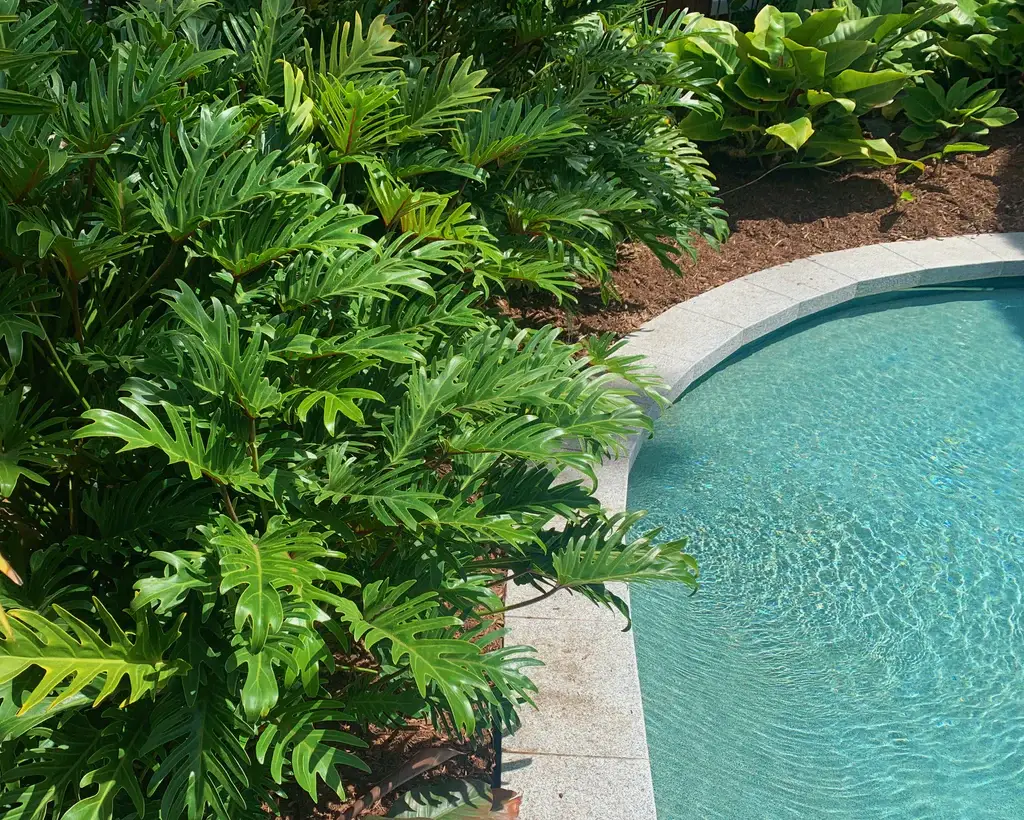
Why Florida’s climate demands design resilience
The extremes you must plan for
- Drought periods: Florida often endures stretches without rain. Even though the region gets significant annual rainfall, dry spells stress plants and soils.
- Flooding or heavy rain events: Summer storms, tropical systems, and seasonal downpours can saturate soils and test drainage systems.
- Sun, heat, UV exposure: Poolside zones get full sun, reflected heat, splash zones, and high evaporation.
- Salt spray (in some areas) and occasional wind damage during storms.
If your landscaping can’t adapt, you’ll deal with stressed plants, erosion, algae runoff into the pool, and higher maintenance costs.
Principles for drought- and flood-resilient poolside design
Here are foundational strategies to make your landscape survive — even thrive — under Florida’s fickle weather:
- Use native or adapted species
Choose plants that already are used to Florida’s cycles of wet and dry, which makes them stronger and less dependent on irrigation.- Examples: Firebush, Seagrape, Saw Palmetto, Beautyberry, Coralbean, Dune Sunflower. What’s Happening Around Florida+2Wilcox Nursery+2
- Mimosa strigillosa (sunshine mimosa) is a low-growing groundcover ideal for dry periods and has good drought tolerance. Wikipedia
- Group by water needs (hydrozoning)
Plants that tolerate occasional flooding go in wetter or lower-lying swales; drought-tolerant species go on more elevated or well-drained beds.
Create transition zones so water doesn’t swamp the entire garden during heavy rain. - Raised beds, berms & gentle slopes
Slight grading ensures water flows away from hardscape and pool edges. Raised planters can protect species during floods while still allowing good drainage in dry times. - Permeable surfaces & proper drainage
Use pavers, gravels, decomposed granite, or permeable pavers around the pool to reduce runoff. Incorporate French drains, dry riverbeds, or shallow swales to channel excess water away. - Mulching and soil improvement
Organic mulch or pine bark helps retain moisture during drought and reduces soil compaction in storms. Mix in compost or sand to boost infiltration in heavy soils. - Smart irrigation & rain sensors
Drip irrigation or soaker lines give water directly to root zones. Use a rain sensor or soil moisture sensor to suspend watering during rainy periods.
Plant recommendations that handle both droughts and floods
Below is a selection of plants known for their durability in Florida’s extremes. Use them as focal points, accents, hedges, or groundcover near the pool.
| Plant | Use near pool | Drought / Flood traits |
|---|---|---|
| Firebush (Hamelia patens) | Accent shrub, border | Tolerant of both drought and wet soils once established. Great for pollinators. Southern Living+1 |
| Seagrape (Coccoloba uvifera) | Specimen tree or hedge | Withstands coastal winds, salt, and occasional flooding. Gardenia+1 |
| Saw Palmetto (Serenoa repens) | Under taller shade trees or border | Native palm with good drought tolerance and resilience. Wilcox Nursery+1 |
| Beautyberry (Callicarpa americana) | Mid-height shrub border | Prefers well-drained soil but tolerates dryness. Wilcox Nursery |
| Coralbean (Erythrina herbacea) | Accent or flowering shrub | Drought-hardy and adapts to periods of wetness. What’s Happening Around Florida+1 |
| Dune Sunflower (Helianthus debilis) | Groundcover, edging | Very drought-tolerant in poor soils; occasional flooding acceptable. Wikipedia |
| Agave (e.g. Agave americana) | Dramatic focal plant or container | Thrives in arid conditions; sensitive to prolonged waterlogging but ok with well-drained soils. Wikipedia |
| Tarflower (Bejaria racemosa) | Shrub in scrubbier zones | Tough and suited to sandy scrub soils; handles dryness well. Wikipedia |
You can also use ornamental grasses, low shrubs, and groundcovers with deeper roots to stabilize soil and buffer runoff.
Design ideas & layout strategies
A. Buffer zones and spill paths
Create landscaped buffer belts between the pool deck and the surrounding lawn. In heavy rains, these buffers take the brunt of runoff, protecting your hardscape. Use native shrubs and grasses that slow water movement.
B. Rain gardens or shallow depressions
If space allows, build a shallow rain garden slightly downhill of the pool. It captures overflow and slowly filters it back into the ground. Use wet-tolerant species on the bottom and drip-tolerant ones at the edges.
C. Mixed-texture layering & focal points
Alternate palms, shrubs, grasses, and groundcovers to give visual depth and functional layering. Place drought-tolerant accent plants near pool walls, and more flood-tolerant species toward edges or lower points.
D. Containers & raised planters near the deck
Containers allow you to control soil mix and drainage. Use them for sensitive species or to provide seasonal interest (e.g. potted succulents). Ensure drainage holes and raised bases to avoid soggy soil in storms.
E. Hardscape integration
Integrate pathways, boulders, stepping stones, and curbing to channel water. Use permeable pavers around pool edges and decorative gravel for transition zones.
Local considerations in Port Charlotte, Punta Gorda & North Port areas
- In Charlotte County, many properties lie with shallow soils and occasional ponding. Always test for the drain line elevation and soil percolation before final layout.
- In Punta Gorda, coastal influence means salt-tolerant species like Seagrape are great choices.
- Homes in Rotonda often have irregular lot shapes and existing wetlands; lean into natural transitions instead of fighting them.
- Snowbird season (late fall to early spring) brings spurts of growth — design so that seasonal rains can be absorbed without overloading root systems.
- During summer tropical storms, expect intense downpours. Ensure your grading and drainage directs excess water away from pool and structural foundation.
Maintenance tips to preserve resilience
- Trim dead wood and thin plants so storms pass through rather than battering them.
- Mulch renewal yearly so that organic matter continues improving infiltration.
- Inspect drainage channels and swales after major storms for blocked flows.
- Fertilize lightly — too much can encourage lush growth that is vulnerable to drought stress.
- Flush irrigation system before seasonal patterns shift (e.g., before fall rains or summer droughts).
- Monitor for algae or runoff into pool — landscaping should buffer nutrients before entering the water.
Why these methods work for pool service clients
By combining design, plant selection, and maintenance strategies:
- You reduce landscape failure during drought or floods.
- You protect pool water quality by limiting runoff and nutrient influx.
- You cut long-term maintenance costs for clients.
- You create aesthetically pleasing landscapes that clients can rely on year-round.
As a local pool service provider in the Port Charlotte or North Port region, these landscaping best practices complement your pool work — you may even coordinate with landscaping clients or partners for bundled service. (See our Services page for how pool and landscape integration works.)
Internal & external linkage (for SEO and reader continuity)
- To learn more about our core offerings, visit Florida Detail’s Home page
- Read about our full list of pool services including maintenance, repairs, and water balance on our Services page
- For inquiries or quotes across Charlotte County, head over to our Contact page
- We previously covered related topics in our “Choosing the Right Drainage and Landscape Design for Florida Pools” blog (internal link)
- If you’d like marketing insight in your region, check a resource like UnlimitedManiac.com
- For local pool-landscape providers, also see PortCharlottePoolService.com or NorthPortPoolCompany.com for comparable examples
Conclusion & Call to Action
Your poolside doesn’t have to be a fragile, watered-out mess once dry season hits — nor a soggy mess after summer storms. With smart design, drought- and flood-resilient plants, and maintenance discipline, your landscape in Port Charlotte, Punta Gorda, North Port, Rotonda, or throughout Charlotte County can withstand both extremes while looking inviting year-round.
Ready to transform your poolscape into a high-performing, low-stress asset? Explore our directory of local pool and landscaping partners or connect with a trusted provider now. Dive deeper into expert care at Florida Detail and let your poolside landscape thrive under every Florida sky.


