When you live in Port Charlotte, Punta Gorda, North Port, Rotonda, or anywhere in Charlotte County, your pool is a daily refuge from the Florida heat. But improper shocking (super-chlorination) can turn that refuge into a stinging hazard. At Florida Detail, we’ve seen firsthand the injuries and damage caused by simple missteps in pool shock procedures. Here’s how to avoid burning your swimmers — and protect your pool investment.
Why “Shocking the Pool” Can Be Risky
When we speak of “pool shock,” we mean adding a high dose of oxidizer (often chlorine-based) to break down organic waste, kill bacteria, and restore water clarity. But because shock is so concentrated, mistakes can lead to:
- Eye and skin irritation, chemical burns
- Respiratory discomfort (strong chlorine fumes)
- Bleaching or damaging pool liners, tile, or surfaces
- Equipment corrosion or built-up deposits
In Florida’s climate, with strong sun, frequent storms, and heavy swim loads (especially by snowbirds visiting in Rotonda or Punta Gorda), these risks are heightened if shock is misused improperly.
Common Mistakes That Lead to Burns & Irritation
Here are the top shocking mistakes we see locally — and how they translate to swimmers’ discomfort:
| Mistake | Consequence for Swimmers / Pool | Why It Happens |
|---|---|---|
| Adding shock directly into pool water | Granules sink, concentrate in one area, burn skin or eyes; liner bleaching | Shock doesn’t dissolve fast enough or distribute evenly. Medallion Energy+2Aquaman Leak Detection+2 |
| Shocking during daytime / under strong sun | Chlorine dissipates quickly; more by-products remain, causing irritation | UV destroys chlorine — less residual, more harmful compounds. Aquaman Leak Detection |
| Using wrong shock type or too much | Over-chlorination leads to high free chlorine that stings swimmers | Many homeowners don’t account for current level before shocking |
| Pouring shock directly into skimmer or near returns | Possible gas reaction, corrosion, pipe damage | Shock meets concentrated chemicals in plumbing. Aquaman Leak Detection |
| Neglecting pH, alkalinity balance | Even correct shock doses can irritate if water pH is off | Low or high pH amplifies chlorine’s harshness |
| Not running the pump / filter long enough | Poor distribution leaves “hot spots” of high chlorine | Circulation is critical post-shock |
How These Mistakes Burn Eyes & Skin
Here’s what actually happens when these missteps reach your swimmers:
- Localized burns – If shock granules sit on the pool floor or cling to liner, feet or legs passing over can absorb a concentrated dose.
- Chloramine irritation – When chlorine oxidizes nitrogen compounds (like sweat or urine), it can form chloramines, which are known to irritate eyes and respiratory tract.
- pH extremes – If water is too acidic or too alkaline, the free chlorine becomes more reactive and aggressive — leading to stinging skin.
- Fumes – In enclosed or poorly ventilated areas (screened enclosures, tight lanai), the chlorine gas released immediately after shocking can sting eyes.
Best Practices: How to Shock Responsibly in Charlotte County
Follow these professional steps to protect swimmers in Port Charlotte, Punta Gorda, North Port, Rotonda, and across Charlotte County:
1. Test and Adjust Before You Shock
- Measure free chlorine, pH, alkalinity, calcium hardness
- Adjust pH to neutral range (~7.2–7.6)
- Turn off automatic chlorine feeders or salt systems
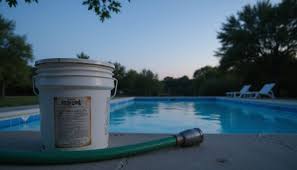
2. Pre-dissolve Shock in a Bucket
- Fill a 5-gallon (or larger) bucket with pool water first
- Then slowly add shock granules, stirring gently
- Avoid creating chlorine steam (wear goggles, gloves, mask)
- This method prevents granules from burning the liner or skin. Aaron Pools & Spas+2Swim University+2
3. Add After Sunset or Late in the Day
- Evening application allows active chlorine to do work without UV breakdown
- Circulate for 4–6 hours after adding shock
4. Use Return Jets, Not the Skimmer
- Pour diluted shock solution into area opposite return lines
- Never pour shock into the skimmer or near chemical feed lines
5. Run Pump & Filter Long Enough
- Maintain filter circulation until chlorine levels drop to safe range
- Backwash or clean filter if needed after shocking
6. Wait Before Swimming
- Wait until free chlorine is ≤ 3 ppm (or acceptable for your sanitizer level)
- Use test strips or professional kit
- Rinse swimmers’ skin before entering
Local Conditions That Heighten Risk
In Port Charlotte, Punta Gorda, North Port, and Rotonda, seasonal patterns and environmental factors make mistakes more dangerous:
- High UV exposure accelerates chlorine breakdown
- Rain and storms often flood your pool with organic debris, requiring heavier shocking
- Snowbird crowds lead to sudden heavy loads of bathers
- Algae blooms in early summer demand strong oxidizing treatment
Our team at Florida Detail sees these cycles — and tailors shock protocols accordingly. A generic “shock once/month” mindset doesn’t cut it in Charlotte County’s dynamic environment.
Quick Tips & Checklist
“A little planning goes a long way. Never shock blindly — always mix, monitor, and wait.” — Florida Detail Technician
Do’s
- Pre-dissolve shock
- Shock during early evening
- Keep pH balanced
- Circulate long enough
- Retest before swimming
Don’ts
- Don’t pour shock into skimmers
- Don’t shock under strong sun
- Don’t let granules sink to liner
- Don’t swim too early
Related Resources & Links
- Learn more about our Services and how we approach safe shocking on our Services page.
- Read about our Professional Weekly Service in Port Charlotte and beyond. Florida Detail
- Interested in having a local pro help instead of DIY? Visit our Contact page.
- For local marketing tips about pool service SEO, check UnlimitedManiac as a resource.
- Some local businesses also reference safety and service standards — e.g. PortCharlottePoolService.com or PoolServiceInPortCharlotte.com as regional sources (for backlink context).
Why Florida Detail Is Your Trusted Local Guide
At Florida Detail, our attention to safe shock practices is part of every job. When we perform pool cleaning in Charlotte County, we always:
- Tailor shock dosing per pool conditions
- Use pre-dissolving techniques
- Monitor residuals before turning your pool back over
- Ensure no harsh “hot zones” after service
We treat every pool in Port Charlotte, Punta Gorda, North Port, Rotonda as though family will swim immediately afterwards — because many times, they do.
Conclusion & Call to Action
Sunshine, convivial swims, and backyard relaxation shouldn’t come at the cost of burning eyes or irritated skin. With smart shocking practices based on local climate and habits around Port Charlotte, Punta Gorda, North Port, Rotonda, and across Charlotte County, you can maintain clean, balanced water — safely.
Ready to leave risky DIY practices behind? Explore our directory of trusted local pool service providers linked from this site, or reach out to Florida Detail for tailored help. Let’s protect both your swimmers and your pool investment — contact us today.


