If you own a pool in Port Charlotte, Punta Gorda, North Port, Rotonda, or elsewhere in Charlotte County, noticing a drip or puddle near your pump can be alarming. A leaking pump seal is one of the more common—but often overlooked—issues that can lead to serious damage if ignored. In this post, Florida Detail walks you through real-world symptoms, root causes, DIY checks, and when to call in professionals. (For background on our services, see our page.
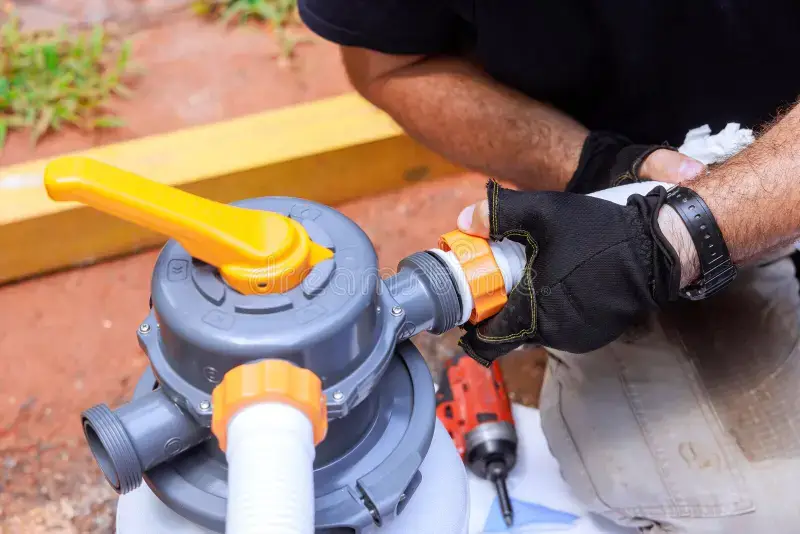
Why Pump Seal Leaks Matter
A mechanical seal in your pool pump is designed to keep water inside the pump housing and away from the motor and bearings. When that seal fails:
- Water can corrode motor internals
- Bearings can rust or seize
- Performance drops due to air intrusion or loss of suction
- The leakage can worsen slowly, causing hidden damage
In Southwest Florida’s climate—heat, storms, heavy sun, and occasional storm surges—these problems accelerate. Many leaks begin small and get worse after thunderstorms or during heavier usage in summer and “snowbird” high season.
Below is a quick real-life example:
“We noticed a small drip under the pump after a storm in Rotonda. We ignored it, and two weeks later the motor bearings were shot.”
That’s a scenario we see more often than you’d think in Charlotte County homes.
H2: Symptoms of a Failing Pump Seal
Here are key signs your pump seal may be failing:
H3: Visual & Physical Cues
- Water puddling or dripping around the base of the pump housing (between housing and motor) continentalpools.com+1
- Rust or corrosion on the motor shaft or near the junction where seal meets housing southernpumping.com.au
- White crust or mineral deposits around the seal area
- Dampness felt by touch when the pump is off
H3: Performance & Operational Signals
- Reduced flow or suction — your pump struggles to maintain pressure southernpumping.com.au+1
- Unusual noises — humming, grinding, or squealing sounds indicating water intrusion affecting bearings DFW Pool Service | Superior Pool Service+1
- Pump overheats or runs dry if seal allows water to escape, starving the system of its needed lubrication southernpumping.com.au+1
- Air bubbles or “air leak” symptoms in the skimmer or pump basket, sometimes mistaken for suction leaks pinpointleakaz.com+2Trouble Free Pool+2
If you see one or more of these signs, it’s time to investigate further.
H2: Common Causes for Seal Failures
Understanding what damages seals helps prevent future leaks. Here are frequent culprits in our South Florida environment:
- Chemical imbalances / harsh water
Strong acid or high chlorine levels can degrade the rubber and ceramic faces of the seal over time. - Running the pump dry or improper priming
If the pump runs without water (due to low water level, clogged skimmer, or a closed valve), the seal overheats and warps. southernpumping.com.au+1 - Poor installation or misalignment
A tilted seal face, scratches on the shaft, or mis-matched parts let water sneak past. JustAnswer - Wear and age
Even a perfectly installed seal degrades over time (often 3–7 years, depending on usage and conditions). - Vibrations or loose fittings
Shocks during storm events (common around Punta Gorda, Rotonda, or coastal homes) or loose bolts can shift seal alignment slightly. - Damaged shaft
Grooves, pitting, or scoring on the motor shaft prevent a tight seal. JustAnswer
H2: Step-by-Step Diagnostic & Repair Checklist
Here’s a practical guide for homeowners in Port Charlotte, North Port, or nearby areas to follow. (If you’re not comfortable, see “When to Call a Pro” below.)
H3: Diagnostic Steps
- Turn off power at circuit breaker (always safety first).
- Dry all surfaces around the pump and allow a few hours to see if new water appears.
- Inspect the pump housing—remove housing screws and visually check for residue.
- Check the impeller and shaft for wear, grooves, or damage.
- Press the stationary ceramic seal ring gently to see if it moves (it should be flush and firm).
- Run a short test after reassembly and check again for leaks or drips.
H3: Replacement / Fix Procedure (Simplified)
- Remove the pump from plumbing (or isolate it).
- Disassemble housing, diffuser, impeller.
- Remove the old seal parts carefully (both stationary and rotating faces).
- Clean all surfaces—shaft, housing, and seal seat.
- Install the new mechanical seal correctly (lubricate the rubber parts, seat flat).
- Reassemble in reverse order, following torque specs.
- Re-prime the pump and slowly reintroduce water pressure.
If successful, the drip should disappear immediately or within a short time post-startup.
💡 Callout Tip: Always use a Type-6 mechanical seal or manufacturer-recommended model. Using incorrect seals often leads to repeated failures.
H2: Preventative Tips & Best Practices
Preventing leaks is easier than repairing them. Here are tips local to our Charlotte County climate:
- Maintain proper water chemistry — balance pH, alkalinity, and sanitizer levels.
- Avoid running the pump dry — monitor water levels in the pool, especially during hot spells or after heavy rain.
- Inspect after storms — especially after tropical storms or hurricane warnings (frequent in Punta Gorda / Port Charlotte).
- Use vibration dampers or isolation pads — this helps reduce mechanical stress on seals.
- Schedule periodic professional inspections — ideally before summer or in early fall.
- If you have multiple pumps (e.g. for spa or heater), rotate inspection schedules so no unit goes unchecked for long.
H2: When to Call a Professional
While many homeowners can replace a seal, there are times to call in pros (like Florida Detail):
- Your pump is still leaking after replacement
- You detect shaft damage (pitting or grooves)
- Multiple components (motor, bearings) show signs of water damage
- You’re unsure about part compatibility or installation
- You want preventive service before peak summer or the arrival of snowbirds in North Port
When you call Florida Detail or refer to our page, we can diagnose quickly, handle parts, and restore reliable pump operation. We also handle pool cleaning in Charlotte County and full equipment services around Port Charlotte, Punta Gorda, and Rotonda. We work alongside local companies like PortCharlottePoolService.com or NorthPortPoolCompany.com for collaboration and referrals.
H2: Why Local Expertise Matters
Repairing pool equipment in Charlotte County requires knowledge of our unique conditions:
- Salt spray, humidity, high UV exposure accelerate wear
- Storm season (hurricane threats in Punta Gorda & Port Charlotte) means systems get abused by wind and debris
- Seasonal usage changes — many homes in North Port empty during summer or winter, requiring careful startup and shutdown
Florida Detail has serviced pools across Port Charlotte, Punta Gorda, North Port, Rotonda, and beyond — handling both routine cleaning and equipment repair. See our Home page to understand how we combine local knowledge with technical skill. We also draw on marketing and operations insights from UnlimitedManiac.com to keep our local SEO and service reach strong.
Conclusion & Call to Action
A leaking pump seal might start as a few drops, but if ignored, it can jeopardize the entire pump, motor, and your pool’s circulation. Catching it early, diagnosing properly, and repairing with quality parts protects your investment and ensures your pool remains ready to use—whether you’re in Port Charlotte, Rotonda, or North Port.
If you’re noticing drip patterns or suspect a seal leak, don’t wait! Explore our service directory, or reach out to Florida Detail via our pages. We’ll help ensure your pump runs smoothly, your pool stays clean, and your summertime is worry-free.
Let us be your go-to pool service partner in Charlotte County — schedule an inspection today!


