Introduction: Why Leak Detection Matters in Florida
In sunny Charlotte County, pool ownership is almost a tradition. From Port Charlotte to Rotonda, residents enjoy crystal-blue water all year — until a mysterious drop in the water level starts costing money. A pool plumbing leak isn’t just wasteful; it can damage foundations, boost utility bills, and promote algae growth.
Thankfully, modern leak detection tools make it easier for homeowners to find and fix plumbing issues early — before calling a professional from Florida Detail.
H2: Common Signs of Pool Plumbing Leaks
Before reaching for tools, watch for these classic red flags:
- Water loss exceeding ¼ inch per day
- Air bubbles shooting from return jets
- Damp soil or soggy spots around the pool deck
- An overworked pump or constant refilling
- Spike in chemical use or imbalanced water chemistry
If these symptoms sound familiar, it’s time to investigate using DIY-friendly leak detection gear.
H2: Top Leak Detection Tools for Florida Homeowners
1. Dye Testing Kit
Best for: Spotting leaks near fittings, lights, and steps
Dye testing is the simplest method for quick leak detection. You can buy a pool leak dye test kit for under $20 at most hardware stores. Just:
- Turn off the pool’s pump.
- Slowly release dye near suspected areas.
- Watch the dye movement — if it drifts into a crack or fitting, you’ve found your leak.
This tool works especially well after storm season in Punta Gorda, when shifting soil can cause minor cracks.
2. Electronic Leak Listening Device
Best for: Locating underground pipe leaks
Electronic devices like hydrophones or listening amplifiers detect the sound of escaping water underground. It’s a step up from basic kits — perfect for homeowners in North Port who want precise results before digging.
💡 Pro Tip: Use electronic tools during quiet hours — early morning or late evening — to reduce background noise interference.
3. Pressure Testing Equipment
Best for: Confirming leaks in plumbing lines
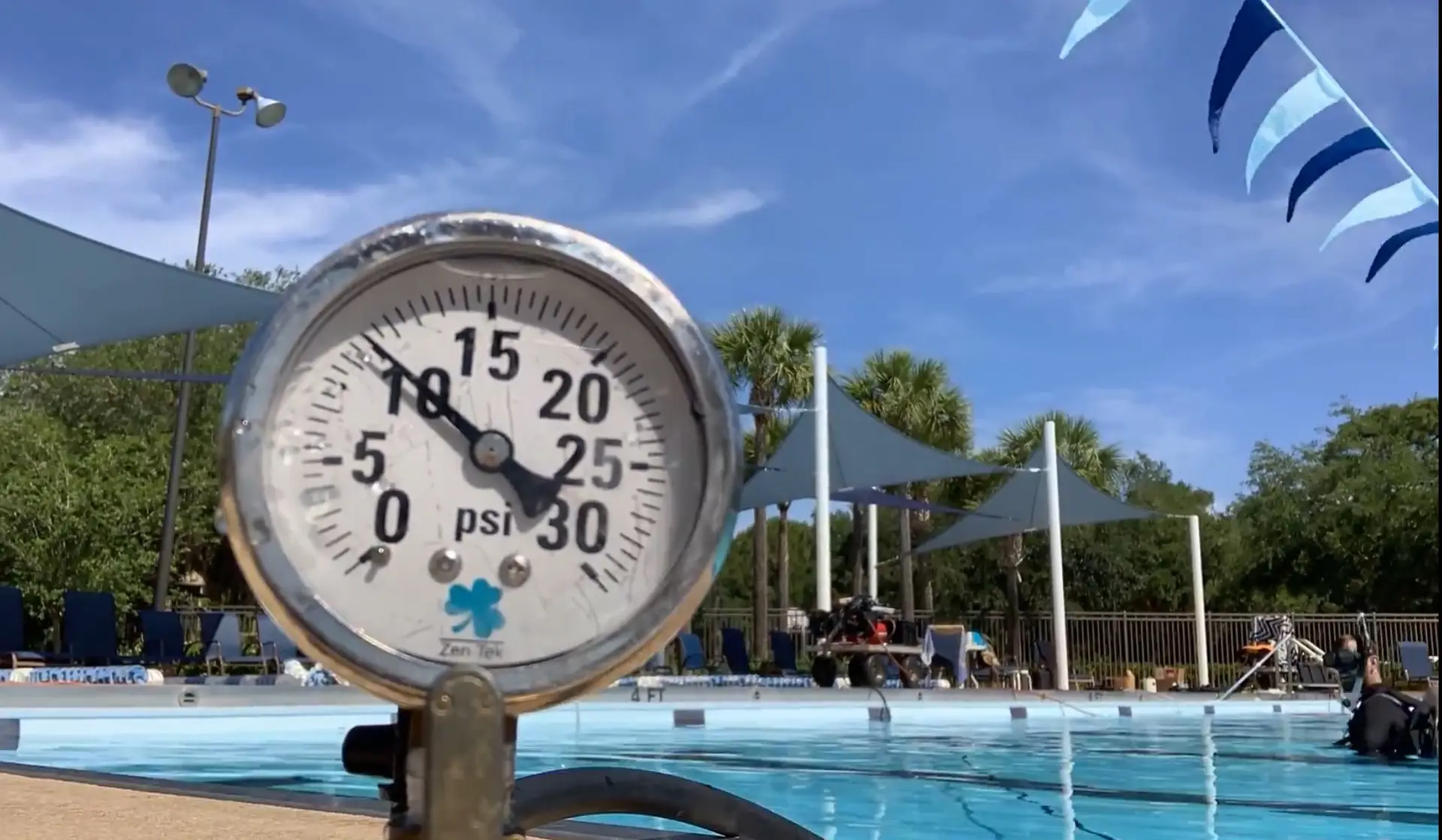
Pressure testing tools are essential if you suspect a hidden plumbing issue. Attach the test plug to your return or skimmer line, then:
- Pressurize the system using air or water.
- Monitor the pressure gauge.
- If the pressure drops quickly — bingo, you’ve got a leak.
This test is common among local pros listed on Florida Detail and PortCharlottePoolService.com.
4. Pool Leak Detection Camera
Best for: Visual inspection in hard-to-reach spots
Tiny waterproof cameras help you inspect plumbing joints or return lines visually. These are ideal for Rotonda West pools where plumbing runs beneath concrete decks.
Cameras connect via Bluetooth or smartphone apps, making it easy for DIYers to spot moisture trails or corroded fittings.
5. Ultrasonic Leak Detectors
Best for: Advanced users or professionals
These tools convert sound vibrations into digital readings. Ultrasonic detectors can find leaks invisible to the human ear, even several feet underground. If you’re managing a large Charlotte County property or commercial pool, this investment pays off.
H2: When to Call a Professional
Sometimes, the problem goes beyond DIY solutions. If your readings are unclear or leaks are deep underground, contact a verified technician through:
- Florida Detail — Local directory for trusted pool service providers in Port Charlotte.
- NorthPortPoolCompany.com — Reliable for plumbing repairs and inspections.
- PoolCleaningInPortCharlotte.Com — Maintenance experts specializing in long-term leak prevention.
⚠️ Remember: Undetected leaks can waste thousands of gallons annually — and weaken pool structures over time.
H2: Why Florida’s Climate Makes Leak Detection Essential
In Florida’s subtropical weather, extreme heat and rainfall cause constant expansion and contraction of pool surfaces. Add in hurricane season and soil shifts, and your plumbing system gets tested year-round.
Routine leak detection isn’t just smart — it’s preventive maintenance that protects:
- Pool structure integrity
- Equipment lifespan (pumps, heaters, filters)
- Water conservation efforts
- Electric and chemical costs
A simple inspection with your DIY toolkit can save hundreds in repair bills, especially for snowbird homeowners returning each season.
H2: Step-by-Step DIY Leak Check Routine
Here’s a quick home inspection plan:
- Visual check: Look for cracks or wet spots.
- Bucket test: Compare water loss inside a bucket placed in the pool to outdoor levels.
- Dye test: Focus on seams, returns, and lights.
- Pressure test: Check plumbing lines if bucket test confirms water loss.
- Record results: Take photos or notes before contacting a professional.
If unsure, consult a licensed pool plumber through Florida Detail or get referral support from UnlimitedManiac.com for local SEO and marketing guidance.
H2: Preventing Future Pool Leaks
After identifying and repairing the issue, use these maintenance tips:
- Schedule quarterly inspections (especially post-storm).
- Avoid draining the pool completely in hot months.
- Maintain balanced pH and chlorine levels to prevent corrosion.
- Monitor pool equipment seals and valve O-rings regularly.
- Use expansion joints where possible to absorb deck movement.
Routine upkeep not only prevents leaks but also enhances your pool’s efficiency and aesthetic appeal.
Conclusion: Protect Your Pool and Your Property
Early detection is your best defense against costly repairs. Whether you’re a DIY enthusiast in North Port or a snowbird homeowner in Rotonda, investing in the right pool leak detection tools can save you both money and stress.
To find vetted local experts, visit:
👉 Florida Detail – your trusted directory for pool repair and leak detection professionals across Charlotte County.
Or explore partner services at PoolServiceInPortCharlotte.com and NorthPortPoolServices.com.
✅ Ready to protect your pool?
Visit https://FloridaDetail.com today to find trusted experts for pool leak inspection, maintenance, and plumbing repair in your area.


