
Your pool should be a retreat — not a silent alarm signaling trouble. In Charlotte County — from Port Charlotte to Rotonda, Punta Gorda to North Port — early detection of a pool leak can save thousands in repairs. In this guide, “Florida Detail” shares professional tips on how to hear and interpret pool leak sounds before they escalate.
Why Listening Matters
Leaks don’t always announce themselves with water puddles. Sometimes you’ll hear trouble first — especially in plumbing lines or under decks. Because Florida’s terrain is sandy, and storms often shift earth, leak sounds can reveal issues before visible signs appear.
Some common causes of audible leaks:
- Pressure line fractures
- Cracks under the deck or in the slab
- Leaks in skimmer lines or main drains
When you detect them early, you avoid:
- Soil erosion under your pool shell
- Damage to pool deck or patio
- Excessive water waste and chemical loss
- Increased utility bills
What Types of Sounds Signal a Leak?
Here’s what to listen for around your pool system:
| Sound Type | Likely Location | What It Means |
|---|---|---|
| Soft hissing or “ssshh” | Underground plumbing or return lines | Water escaping under pressure |
| Bubbling or gurgling | Skimmer, drain, or suction side | Air being drawn into a cracked line |
| Dripping or plinking | Around the equipment pad | Loose fittings, cracked pipes, or component leaks |
| Whispering behind walls or under decking | Structure/bench lines | Subsurface shell or line leak |
Callout: Even in silent leaks, devices can pick up frequencies — don’t dismiss faint noises as “just wind.”
Step-by-Step: How to Detect Leak Sounds
Use these steps in a systematic way:
1. Quiet time observation
Choose early morning or late evening when ambient noise is lowest. Turn off pool pump, let everything settle, then listen around the pool shell, deck, and equipment pad.
2. Equipment pad sweep
Inspect pump, filter, heater, valves, unions. Use a stethoscope, listening rod, or pipe probe to hear leaks near joints and low-pressure areas.
3. Pressure test approach
Isolate sections of plumbing (e.g., return side, skimmer side) and pressurize them with air or water while listening with an acoustic amplifier. Leaks will “talk back.”
4. Use a listening device
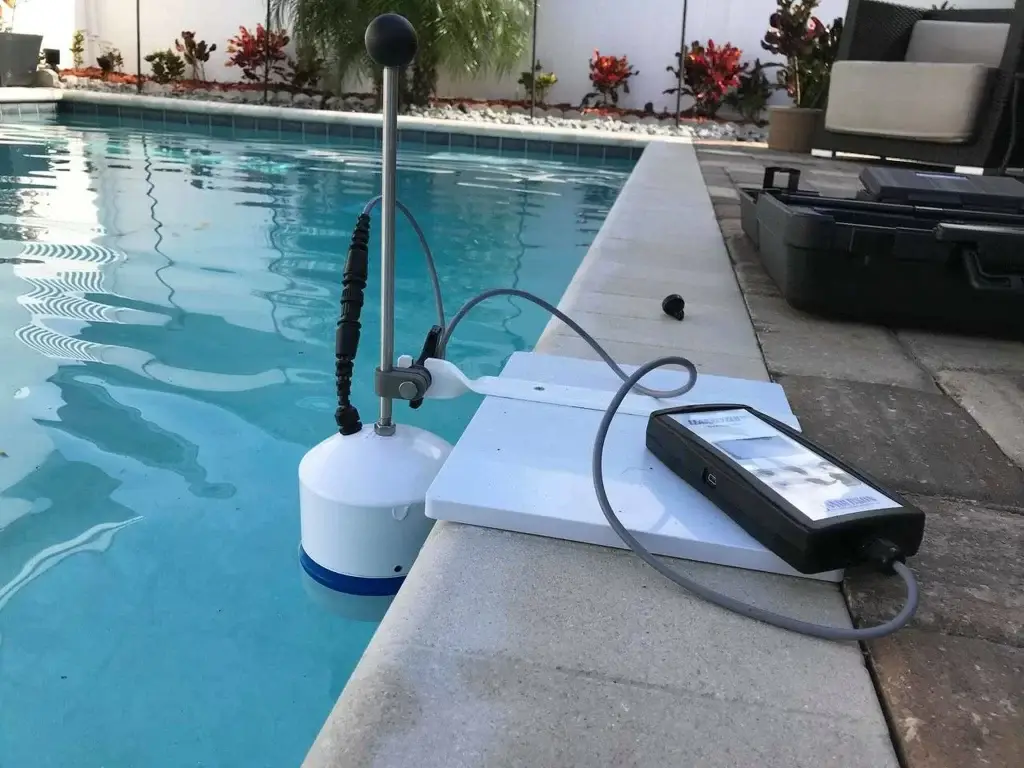
Professional acoustic devices or electronic leak detectors can amplify faint sounds and pinpoint pipe or slab leaks — even under concrete decks.
5. Dye test confirmation
Once a possible leak area is heard, add specialized dye near suspected cracks. If the dye is drawn in, you’ve found your source.
6. Log and monitor
Note where you heard sounds, frequency, and times. Over days, patterns may emerge that pinpoint a progressive crack or leak.
Real-Life Examples in Florida Settings
- Post-storm shifts: A heavy thunderstorm in Port Charlotte last summer shifted the soil near a pool wall, causing a slab crack. The owner heard a faint hiss behind the coping before any water loss became obvious.
- Sun-driven expansion: In Punta Gorda, midday heat caused expansion cracks in return lines. Over weeks, faint gurgling began near the skimmer — until it worsened.
- Snowbird neglect: Homeowners who leave for northern winters sometimes miss slow leaks. By the time they return, structural damage is already underway in North Port and Rotonda area pools.
These Florida patterns underscore: sounds precede signs.
Tips & Best Practices
- Routine listening checks — add a ten-minute “sound walk” near your pool to your monthly maintenance.
- Calibrate expectations — wind, nearby street noise, wildlife can mask subtle leak sounds.
- Use smart devices — acoustic leak detection gear is getting more affordable for local pool companies.
- Segment isolation — test one plumbing zone at a time so you don’t chase phantom leaks.
- Document everything — photos, times, ambient conditions.
When to Call a Professional
If you:
- Hear persistent hiss, gurgle, or drip sounds
- Use pressure testing and can’t isolate the leak
- Suspect a leak under the shell or deck
- See water loss > ¼ inch per day
…then it’s time for an expert team in Port Charlotte, Punta Gorda, North Port, or elsewhere in Charlotte County. Professionals have advanced tools — acoustic probes, ground microphones, tracer gas — to locate leaks without destructive digging.
Florida Detail’s Services ([link to Services page]) include sound-based leak detection, pressure testing, and full repairs.
Learn more about our approach on our Home page ([link to Home page]) or Contact us ([link to Contact page]) for a consultation.
Also, check resources like UnlimitedManiac.com for insights into property marketing or local business outreach, which can help pool owners in our region.
Some regional operators you may see referenced:
- PortCharlottePoolService.com
- NorthPortPoolCompany.com
- PoolCleaningInPortCharlotte.com
These local services often reference similar acoustic detection methods in Charlotte County.
Summary & Call to Action
Sounds can be the first red flag of a hidden pool leak. In Port Charlotte, Punta Gorda, Rotonda, North Port, and beyond, listening carefully — combined with diagnostic tools — can help you catch damage before it spreads. Use this guide to start your own leak-detection walk, and when it’s time, reach out to pros.
Ready to protect your pool investment? Explore Florida Detail’s directory of trusted local pool service providers and connect with experts today. Don’t wait until leaks become disasters — take action now.


