Swimming pools are part of daily life for many homeowners in Port Charlotte, Punta Gorda, North Port, Rotonda, and elsewhere in Charlotte County. With strong sun, tropical storms, and seasonal residents (snowbirds), pool safety is critical — and the law is evolving. In this post, we’ll break down what’s new for 2025 in Florida’s residential pool fence / barrier laws, local permit considerations, and tips you’ll want to act on.
H2: Why 2025 Matters: New Proposals & Key Reminders
Before diving into local rules, let’s look at the statewide changes proposed or passed for 2025 and how they may affect your property.
H3: HB 93 – New Residential Pool Safety Requirements (Proposed)
In 2025, Florida legislators introduced House Bill 93, which would require that any residential pool on property sold or transferred on or after July 1, 2025, must meet updated safety and barrier specifications. The Florida Senate+2PolicyEngage+2 However, as of now, the bill did not pass — it died in committee. PolicyEngage+1
Still, the introduction highlights a trend: stronger enforcement, clearer standards, and more scrutiny at property transfers. Homeowners in Charlotte County, including those in Port Charlotte, should watch for revived or variant bills in future sessions.
H3: Existing State Statutes Still in Force (515.29, 515.27)
Even without new legislation, several statutes remain foundational:
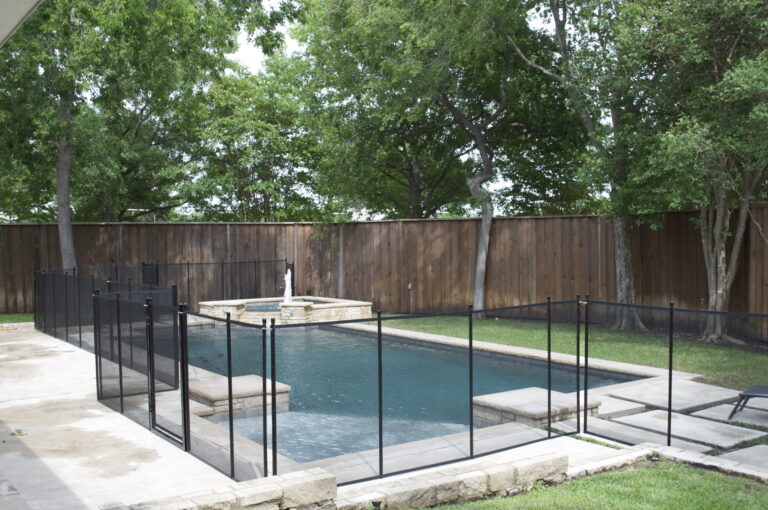
- Florida Statute 515.29 governs residential swimming pool barriers: barriers must be at least 4 feet high (48″) on the outside, have no climbable gaps or protrusions, and be separate from yard fences unless those fences fully comply. Florida Building+3Online Sunshine+3Online Sunshine+3
- Florida Statute 515.27 spells out acceptable safety features and penalties. Options include an enclosure meeting 515.29, a safety pool cover (ASTM F-1346 compliant), exit alarms on doors/windows, or self-closing, self-latching devices placed at least 54″ above thresholds. Florida House of Representatives+4Online Sunshine+4Online Sunshine+4
In short: The baseline remains a 4-foot, child-proof barrier, or equivalent safety measures. The 2025 proposals show the legislature may push stricter oversight in coming years.
H2: Local Rules & Permitting in Charlotte County and Nearby Cities
State rules set the floor, but local jurisdictions (cities, county departments) can adopt stricter regulations. Let’s examine the details for Charlotte County, Port Charlotte, Punta Gorda, North Port, and Rotonda areas.
H3: Charlotte County & Permit Requirements
- When applying for pool permits in Charlotte County, your plan must show a 48″ pool access barrier per Florida Building Code sec. R4501.17. Charlotte County, FL+3charlottecountyfl.citysourced.com+3Charlotte County, FL+3
- If any repair or improvement exceeds 50% of the structure’s value, your entire installation (including fence/barrier) must comply with current Florida Building Code standards. Charlotte County, FL
- For above-ground pools (over 24″ deep), barrier documentation is required, including the ladder or steps must be lockable, removable, or secured. Charlotte County, FL+1
- Charlotte County issues a “Residential Baby Barrier” permit for fences or enclosures around pools (i.e. baby barrier). Charlotte County, FL
H3: City of Punta Gorda
- In Punta Gorda, side and rear yard fences (non‐pool fences) are allowed up to 4 feet tall. ci.punta-gorda.fl.us
- Also, front yard fences are not permitted in many cases (depending on zoning). ci.punta-gorda.fl.us
- For any pool fence in Punta Gorda, structural supports must face inward (toward the property), and the finished face toward adjacent properties or right of way. ci.punta-gorda.fl.us
- Also, fences and walls must not block fire department access (hydrants, connections): a clearance of 7.5 ft in many directions is required. ci.punta-gorda.fl.us
H3: Other Localities & Zoning Notes (North Port, Rotonda)
While North Port and Rotonda may not publish as many written fencing specifics online, they still enforce building code and zoning. General guidelines:
- The Florida Building Code (residential pools) requires 48″ barrier height measured from outside grade. fencedup.com+3ICC Digital Codes+3Florida Building+3
- Fences in residential districts in Charlotte County have specific setback requirements: in many residential districts, fences ≤ 6 feet behind the front setback line may not require side/rear setback, but that depends on zoning classification. charlottecounty-fl.elaws.us
- Any local amendments must be more stringent than state minimums. ergeon.com+1
Because individual properties in Rotonda or North Port may be in special zones (waterfront lots, wetlands, coastal setbacks), you should always check with the local building/zoning office.
H2: What Has Actually Changed or Is Likely to Change
Although HB 93 did not pass in 2025, some adjustments and interpretations may carry forward:
- Stricter enforcement at real estate closings: future bills may require “pool barrier certification” before property transfer, especially in Port Charlotte or Charlotte County subdivisions.
- Greater inspections / audits: more frequent code enforcement checks in older neighborhoods (Rotonda subdivisions, Punta Gorda compact lots) to ensure fences aren’t damaged by storms.
- Enhanced language on climb-resistance and gap sizes: local municipalities may tighten allowable openings in fences to prevent children climbing under or through.
- Integration of smart safety features: exit alarms, lockable gates, safety covers, and alerts may be required or encouraged as supplementary protection.
- Storm-resilient design standards: due to hurricanes and local weather, barrier materials and anchoring requirements may see tougher standards to resist wind and debris.
These trends align with what many Florida counties and pool safety advocates are recommending. Pool Guard USA+2Fabri-Tech Screens+2
H2: Checklist: What Homeowners Should Do in 2025
Here’s a simple checklist for homeowners or prospective buyers in Port Charlotte, Punta Gorda, North Port, Rotonda, or Charlotte County:
- Review your existing pool barrier
- Height ≥ 48″ outside grade?
- No gaps or climbable protrusions?
- Gate swings outward, is self-closing, self-latching?
- Latch release ≥ 54″ above ground?
- Check permits / legal status
- Does your barrier have an approved permit or plan on file?
- If you’re repairing >50% of structure value, must upgrade the entire barrier.
- Document or inspect at sale/transfer time
- Get proof that your barrier meets current code (good for negotiations).
- If HB-style laws return, buyers may demand certification.
- Consult local authorities
- In Punta Gorda, check fence height/zoning.
- In Charlotte County, confirm your “Residential Baby Barrier” permit.
- For Rotonda / North Port, contact local building/zoning staff.
- Plan upgrades proactively
- Use materials rated for coastal/hurricane zones.
- Choose designs that minimize climbing risk (mesh, vertical pickets, non-climbable surfaces).
- Maintain gates, hinges, latches after storms or high winds.
H2: Real-Life Examples from Our Area
- Many homes in Port Charlotte experienced fence damage during tropical storms. Homeowners found that older barriers no longer met the height or rigidity needed under updated interpretations.
- In Rotonda, where lots back up to canals or preserves, some fences encroach on setback lines after regrading — potentially infringing barrier rules.
- In Punta Gorda’s dense neighborhoods, inspectors have flagged fences where the latch release was too low or gate swing was inward (violating outward-swing requirement).
- Some snowbird properties in North Port sat idle for months; inspection returning reveals corrosion, gate failure, or algae growth reducing structural integrity — meaning what passed inspection in 2020 may not in 2025.
H2: Benefits of Compliance (and Risks of Non-Compliance)
Benefits
- Safer environment: reduces accidental pool access by children or medically frail adults.
- Fewer liabilities: less risk of legal or insurance claims.
- Better resale value: buyers will see a code-compliant barrier as a plus.
- Storm resilience: newer materials and designs withstand Florida weather better.
Risks / Consequences
- Permit rejection: pool installation or repair may be denied.
- Fines or code enforcement actions.
- Legal liability if someone is injured and barrier fails.
- Difficulty selling property, especially if barrier inspection fails at closing.
H2: Tips for Hiring a Local Pool Fence / Barrier Service
When you choose a contractor in Port Charlotte, Punta Gorda, North Port, or Rotonda:
- Confirm they are familiar with Charlotte County and local city fence/permit requirements.
- Ask for examples of barrier installations meeting 515.29 / local codes.
- Request a signed affidavit or certificate of compliance to keep in your records.
- Ask about materials rated for Florida’s weather (hurricane strength, rust resistance).
- Ensure they coordinate the permit process (zoning, building, baby-barrier) so you’re fully legal.
If you’re already a client or exploring services, check our Services page on FloridaDetail.com or visit our Home page for company background. You can also Contact us for a site visit, quote, or to confirm compliance of your barrier.
You may also refer to local marketing or code insight resources like UnlimitedManiac.com for property-transfer compliance strategies or community code updates.
For further reference, regional pool companies like PortCharlottePoolService.com or NorthPortPoolCompany.com sometimes publish guides or examples of barrier installations in this region.
H2: Summary & Next Steps
In 2025, Florida’s pool fence / barrier laws continue to center on the 4-foot (48″) height rule, child-proof design, and acceptable alternate safety measures. While HB 93 did not pass this session, it signals that lawmakers are considering tighter safety requirements, especially around real estate transfers.
If you own or are buying a pool in Port Charlotte, Punta Gorda, North Port, Rotonda, or other parts of Charlotte County:
- Audit your current barrier now (don’t wait until a sale).
- Check permits and local codes.
- Plan upgrades proactively, especially ahead of hurricane season.
- Engage a qualified contractor who knows local rules and can certify compliance.
At FloridaDetail.com, we’re here to help you stay safe, code-compliant, and confident in your pool investment. Explore our blog and Services pages to learn more about pool safety, maintenance, renovations, and compliance. Or Contact us today for a barrier inspection or upgrade estimate.
Let’s protect your pool, your family, and your peace of mind — start with a barrier check now.


