When setting up or upgrading your pool system, equipment placement isn’t just about convenience — it’s about safety, performance, and compliance. Many homeowners in Florida (especially in Charlotte County, Port Charlotte, and Punta Gorda) don’t realize that improper placement of pumps, filters, and heaters can lead to code violations, reduced efficiency, and costly repairs.
Here’s what you need to know before installing or relocating your pool equipment.
1. Respect the Required Setback Distances
Florida building codes — and most local municipalities — require specific distances between your pool equipment and property lines, structures, and windows.
- Property Line: Equipment must typically be at least 3–5 feet from your property line.
- Windows or Openings: Keep at least 5 feet away to prevent exhaust or chemical fumes from entering your home.
- Neighbor Noise Concerns: Pumps and filters can be noisy, so maintaining distance helps avoid complaints and HOA issues.
Pro Tip: Always check with your county building department before installation — regulations may differ between Port Charlotte and North Port.
2. Mind the Electrical and Plumbing Layout
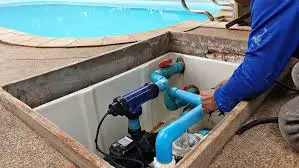
Your equipment should be positioned to allow short, direct plumbing runs for better water flow and less strain on the pump.
- Keep Pipes Straight: Avoid sharp 90° bends right at the pump.
- Electrical Panel Access: Leave at least 3 feet of clear space in front of electrical panels (per the National Electric Code).
- Grounding: All pool equipment must be properly bonded and grounded to prevent shock hazards.
3. Ensure Proper Ventilation for Gas Heaters
Gas pool heaters generate carbon monoxide and need adequate airflow.
- Minimum Clearance: 18–24 inches on all sides; 4 feet above the top for venting.
- Avoid Enclosures: Never place a heater inside a shed or enclosed space without proper venting.
- Tip: Wind direction matters — don’t let exhaust blow toward windows or lanais.
4. Avoid Low-Drainage Areas
Florida’s heavy rains can flood poorly graded yards. Installing pool equipment in a low spot risks electrical damage and corrosion.
- Mount equipment on a raised concrete pad.
- Slope the area away from the pad to promote drainage.
- Use check valves to prevent backflow into the system after a storm.
5. Noise Control and Aesthetic Placement
You don’t want your relaxing pool area disturbed by loud pump noise or an eyesore of pipes.
- Use sound-dampening enclosures or hedges to reduce noise.
- Ensure at least 12 inches of clearance around equipment for maintenance.
- If possible, position equipment out of direct sun to extend lifespan.
Local Insight: Homeowners in Rotonda and Deep Creek often build small privacy walls that both conceal equipment and meet HOA appearance rules.
6. Plan for Future Additions
If you plan to add a heater, salt system, or automation panel later, leave space for expansion.
- Include extra plumbing unions for easy integration.
- Run conduit for future wiring during initial installation.
- Mark utility lines clearly for service safety.
7. Follow Manufacturer Clearance Guidelines
Each brand (Hayward, Pentair, Jandy, etc.) specifies clearances for safe operation and warranty protection.
Ignoring these can void your warranty.
- Pumps: Need airflow to cool motors.
- Filters: Require space to remove lids or cartridges.
- Automation Panels: Must stay shaded and protected from rain.
8. Comply with Local Codes and HOA Rules
Even if you’re outside city limits, county and HOA regulations still apply.
- Always file a permit if you move major plumbing or electrical components.
- Check HOA rules for fence height, noise, and equipment visibility.
- Some communities require acoustic barriers for high-powered pool pumps.
Final Thoughts
Smart pool equipment placement protects your investment, keeps your system efficient, and ensures safety compliance.
Before installation, talk to a licensed pool contractor who understands Florida’s unique codes and weather challenges.
For more expert tips, visit:
- https://FloridaDetail.com
- PoolServiceInPortCharlotte.com
- UnlimitedManiac.com for pool SEO and marketing insights.


