
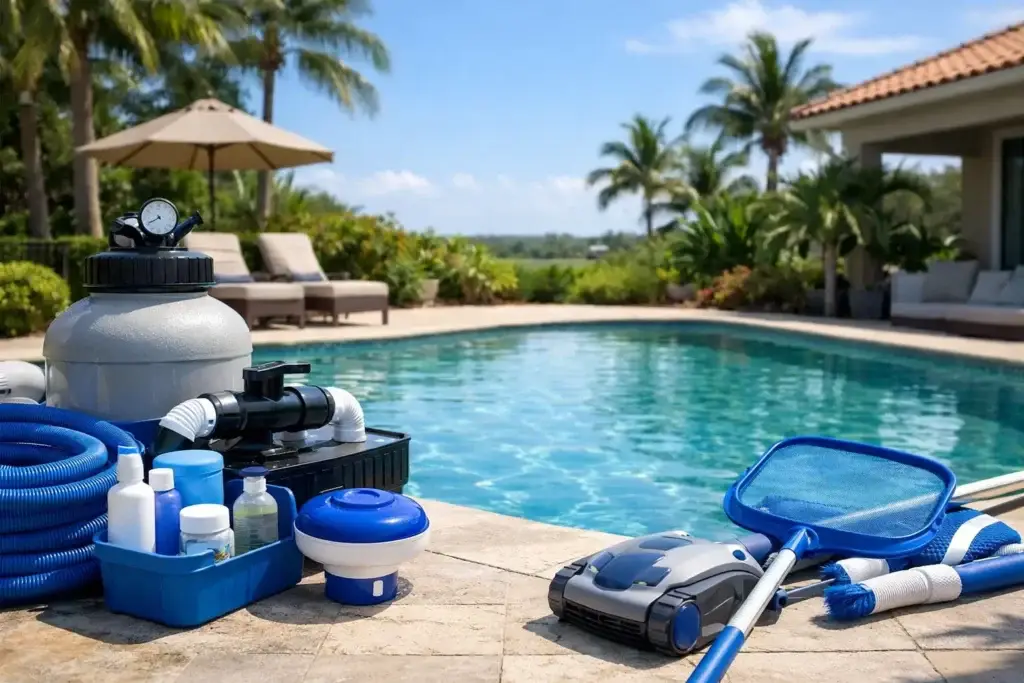
A clean pool can still have a problem hiding at the equipment pad. A pump that sounds louder than usual, a filter pressure gauge that keeps climbing, or a salt system that stops producing chlorine can turn into a costly repair if it is ignored. This pool equipment care guide focuses on the working parts behind clear, safe water and the practical habits that help Southwest Florida pool owners avoid preventable breakdowns.
Why Pool Equipment Needs Regular Attention
Your pool equipment does more than circulate water. The pump moves water through the system, the filter captures debris, and the sanitizer system helps keep algae and bacteria under control. When one part is underperforming, the rest of the pool has to work harder.
Florida pools run through heavy heat, intense rain, windblown debris, high bather loads, and long swimming seasons. That means equipment often works year-round, not just during a short summer window. A small blockage, a neglected filter, or poor water balance can put unnecessary strain on expensive components.
The goal is not to inspect every part of the system daily. It is to know what normal operation looks and sounds like, then act quickly when something changes.
Pool Equipment Care Guide: Start With the Pump
The pool pump is the heart of the circulation system. It pulls water from the skimmer and main drain, pushes it through the filter and other equipment, then sends it back to the pool through the returns. If the pump loses prime or runs dry, it can overheat and damage the motor or seals.
Check the pump basket regularly, especially after a storm or when leaves are dropping. Turn the pump off before opening the lid, remove debris, inspect the lid O-ring for cracks or dryness, and reseat the lid securely. A clean, lubricated O-ring helps prevent air leaks that can cause bubbles in the pump basket or weak flow at the returns.
Pay attention to sound. A steady operating hum is normal. Grinding, screeching, rattling, or a sudden loud vibration is not. These noises may point to worn bearings, debris in the impeller, loose mounting hardware, or an air leak on the suction side. Continuing to run a noisy pump can turn a service call into a motor replacement.
Variable-speed pumps deserve a little extra attention because their settings affect both water quality and energy use. Running at a lower speed for longer can be more efficient than a short, high-speed cycle, but the exact schedule depends on pool size, plumbing, sanitizer type, and seasonal conditions. If circulation is too low, debris settles, chemicals distribute poorly, and algae can gain ground.
Keep the Equipment Pad Clear
Trim plants back from the pad and keep mulch, leaves, and stored items away from the motor and controls. Equipment needs airflow to stay cool, and technicians need safe access for service. Never cover a running pump with a tarp or place chemicals directly beside electrical equipment.
Watch Filter Pressure and Water Flow
Your filter does the quiet, unglamorous work of keeping fine debris out of the water. Whether your pool has a cartridge, sand, or DE filter, it needs cleaning at the right time. Cleaning too late restricts circulation. Cleaning too often can also be counterproductive, particularly with sand and DE systems that filter more efficiently once they develop a light coating of trapped debris.
Start by noting the clean operating pressure on the gauge after a proper cleaning. When pressure rises roughly 20 to 25 percent above that baseline, it is usually time for service. Low pressure can be a warning too. It may indicate a clogged pump basket, a suction-side air leak, a blocked skimmer, or a pump problem.
Cartridge filters should be removed and rinsed carefully with a garden hose. Avoid aggressive pressure washing that can damage the pleats. If cartridges remain stained, flattened, torn, or difficult to clean, replacement may make more sense than repeated chemical treatments. Sand filters may need backwashing, while DE filters require correct recharging after backwashing. Each filter type has different service needs, so guessing can create more work and less filtration.
Cloudy water is not always a chemistry issue. A dirty or damaged filter can make balanced water look dull because particles are not being captured effectively.
Protect Heaters, Heat Pumps, and Plumbing
A pool heater or heat pump can make a pool more enjoyable for longer stretches of the year, but it is not equipment to ignore. Maintain proper water chemistry, especially pH, alkalinity, calcium hardness, and sanitizer levels. Water that is too acidic or poorly balanced can corrode internal components, while high calcium levels can create scale inside the heater.
Keep the area around a heat pump clear of landscaping and debris. Heat pumps require open airflow to operate properly. Do not stack patio furniture, pool toys, or yard waste against the unit.
After heavy rain, inspect the equipment pad for standing water, damaged wiring, loose fittings, and signs of leaks. Southwest Florida storms can drop enough debris to clog baskets and can expose small issues that were easy to miss in dry weather. If you suspect an electrical issue, such as a tripped breaker that will not stay reset, leave the equipment off and call a qualified professional.
PVC plumbing and valves also deserve a quick visual check. Look for drips at unions, wet spots beneath pipes, cracked valve handles, and white mineral buildup around fittings. A tiny leak may not seem urgent, but it wastes water, affects circulation, and can worsen as the pump vibrates.
Give Salt Cells and Sanitizer Equipment the Right Care
Saltwater pools still need active equipment care. The salt cell converts salt into chlorine, but scale buildup can reduce its output and shorten its life. Inspect the cell periodically for white, crusty deposits between the plates. Do not clean it with acid unless buildup is present and the manufacturer’s instructions call for it. Unnecessary acid cleaning can wear down the cell coating.
Keep salt levels within the range specified for your system. Too little salt can trigger low-salt warnings and weak chlorine production. Too much salt can contribute to corrosion and may require partial draining to correct. Water temperature also matters. Many salt systems produce less chlorine in cooler conditions, so seasonal adjustments may be needed.
If your pool uses a chemical feeder, UV system, ozone unit, or automation controller, inspect it for warning lights, leaks, and unusual readings. These systems can reduce day-to-day work, but they do not replace water testing or routine cleaning.
Do Not Let Water Chemistry Damage the Equipment
Water chemistry and equipment health are tied together. Low pH can corrode heaters, metal fixtures, and pump components. High pH and calcium hardness can cause scale in salt cells, heaters, and plumbing. Low stabilizer may allow chlorine to burn off quickly in the Florida sun, while high stabilizer can make chlorine less effective.
This is why tossing in chemicals only when the water looks bad is risky. By the time the pool turns cloudy or green, circulation and filtration may already be under added stress. Consistent testing and balanced treatment protect the water, the finish, and the equipment at the same time.
Know When to Call for Pool Service
Some tasks, such as emptying a basket or checking for visible leaks, are straightforward for most owners. Electrical repairs, heater diagnostics, motor problems, major leaks, and repeated algae outbreaks are different. Trying to force a fix without identifying the cause can lead to damaged equipment or unsafe conditions.
Call for professional help when the pump will not prime, the breaker trips repeatedly, pressure changes dramatically, water flow drops without an obvious blockage, or equipment is leaking. It is also smart to schedule service if your pool is frequently cloudy despite regular chemical treatment.
For homeowners in Port Charlotte, North Port, Punta Gorda, and nearby communities, a dependable maintenance schedule takes these checks off the weekend list. Florida Detail Pools can keep an eye on circulation, filtration, chemistry, and equipment condition while you enjoy the reason you bought the pool in the first place.
A five-minute look at the equipment pad after storms and during regular pool use can catch a small concern before it interrupts a swim day or becomes a major repair bill.