H1: Why Standard Pool Covers Fail in Florida Hurricanes
When a hurricane or tropical storm hits Charlotte County, ordinary pool covers often become liabilities—they snag debris, flap under high winds, and sometimes blow away entirely. In extreme cases, they can damage decking, break anchor points, or even injure nearby structures.
In Port Charlotte, Punta Gorda, North Port, Rotonda, and all across Charlotte County, we’ve witnessed this firsthand. After recent storms, many homeowners found torn mesh or covers ripped off and tangled in trees.
According to Charlotte County’s emergency management, destructive winds and flooding are major hazards during hurricanes. Charlotte County, FL Homes and pools are frequently exposed to both wind and debris.
The key to hurricane-resistant pool protection is selecting a cover designed and installed for high-wind events.
H2: What Makes a Pool Cover Hurricane-Resistant?
Here are the critical features to look for (and demand) when choosing a cover for storm-prone Florida:
H3: 1. Strong anchoring — deck-mounted hardware
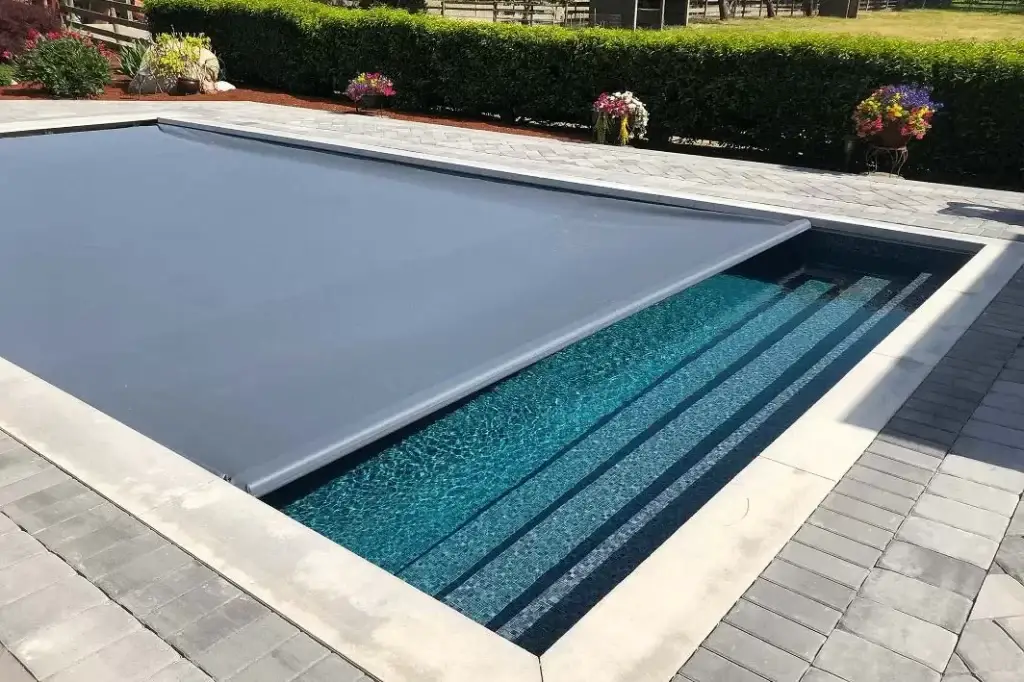
A cover must anchor securely into your pool deck or surrounding hardscape, not just rely on straps or water tubes. So-called “attached safety covers” use stainless steel anchors drilled into concrete, so the cover resists uplift forces even in strong gusts. sumtercountyfl.gov
H3: 2. Heavy-duty material & reinforced seams
The fabric should resist tearing and UV breakdown. Reinforced stitching and extra overlap help minimize point stress. Look for marine-grade or UV-stabilized mesh or solid vinyl specifically rated for wind loads.
H3: 3. Wind-permeability (venting or mesh design)
Completely solid covers can act like sails. A cover that allows some airflow—via mesh panels or vents—reduces pressure buildup under the cover.
H3: 4. Extra strap density and redundancy
More anchor points and overlapping strap layouts help distribute load. If one strap fails, adjacent ones can take some of the load instead of letting the whole cover detach.
H3: 5. Flexible tensioning system
You want adjustable spring or tension mechanisms so the cover remains taut but not over-stress the anchors. Avoid cables or straps so tight that springs are fully compressed. sumtercountyfl.gov
H2: How to Choose Cover Types for Southwest Florida
Below is a comparison of common cover types and their suitability in hurricane zones like Port Charlotte, Rotonda, North Port, and Punta Gorda.
| Cover Type | Pros | Cons / Risks in Hurricanes |
|---|---|---|
| Attached safety cover (deck-anchored) | Strong anchorage, good for wind loads | Must be properly installed and tensioned |
| Heavy-duty mesh safety cover | Allows drainage, lighter | May flap if not backed by secure anchoring |
| Solid vinyl cover | Blocks sunlight completely | Risk of acting as sail if not vented |
| Water-tube weighted cover | Easy to install | Tubes often shift or blow off in winds — avoid in hurricane zones sumtercountyfl.gov+1 |
In Charlotte County’s hurricane-prone coastline, we strongly recommend deck-anchored safety covers or high-grade mesh covers with secure hardware over water-weight or tube-based covers.
Some companies marketing “hurricane covers” (e.g. specialized dome or flood-barrier covers) claim wind resistance, but many are not designed for category-level storms common along Florida’s Gulf Coast. Easydome Pool Covers LLC+1 Always inspect wind ratings or ask manufacturers for independent test data.
H2: Best Practices for Installation & Storm Prep
Even a top-tier cover can fail if improperly installed or stressed. Here are proven practices:
H3: Pre-season checklist
- Inspect your anchors and deck — look for cracks or loose fittings
- Replace worn straps or springs
- Re-tension the entire cover (loosen then retighten)
- Add redundant backup anchors in exposed sections
- Trim surrounding trees or branches — flying debris causes most damage
- Document everything with photos (helpful for insurance later)
H3: Storm-event precautions
- Remove skimmer lids (they can become flying projectiles) sumtercountyfl.gov
- Turn off filters and equipment (electric parts can attract damage) coastalluxurypv.com+1
- Do not fully drain your pool — an empty shell can “pop out” under hydrostatic forces. Certified Leak Detection of Orlando+1
- Remove pool toys, furniture, umbrellas — anything light that could fly off
- For pool enclosures or cages, consider creating vents or removing some panels to reduce sail effect allseasonspools.com+1
H3: Post-storm recovery
- Carefully remove debris from the cover
- Inspect anchor points before removing cover
- Rinse off sand, salt, or grit (sand abrasion can weaken fabric)
- Re-tension or repair any damaged straps immediately
H2: Real-Life Storm Case in Southwest Florida
Hurricane Charley’s Lesson for Pool Owners
In 2004, Hurricane Charley made landfall near Punta Gorda with 145 mph winds, directly impacting Port Charlotte and Charlotte Harbor. Wikipedia Many homes there suffered pool damage, with torn screens and blown-off covers becoming secondary hazards. The storm taught local homeowners the critical need for reinforced anchoring and vented covers.
Recent Storms and Repair Trends
In the wake of Hurricane Helene, several Charlotte County residents reported pool mesh torn off and anchors uprooted. The local emergency recovery office has been active in cleanup across Port Charlotte, North Port, and surrounding areas. Charlotte County, FL+2unitedwayccfl.org+2 Some homeowners opted to retrofit heavier covers mid-season after seeing neighbors’ failures.
H2: Local Pool Services & How Florida Detail Helps
At Florida Detail, we specialize in evaluating and installing hurricane-resilient pool covers in Port Charlotte, Punta Gorda, North Port, and throughout Charlotte County.
- We perform on-site inspections, measuring wind exposure and recommending proper anchoring.
- Our team installs deck-anchored safety systems with redundant hardware and proper tensioning.
- We offer pre-season maintenance packages to inspect, retension, and repair.
- If your current cover failed in a storm, we can assess damage and propose stronger replacements.
Want to learn more about what we do? Check out our Services page or return to our Home page for an overview of our full pool care offerings.
We also stay active in the local market and collaborate with area resources like PortCharlottePoolService.com and NorthPortPoolCompany.com for industry insights and shared best practices.
H2: Key Summary & Tips
- Invest in deck-anchored safety covers or high-grade mesh with proper venting
- Use dense anchoring, redundant hardware, and a flexible tensioning system
- Prep your pool before storms—remove loose items, trim foliage, and protect equipment
- Don’t trust simple water-tube covers in hurricane exposure
- After a storm, inspect, clean, and re-tension as soon as feasible
Conclusion & Call to Action
When you live along the Gulf Coast — Port Charlotte, Punta Gorda, North Port, or Rotonda — protecting your pool from hurricane-force winds isn’t optional — it’s essential. A thoughtfully engineered cover can be the difference between minor repairs and catastrophic damage.
Explore the Florida Detail directory to review our pool care and cover services. If you’re in Charlotte County and want a professional assessment, reach out via our Contact page today. Let us help you shield your dream pool from the next storm.
Let Florida Detail be your local guide for pool protection in Charlotte County — start now, before the next storm hits.


