
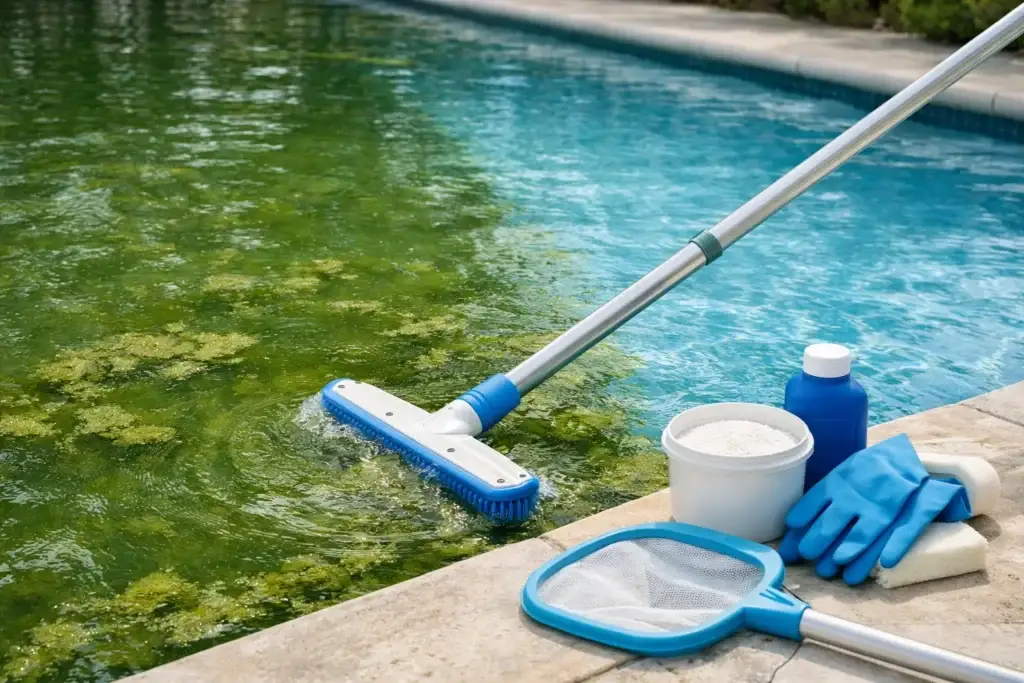
That green tint usually does not show up all at once. One hot week, a little rain, a missed service, low chlorine, and suddenly you are staring at cloudy water, slick walls, and a pool that looks more swamp than backyard. If you are wondering how to remove pool algae, the fix is usually straightforward – but only if you handle it in the right order.
In Southwest Florida, algae moves fast. Warm weather, frequent storms, heavy pool use, and year-round heat create ideal conditions for growth. That means a small chemistry issue can turn into a full cleanup job before you know it. The good news is that most algae problems can be cleared with a thorough approach and a little patience.
How to remove pool algae without wasting time
The biggest mistake pool owners make is treating algae like a one-step problem. They add shock, wait a day, and expect the water to clear on its own. Sometimes that works for a very mild case. More often, it leaves dead algae in the water, throws chemistry out of balance, and allows the bloom to come right back.
The right process starts with identifying how bad the algae is, correcting the water chemistry, brushing aggressively, sanitizing hard, and then filtering until the water is truly clean. If one of those steps gets skipped, you are usually left chasing the problem.
Start by identifying the type of algae
Most residential pools deal with green algae. It is the most common, the easiest to spread, and usually the easiest to remove. Green algae floats freely in the water or clings to steps, walls, and corners. It can turn water dull, cloudy, or fully green.
Yellow or mustard algae is trickier. It tends to cling to shaded walls and steps and can look like pollen or sand at first. It is more chlorine-resistant than green algae and often returns if the pool is not treated aggressively.
Black algae is the toughest of the three. It usually shows up as dark spots embedded in plaster or rough surfaces. It roots deep, so surface-level treatment often is not enough. If you are dealing with black algae, there is a good chance you will need repeated brushing, stronger chemical treatment, and close follow-up.
Check the water before you treat it
Before adding anything, test the water. You need to know where your chlorine, pH, alkalinity, and stabilizer levels stand. Algae cleanup works best when the chemistry supports the sanitizer instead of fighting it.
pH matters a lot here. If pH is too high, chlorine becomes less effective. Bringing the pH down to the lower end of the normal range before shocking usually helps the sanitizer work harder. If the pool has been neglected for a while, expect chemistry to be off in more than one area.
This is also the point where you should empty skimmer baskets, remove large debris, and check that the pump is running properly. There is no point in treating algae if circulation is poor or the filter is already packed with debris.
Brush first, then shock
Brushing is not optional. Algae clings to pool surfaces, especially in corners, behind ladders, along steps, and near the waterline. A thorough brushing breaks that layer apart so chlorine can reach it.
Use a brush that fits your pool surface. Plaster pools can usually handle a stiffer brush. Vinyl and fiberglass need a gentler one to avoid damage. Be thorough and expect this step to take longer than you want. The areas you rush through are usually the same ones where algae returns.
After brushing, shock the pool with enough chlorine to actually kill the bloom. Mild algae may clear with a standard shock treatment. Heavier algae usually needs a higher dose and more than one round. This is where many DIY cleanups fall short – the water may look better after one treatment, but the algae is not fully gone.
Run the pump continuously during this stage. Good circulation helps distribute chemicals, move dead algae toward the filter, and prevent dead spots where growth can linger.
Filter, vacuum, and keep brushing
Once the algae starts dying, the pool often looks worse before it looks better. Water may turn cloudy blue, gray, or dull green as dead algae remains suspended in the water. That does not mean the treatment failed. It usually means the sanitizer is working and the cleanup has moved into the filtration stage.
Keep the system running and monitor filter pressure. A clogged filter cannot clear dead algae efficiently. Depending on your setup, that may mean backwashing, cleaning cartridges, or deep-cleaning filter media. If the algae bloom was heavy, the filter can load up quickly.
Vacuum the pool as debris settles. In some cases, vacuuming to waste is the better move because it removes algae from the system instead of pushing it through the filter. That depends on the pool, the equipment, and how much debris is on the floor.
Keep brushing daily until the surfaces feel clean and look clean. Algae can hold on in textured finishes, along tile lines, and inside tight areas where circulation is weaker.
When algaecide helps – and when it does not
Algaecide can be useful, but it is not the hero of the story. If active algae is already blooming, chlorine and proper cleanup do the heavy lifting. Algaecide is better used as support or prevention, especially after the main treatment is done.
The wrong product can create its own problems. Some algaecides can foam, stain, or add metals to the water. That is one reason pool owners sometimes spend more money and get worse results. Product choice matters, and so does timing.
For stubborn mustard algae or recurring blooms, a targeted algae treatment may be worth using after shock and brushing. For black algae, specialty treatment often becomes part of the process. But if the chemistry is off, circulation is weak, or surfaces were never scrubbed properly, no additive is going to fix the root issue.
How long does it take to clear an algae pool?
It depends on how severe the bloom is, what type of algae you are dealing with, and how well the pool equipment is performing. A light green algae issue may clear in a day or two. A heavier bloom can take several days. Black algae can take longer and may need repeated treatment.
Weather also plays a role. In Florida, heat and rain can push a pool backward during cleanup if chemistry is not maintained closely. If the pool is attached to a spa, has water features, or has areas with weak circulation, those sections need extra attention too.
What matters most is not whether the water changes color quickly. What matters is whether the pool finishes the process with balanced water, clean surfaces, and no hidden algae left behind.
When to call for professional algae removal
Some pools are worth handing off right away. If the water is dark green, the filter is struggling, stains are showing, or you are dealing with black algae, a professional cleanup can save time and prevent surface damage. The same goes for vacation homes, rental properties, and homes where the pool has been left unattended for a stretch.
A proper algae cleanup is more than dumping in chlorine. It takes testing, adjustment, brushing, vacuuming, filtration management, and follow-up. For many pool owners in Port Charlotte, North Port, Punta Gorda, and nearby areas, the bigger issue is not how to clear algae once. It is how to keep it from coming back.
That is where recurring service makes a real difference. Consistent cleaning, chemical balancing, filter care, and early correction of water issues stop small problems before they become a green pool restoration job. That is the kind of detail-focused maintenance Florida Detail is built around.
How to keep algae from coming back
Once the pool is clean, stay on top of sanitizer levels, brush trouble spots regularly, and make sure the pump run time matches the season and pool use. Clean filters on schedule, especially during summer and storm season. If the pool gets heavy rain, lots of debris, or frequent swimmers, expect chemistry demand to go up.
It also helps to watch the early signs. Slight wall slickness, dull water, a light green step, or recurring cloudiness usually means algae is trying to get started. Catching it early is always cheaper and easier than clearing a full bloom.
A clean pool should not feel like a second job. If you want clear water without guessing at chemicals or fighting algae every few weeks, steady maintenance beats emergency cleanup every time.