Why Shade Matters for Pools—and Why It’s a Double-Edged Sword
The Algae Connection
Algae are simple microscopic plants. They thrive on sunlight and excess nutrients in your pool water. River Pools and Spas+1
Shade helps by limiting how much intense sunlight hits your water surface—thus slowing the algae’s photosynthesis.
However:
- Over-shading can reduce surface airflow or promote stagnant edges, which may cause “cold spots” or zones where chemicals don’t circulate well.
- Dense canopies drop leaves, pollen, and organic debris—fueling phosphates and nitrates that feed algae.
- Some shade structures can block your skimmer or make equipment access tricky.
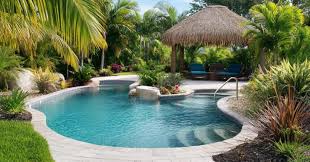
Your goal: balanced shade—enough to cut sunlight, not so much that you invite water chemistry troubles.
Local Conditions You Must Consider in Charlotte County
Because this is Florida, and specifically this part of Florida, local climate and storm activity demand certain precautions.
- Storm winds and hurricanes: In Punta Gorda or Port Charlotte, storms may snap branches, strip foliage, or dump debris onto your pool. Always choose resilient species and keep limbs trimmed.
- High heat and long summers: Shade must be durable under intense sun, not just ornamental.
- Seasonal residents / snowbirds: When many homes are unoccupied, your pool might sit lightly maintained. Your landscape should be low maintenance and forgiving.
- Soil & drainage: Parts of Rotonda and North Port may have sandy or clay soils. Soil preparation is vital before planting.
- Local pests, humidity, fungal pressures: Dense shade plus humidity is a recipe for fungal diseases—choose species that resist rot, mildew, and are Florida-adapted.
Step 1: Analyze Sun & Shade Patterns
Before you commit, map sun exposure. Over a few days:
- Identify the sunniest windows (midday, late afternoon).
- Mark hot zones (full sun 5+ hours).
- Note shadow movement from house, fences, neighboring trees.
- Note winds & storm direction.
This map guides where you can safely plant shade without blocking too much light over the water.
Step 2: Choose Smart Shade Strategies & Structures
Below are structure and planting approaches that deliver shade while helping you manage algae risk.
Structures First
Use man-made shade before finalizing all plantings:
- Pergolas / arbors / trellises: These provide filtered shade and let air pass. You can train vines like draping native jasmine or creeping fig to soften light without total darkness.
- Shade sails / cantilever umbrellas: Adjustable and movable. Great for shifting shade as sun angles change.
- Partial solid roof or overhangs: Use sparingly, along seating zones—not full pool coverage.
- Lattice screens or gabion walls: Offer dappled shade, vertical greenery, and structure without heavy shadow.
Plant Layers
Combine structure + living shade to gain flexibility:
- Overstory / midstory trees (set back from pool edge): Small, slow-shedding palms or cypress variants.
- Understory shrubs: Lower shrubs that create vertical shade but don’t block airflow.
- Groundcovers & mulch: Avoid turf directly at the edge to cut grass clippings and fertilizer runoff.
Examples:
- A setback of sabal palm or pindo palm (in areas of Port Charlotte or Rotonda) can cast gentle shade without leaf overload.
- Use romo (coontie), saw palmetto, or native shrubs near pool decks to filter light.
- Close to pool edges, use low, tidy shrubs or ornamental grasses that resist dropping large leaves.
Step 3: Layout Guidelines & Best Practices
To keep algae under control, your layout needs to support water movement, access, and microclimate control.
Best Practices
- Maintain at least 8–10 feet of clear open airflow above the pool, at least in the most critical sunlit hours.
- Don’t plant heavy leaf deciduous trees directly adjacent to the pool’s edge. Even dormant leaves will fall.
- Slope planting beds gently away from pool to prevent fertilizer runoff or soil wash.
- Leave equipment access zones (skimmers, pumps, filters) free of permanent shading that might block service.
- Integrate hardscape + plant layout so plants alternate with open decking to “break up” full shade into dappled zones.
Use Buffer Zones
A buffer zone between the planting bed and pool edge can capture organic debris (leaves, pollen) before it enters water. Use:
- Pea gravel or fine crushed stone
- Minimal mulch (inorganic chips)
- A strip of nonvegetated pavers
This gives you a first filter zone before debris hits the water.
Step 4: Maintenance Considerations (to protect your algae budget)
Even the best design won’t eliminate all algae risk. Vigilance is still needed. Here’s how to stay ahead:
Weekly / Seasonal Tasks
- Skim leaves & debris daily (or as needed)
- Brush walls, especially shaded corners
- Test water chemistry (chlorine, pH, alkalinity)
- Run circulation pumps long enough to pass full volume
- Clean filters regularly
Seasonal or Storm Prep
- Prune back larger limbs before storm season
- Monitor downed foliage after storms
- If the home is vacant (snowbird season), consider automatic chemical feeders or periodic check-ins
Spot Treatments & Quick Fixes
- Use shade-friendly algaecide (as per manufacturer) when you see early green tints
- Consider barley straw, beneficial bacteria additives, or low-dose phosphate removers
- In severe cloudy or discolored cases, use shock treatment + brush + vacuum approach River Pools and Spas
Real Florida Example: Punta Gorda Backyard
A homeowner in Punta Gorda approached us with ugly green “mustard algae” creeping in shaded corners. Their initial plan had planted dense hedges all around the pool. We reworked it:
- Removed tight hedges near the pool line
- Installed a pergola shading the lounge zone only
- Moved heavier trees farther back
- Created a buffer strip of crushed shell around the pool
- Emphasized airflow and sunlight penetration for at least 6 midday hours
Within 2 months, algae receded, chemical costs dropped, and maintenance effort was cut nearly in half.
That kind of success is what we aim for at Florida Detail in all of Charlotte County—from North Port to Rotonda.
Summary & Shade Planning Checklist
Use this checklist to validate your shade plan before implementation:
| Task | Goal | Checkpoint |
|---|---|---|
| Sun/shade mapping | Know hot and shaded zones | 3-day observation map |
| Structure placement | Provide filtered shade | Pergola, sail, lattice |
| Plant species | Low debris, native, slow shed | Palms, native shrubs, grasses |
| Buffer zone | Debris doesn’t fall directly in water | Gravel or nonvegetated strip |
| Circulation & access | Flow not blocked | Equipment zones clear |
| Maintenance plan | Algae prevention costs low | Brush + test + skim weekly |
Stick to this, and your pool landscape will remain a beauty—not a biology experiment.
Internal & External Links for SEO
- For more on how we maintain pools in our region, see our Services page at Florida Detail.
- Interested homeowners can always return to our Home for more resources and regional insights.
- If you’d like to talk through your specific yard and shade plan, go ahead and use our Contact page to connect.
- For deeper reading on local SEO and promotion in our region, check out UnlimitedManiac.com (they share useful marketing tips for Florida businesses).
- To see how other pool service firms position themselves in Port Charlotte, check sites like PortCharlottePoolService.com or PoolCleaningInPortCharlotte.com.
Conclusion & Call to Action
Designing a pool landscape that delivers shade—without triggering chronic algae infestations—is a balance of light, airflow, smart planting, and maintenance discipline. In Port Charlotte, Punta Gorda, North Port, and Rotonda, Florida’s climate demands we think ahead. A thoughtful plan saves you money, headaches, and stress.
Ready to move from idea to execution? Explore our directory and local tips on FloridaDetail.com, review our Services, or Contact us today. Let’s build a poolside oasis that’s shaded, beautiful, and algae-smart.


