
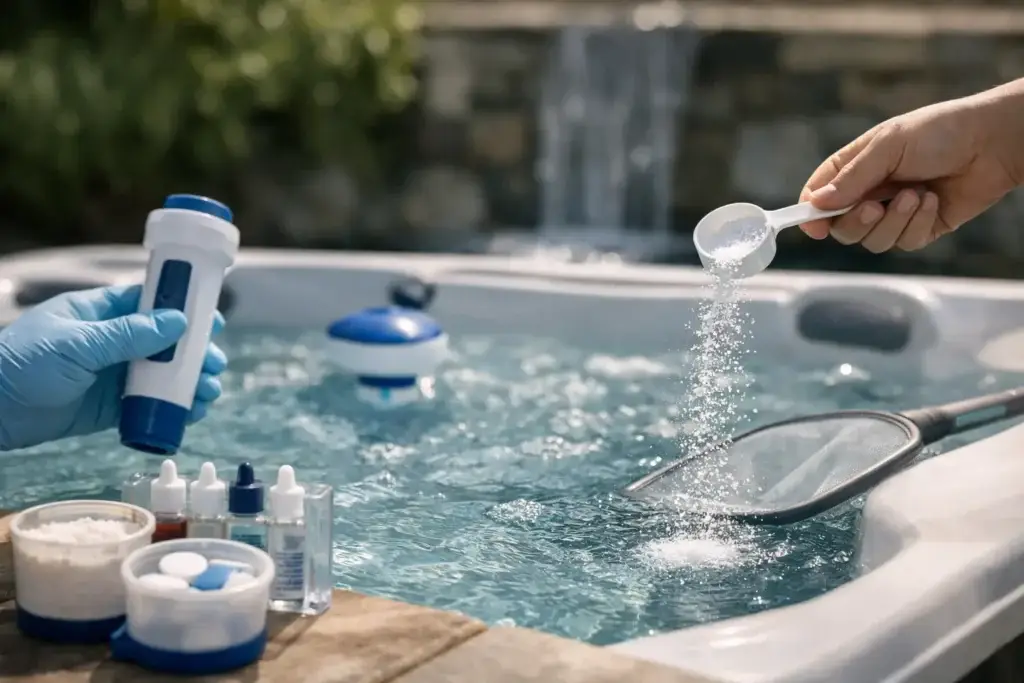
A spa can look clean and still have water that irritates skin, smells sharp, or turns cloudy after one busy weekend. Knowing how to maintain spa water comes down to steady, small checks – not waiting for a problem to show up. In Southwest Florida, warm temperatures, frequent use, sunscreen, rain, and windblown debris can change water balance quickly.
Clear spa water is not just about appearance. Proper care helps your sanitizer work, protects heaters and pumps from scale or corrosion, and gives everyone a more comfortable soak. A simple routine keeps the work manageable and helps prevent the expensive cleanup that follows neglected water.
Start With Consistent Water Testing
Test spa water at least two or three times per week. If the spa gets daily use, has several guests, or sits exposed to heavy rain, test it more often. Hot water concentrates contaminants faster than a swimming pool, so a spa’s chemistry can shift in a day.
Use a reliable test strip or liquid test kit to check sanitizer, pH, total alkalinity, and calcium hardness. Follow your spa manufacturer’s recommended ranges, especially for the sanitizer system you use. Chlorine and bromine systems need different maintenance habits, and saltwater spas still require regular testing and balancing.
Test before adding chemicals whenever possible. Adding a little of everything because the water looks off often creates a bigger problem. Let the results tell you what needs adjustment.
Balance in the Right Order
Total alkalinity should usually be corrected before pH. Alkalinity acts as a buffer that helps keep pH from swinging up and down. Once alkalinity is in range, adjust pH gradually. A pH level that runs too high can lead to cloudy water, scale, and weaker sanitizer performance. A level that runs too low may cause eye irritation and can be hard on spa surfaces and equipment.
Calcium hardness matters, too. Water with too little calcium may pull minerals from plaster, grout, or other surfaces. Water with too much calcium can leave white scale around the waterline, jets, heater, and tile. This is especially worth watching in Florida, where source water conditions can vary by neighborhood.
Make one adjustment at a time, circulate the water, and retest. That patience prevents the back-and-forth chemical cycle many spa owners run into.
Keep Sanitizer Available, Not Overwhelming
Sanitizer is what controls bacteria and organic contaminants introduced by bathers, lotions, body oils, and leaves. A spa that smells strongly of chlorine does not necessarily have too much chlorine. Often, that odor points to used-up sanitizer reacting with contaminants.
Maintain the recommended sanitizer level for your system, and use a periodic shock treatment after heavier use. Shocking oxidizes waste that routine sanitizer cannot fully handle. It is particularly helpful after a gathering, after a storm, or when the water begins to lose its fresh, clean look.
Do not add chemicals directly into a filled dispenser unless the product instructions call for it. Granular products should be added carefully with the circulation system running, following label directions. Never mix chemicals together, and always store them in a dry area away from direct sun, moisture, and children.
There is a trade-off with sanitizer: too little allows water problems to build quickly, while too much can be uncomfortable and may damage covers or surfaces over time. Consistent testing is the easiest way to stay in the middle.
Use Filtration as Part of Your Spa Water Maintenance
Chemicals treat what is dissolved in the water. Filters capture the fine debris, oils, and particles that make water dull or cloudy. Run the circulation system according to your spa’s recommended schedule, and increase filtration time when the spa sees more use.
Rinse cartridge filters regularly. For a lightly used residential spa, a quick rinse every one to two weeks is a good starting point. Clean the filter more thoroughly on a regular schedule with an approved filter cleaner, then allow it to dry completely before reinstalling if practical. Having a second cartridge set makes this easier and keeps the spa from sitting without filtration.
A dirty filter can make clear water difficult to maintain, even when the test readings look right. It also puts extra strain on the pump and can reduce jet performance. If the filter is worn, damaged, or no longer cleans well, replace it rather than trying to stretch its life too far.
Remove What Chemicals Cannot Fix
Scoop out leaves, insects, and visible debris as soon as you see them. Wipe the waterline weekly, where oils and residue collect. Check the underside of the cover as well, since dust, mildew, and debris can fall back into the water each time it is opened.
Encourage bathers to rinse off before using the spa. It sounds simple, but reducing body lotion, makeup, sweat, lawn chemicals, and detergent residue makes a noticeable difference. For homes that use the spa often, this one habit can reduce sanitizer demand and help the water stay clear longer.
Keep the cover in good condition and use it whenever the spa is not in use. A cover holds heat, lowers evaporation, and keeps out the leaves and pollen that are common around Port Charlotte, North Port, and Punta Gorda. Still, open the cover briefly after adding chemicals so vapors do not stay trapped underneath.
Know When to Drain and Refill the Spa
Even with great chemistry, spa water does not last forever. Dissolved solids build up from chemicals, sweat, lotions, and the water itself. Eventually, the water becomes harder to balance, looks flat or cloudy, and may foam easily.
Most residential spas need to be drained and refilled about every three to four months. A lightly used spa may go longer, while a heavily used spa, vacation rental, or commercial setting may need more frequent water changes. If you are repeatedly correcting chemistry without getting stable results, a fresh start is often more efficient than adding more products.
Before draining, turn off the power as directed by the manufacturer. Flush the plumbing with an approved spa line cleaner if buildup is suspected. Once empty, clean the shell, jets, pillows, and cover without using household soaps that can create foam after refilling. Refill through the filter compartment if your manufacturer recommends it, then balance fresh water before heating it fully.
Watch for Early Warning Signs
Cloudy water, persistent foam, a slimy feel on surfaces, unusual odors, weak jets, and recurring scale are not problems to ignore until the next cleaning day. They are signs that one part of the maintenance routine needs attention.
Cloudiness may be caused by poor filtration, high pH, low sanitizer, or fine debris. Foam often points to body oils, soaps, or high dissolved solids. Scale usually indicates high pH or calcium hardness. Green, yellow, or dark discoloration can be related to algae, metals, or a serious sanitizer issue. The cause matters, because treating the symptom alone rarely holds.
If the water has been neglected, looks discolored, or will not balance after basic corrections, professional service can save time and prevent equipment damage. Florida Detail Pools can inspect the water, filtration, and spa equipment, then address the actual source of the problem instead of simply adding more chemicals.
A Routine That Protects Your Time and Your Spa
For most homeowners, the best routine is simple: test several times each week, keep sanitizer in range, rinse the filter regularly, remove debris, and plan water changes before the spa becomes difficult to manage. Check the equipment while you are there for leaks, unusual sounds, or reduced flow.
Spa care is not complicated when it is consistent. A few minutes of attention keeps the water inviting, protects the equipment you paid for, and makes your next soak feel like the break it is supposed to be.