
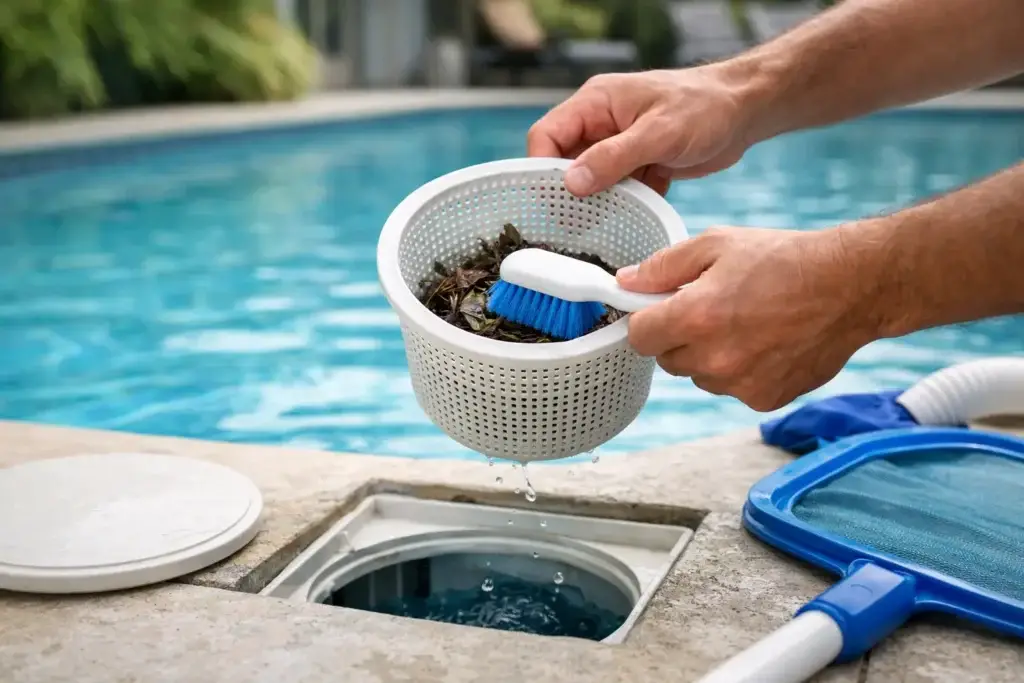
A skimmer basket packed with palm fronds, oak leaves, seed pods, or sunscreen residue can turn a clear pool into a circulation problem fast. Knowing how to clean pool skimmer equipment properly takes only a few minutes, but doing it consistently protects your pump, helps your filter work better, and keeps debris from settling across the pool floor.
In Southwest Florida, skimmers work hard nearly every day of the year. Afternoon storms, windy conditions, tropical weather, and heavy landscape debris can fill a basket much faster than many pool owners expect. A clean skimmer is one of the simplest ways to keep water moving, chemicals circulating, and your pool looking ready to use.
What the Pool Skimmer Does
Your pool skimmer is the opening along the waterline that pulls in floating debris before it sinks. Water enters through the skimmer throat, passes through the basket, and travels through plumbing to the pump and filter. The basket catches larger debris such as leaves, bugs, grass clippings, and small twigs.
When that basket is full, water cannot flow as freely. Your pump may pull less water, the surface may collect debris, and your pool can start looking dull even if the chemical levels are close to normal. In more serious cases, a blocked skimmer can contribute to low water flow at the pump, which can lead to equipment strain.
The skimmer is not just a place to toss leaves. It is an important first line of defense for the entire circulation system.
How to Clean Pool Skimmer Safely
The safest approach is straightforward: turn off the pump, remove the basket, empty and rinse it, then inspect the skimmer area before putting everything back together. Do not reach into an active skimmer while the pump is running. Strong suction can pull debris against the opening and make the work harder than it needs to be.
Turn off the pool pump first
Go to your pool equipment panel and turn the pump off. This stops water movement through the skimmer and protects the pump from accidentally running with restricted flow while you work. If your system is on an automation schedule, make sure it will not switch back on during cleaning.
If you are also checking the pump basket, wait until the pump is off and follow the equipment manufacturer’s normal shutdown procedure. The skimmer basket and pump basket are different components, and both need regular attention.
Remove the skimmer lid and basket
Lift the skimmer lid from the deck. Most lids either lift straight out or have a small access notch. Set it aside where it will not crack, get stepped on, or fall into the pool.
Reach down and lift out the plastic basket by its handle. If the basket is stuck, avoid forcing it with a screwdriver or sharp tool. Leaves can compact around the sides, especially after a storm. Gently rock the basket back and forth until it loosens. If it will not move, check whether the water level is unusually low or whether debris is wedged around it.
Empty and rinse the basket
Dump the debris into a yard-waste container or trash bag, not back into the pool area where wind can blow it right back into the water. Use a garden hose to rinse off fine debris, dirt, and oily buildup.
For normal weekly cleaning, plain water is enough. Do not use harsh household cleaners, bleach, or abrasive scrub pads on the basket. These can weaken plastic over time or leave residue that you do not want entering the pool. If sunscreen or body-oil residue is noticeable, a mild dish soap rinse followed by a thorough clean-water rinse can help.
Before replacing it, inspect the basket for cracks, broken ribs, or a damaged handle. A broken basket can allow leaves and larger debris into the plumbing line, where clearing a blockage is much more difficult and expensive.
Check the skimmer throat and flap
With the basket out, look into the skimmer opening and the area just below it. Remove visible leaves, small toys, or debris caught around the throat. Do not push debris deeper into the plumbing line.
Many skimmers have a floating flap called a weir door at the pool-facing opening. It should move freely. This flap helps skim surface debris by creating a steady draw of water from the top layer of the pool. If it is stuck, missing, or broken, your pool may not skim as effectively even with a clean basket.
A stuck weir door may simply have debris around its hinges. Clean it gently and test its movement. If it remains jammed or damaged, replacement is usually the better option.
Reinstall the basket and lid
Set the empty basket back into place so it sits level in the skimmer housing. Make sure it is not tilted or resting on debris. Replace the lid securely, then turn the pump back on.
Watch the skimmer for a minute or two. You should see a consistent pull of water across the surface. At the equipment pad, check that the pump is priming normally and that there are no unusual sounds. If the pump loses prime, shows air bubbles in the pump lid, or has noticeably weak flow, the issue may be beyond a dirty skimmer basket.
How Often Should You Clean a Pool Skimmer Basket?
For most pools, check the skimmer basket at least once a week. In Port Charlotte, North Port, Punta Gorda, and nearby communities, twice a week is often more realistic during windy periods, after heavy rain, or when trees are shedding leaves and seed pods.
A pool with a screened enclosure may need less frequent cleaning than one surrounded by mature landscaping. A vacation home that sits empty for part of the year may need more attention because debris can build up unnoticed. The right schedule depends on what lands in your pool, how long the pump runs, and how quickly the basket fills.
Do not wait until the basket is packed solid. Emptying it when it is about half to two-thirds full is a good habit. That gives water room to move and keeps debris from breaking down into smaller particles that are harder for the system to capture.
Signs Your Skimmer Needs Attention Before Cleaning Day
Your pool usually gives you clues when the skimmer is struggling. Surface leaves that stay in one place, weak movement toward the skimmer, a lower-than-usual water level, or air bubbles returning through the pool jets can all point to a circulation concern.
You may also notice the pump sounds different, the filter pressure changes, or debris starts collecting in corners and along steps. A full basket is a common cause, but it is not the only possibility. Low water, a clogged pump basket, a dirty filter, a suction-side air leak, or a closed valve can create similar symptoms.
If the basket is clean and circulation still looks weak, do not keep running the equipment and hope it clears itself. Check the water level first. The water should generally sit around the middle of the skimmer opening so the skimmer can pull water without drawing air. If the level is correct, a professional inspection can prevent a small circulation issue from becoming a pump or plumbing repair.
Avoid These Common Skimmer Cleaning Mistakes
The biggest mistake is cleaning only what you can see at the surface. The basket may look mostly clear while a layer of compacted debris sits underneath it or around the skimmer throat. Lift it out and inspect the whole area.
Another common mistake is using a skimmer sock without checking it often. Skimmer socks can catch fine debris before it reaches the basket, which is helpful in pools with pollen, dog hair, or heavy landscape debris. But they restrict flow as they fill. If you use one, clean or replace it more often than the basket itself.
Avoid running the pump for long periods with a full basket or low water level. Pumps rely on steady water flow for cooling and operation. Starving a pump of water is not a shortcut to a cleaner pool.
Finally, do not overlook the skimmer lid. A warped or cracked lid is a trip hazard and can allow more deck debris into the opening. Replace damaged lids with the correct size and style for your skimmer body.
When a Clean Basket Is Not Enough
A clean skimmer basket will not fix every water-quality problem. If the pool is green, cloudy, losing water, or showing recurring algae, the real issue may involve chemistry, filtration, circulation time, or equipment condition. Skimmer maintenance works best as part of a complete routine that includes brushing, vacuuming, water testing, filter care, and correct chemical balancing.
That is why regular service matters. Florida Detail Pools checks the small details that are easy to miss between busy weeks, from baskets and water flow to filter condition and treatment needs. Consistent care helps keep a minor debris issue from becoming a cloudy pool or an avoidable equipment call.
Take a look at your skimmer after the next storm or windy afternoon. A few minutes of attention now can keep your water moving cleanly and give your pool the clear, cared-for appearance it deserves.