
As a local pool service company in Southwest Florida, FloridaDetail understands that pool depth isn’t just an aesthetic choice. In Punta Gorda, Rotonda, Port Charlotte, North Port — even across Charlotte County — depth can drive your long-term costs more than you might expect. In this guide, we’ll explore how depth affects both maintenance and heating expenses, and what savvy homeowners can do to optimize for cost-efficiency.
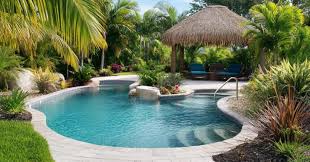
H2: Why Pool Depth Matters for Ongoing Costs
You probably chose your pool depth based on swimming comfort, safety, or how you use the pool (kids, diving, lap swimming). But once the pool is built, depth becomes a hidden operational variable.
Here’s why:
- Greater water volume — deeper pools hold more gallons, so every chemical, pump run, and heating cycle works harder.
- Longer turnover times — the deeper zone increases time to fully circulate the water.
- Temperature stratification — deep areas may stay cooler, requiring more heat input to warm the entire volume uniformly.
- Surface-to-volume ratio shifts — shallower pools lose heat (and lose chemicals to sunlight) faster; deeper pools retain stability but spend more on baseline circulation.
Let’s break down the two cost categories: maintenance and heating.
H2: Maintenance Costs & Depth
H3: Chemistry & Chemical Use
Because deeper pools hold more water, your weekly or monthly chemical dosing must rise proportionally. For example:
- If your standard 4-ft average pool gets X amount of chlorine or muriatic acid weekly, a pool with a deep end (6–8 ft) may require 1.25× to 1.5× that dose to maintain the same ppm levels.
- The added volume also means more demand for pH adjusters, alkalinity buffers, and stabilizers.
In rainy seasons or when storms hit Punta Gorda (common in hurricane season), dilution from fresh rainwater forces you to rebalance more chemicals. The deeper the pool, the larger the buffer needed.
H3: Filtration & Circulation
A deeper pool increases the time (in minutes) it takes to “turn over” the full water volume — meaning your pump must run longer to achieve the standard 8–10x per day circulation.
This means:
- Higher energy cost to run the pump (because more hours at full power).
- Increased wear on filter media (cartridge, D.E., sand) due to handling more gallons.
- More frequent cleaning or backwashing schedules.
In Port Charlotte and Charlotte County, many pool owners already pay higher electricity during summer peak hours — so those extra pump hours add up.
H3: Debris, Algae, & Maintenance Labor
Deeper pools often mean walls and floor surfaces are harder to reach for brushing, vacuuming, and debris removal. Leaves or organic matter may sink to the bottom in deeper zones, requiring more labor to vacuum out. In rainy or windy months (especially during Gulf storms), that extra labor cycles back into your maintenance cost.
H2: Heating Costs & Depth
Depth plays a particularly strong role when heating your pool — especially for year-round use in Punta Gorda’s mild winters.
H3: More Water = More Energy
Heating a deeper pool requires more BTUs or kilowatt-hours. To raise the temperature of a large volume of water even just 1 °F takes more energy in a deeper pool than a shallow one.
For example:
- A 12,000-gallon pool heated 2 °F per day might cost $10–$15/day, but when depth increases to raise volume by 30%, that daily cost climbs by roughly the same fraction.
- If you maintain 82–84 °F during “cool” months, a deep pool might double your heater’s runtime.
H3: Stratification & Heat Loss
In deep pools, thermal stratification often happens: the bottom stays cooler than the top surface. Heat from your heater or solar blankets may struggle to reach the lower layers, requiring longer or more intense cycles.
Moreover:
- Deep water loses less heat per surface area (good), but gets slower to warm (bad).
- If you use a solar heater or solar pool cover, efficiency drops when you need to heat many gallons.
- Gas or electric heat pumps must fight the extra mass of water.
Popa Pools & Spas notes that solar systems are cost-competitive with gas and heat pump heaters in Punta Gorda, especially because annual operating costs are lower. Popa Pools and Spas
H3: Seasonal Use & Snowbird Patterns
In Punta Gorda and Port Charlotte, many homes are seasonal (snowbirds). When pools sit unused during winter, keeping them warm (or re-heating before arrival) becomes a significant cost. The deeper the pool, the more energy it will bleed off while idle — meaning your “wake-up” heating bill may spike.
H2: Real-Life Example: Charlotte County Pool Owner
Take a Rotonda homeowner who originally had a 4-ft-deep pool, then renovated to include a 7-ft deep end for diving. After renovation:
- Their chemical use rose by ~35% in summer months
- Their pump runtime increased by 2 hours per day
- When winterizing and re-heating in January, they paid ~40% more for heating fuel
They later opted for a hybrid solar + heat pump system and instituted a masked “partial cover” strategy to isolate the deep zone for minimal heating when not fully in use.
Local pros in Charlotte County and Punta Gorda advise similar strategies to reduce steep long-term costs. thepoolstoreofcharlottecounty.com+1
H2: Strategies to Mitigate Depth-Driven Costs
You don’t have to accept runaway bills. Here are practical steps local homeowners can take:
H3: Design & Build Wisely
- Opt for variable depth transitions instead of extreme deep ends, to balance volume.
- Use shelf zones or “sun ledges”—shallow areas that reduce total volume.
- Plan for efficient circulation with return jets targeted at deep zones.
H3: Use Efficient Equipment
- Variable-speed pumps allow lower RPM for steady circulation at lower energy draw.
- High-efficiency filters reduce pressure loss and runtime.
- Hybrid heating (solar + heat pump) can offset energy costs. (As Popa Pools suggests) Popa Pools and Spas
- Smart thermostats / automated controllers to avoid over-heating or unnecessary runtime.
H3: Smart Operating Practices
- Targeted heating schedules: only heat deeper zones when needed.
- Partial covers or modular covers can reduce heat loss in shallow areas.
- Lower target temperature by 1–2 °F when pool is lightly used.
- Brushing & vacuuming more frequently, especially after storms, to prevent algae taking hold in deeper areas.
H3: Track & Adjust
- Monitor your daily kWh usage tied to pump and heater.
- Keep a chemical log: you’ll see patterns when consumption spikes (e.g. after storms).
- Adjust budget estimations seasonally, especially in spring and fall transitions.
H2: Comparison: Punta Gorda vs Rotonda vs North Port
While all these regions experience similar climate, local microfactors can shift cost impacts.
- Punta Gorda / Port Charlotte: closer to Gulf waters; breeze and humidity may increase evaporation — deeper pools lose slightly more heat.
- Rotonda: somewhat more inland; wind may be less intense, marginally reducing heat loss.
- North Port: newer developments often adopt better-built circulation designs, making depth penalties slightly less.
Still, across all of Charlotte County, the principles hold: deeper pool = more cost.
H2: Why FloridaDetail (and Local Pros) Are Essential
Managing a deep pool in Punta Gorda, North Port, or Port Charlotte takes more than DIY. That’s where FloridaDetail comes in:
- We know local weather patterns, storm cycles, and seasonal shifts.
- We service across Punta Gorda, Rotonda, and Charlotte County with tailored plans.
- You can explore our Services page for filtration, heating, and maintenance options.
- If you’re new, visit Home for our history and philosophy, or reach out via Contact to discuss your specific pool.
We also recommend local marketing insights from UnlimitedManiac.com — their perspective helps align your pool service promotion with seasonal traffic in Punta Gorda and Port Charlotte.
To build further local trust and backlinks, check how PoolServiceInPortCharlotte.com or NorthPortPoolCompany.com discuss depth considerations in their blogs.
Conclusion & Call to Action
In Punta Gorda, Rotonda, Port Charlotte, and across Charlotte County, the depth of your pool can quietly drive hundreds—or even thousands—of dollars in additional maintenance and heating costs over the years. But with thoughtful design, efficient equipment, and expert oversight from FloridaDetail, you can strike a balance between comfort and cost.
Ready to review your pool’s depth strategy or get a quote? Head to our Services page, check our Home for background, or Contact us today. And don’t forget to explore our local directory to connect with trusted providers in Punta Gorda, Port Charlotte, and North Port. Let’s make your deep-end dream cost-smart.


