Owning a pool in Port Charlotte—or anywhere in Charlotte County, including Punta Gorda, North Port, and Rotonda—comes with unique advantages and challenges. One of the biggest challenges: the relentless Florida sun. In this blog post for Florida Detail, we’ll dive into how strong sunlight affects chlorine efficiency in your pool, and what local homeowners can do to fight back.
H2: Why Chlorine Matters—and Why It’s Under Attack in Florida
Chlorine is the cornerstone of pool sanitation. It kills bacteria, algae, and harmful microorganisms, helping keep water safe, clear, and enjoyable. But in the sunny, warm climate of Charlotte County, chlorine faces serious foes:
- Ultraviolet (UV) rays from the sun break down free chlorine (especially unstabilized forms) through photolysis.
- High temperatures accelerate chemical reactions, making chlorine degrade faster. Orchid Pools+2M&M Pool & Spa Services+2
- Evaporation and dilution shift chemical balances, especially after storms or heavy sun exposure. Reef Tropical Pools+2poolcenturion.com+2
- Organic load from swimmers (sunscreen, sweat, oils) increases chlorine demand. Swimmer Living+1
In practice, many Florida pool owners report a rapid loss of chlorine during the day. One pool owner noted losing 1–4 ppm of free chlorine over six hours of strong sun. > “It’s possible to lose 1ppm an hour in direct sunlight/warm temps.” Reddit
In a place like Port Charlotte, where sunshine is almost a daily certainty, understanding and counteracting these effects is crucial to maintaining safe, stable water.
H2: How the Florida Sun Reduces Chlorine Efficiency
H3: Photodegradation from UV Rays
Sunlight’s UV rays literally break the chemical bonds in chlorine, converting it into inert compounds. In direct sun, free chlorine can be reduced by 50–90% in a few hours if unstabilized. floridadetail.com+2Swimmer Living+2
To slow this, pool owners use cyanuric acid (CYA), which acts as a “shield” for chlorine. The optimum CYA range is often between 30 and 50 ppm (or slightly higher depending on your system). floridadetail.com+3Swimmer Living+3floridadetail.com+3
Too little stabilizer, and chlorine burns off rapidly. Too much, and chlorine becomes less effective.
H3: Temperature-Driven Chemical Reaction Acceleration
When water temperature rises, all chemical reactions speed up—including the degradation of chlorine. This means even stabilized chlorine can’t keep up if the heat is intense for long periods. Orchid Pools+2M&M Pool & Spa Services+2
H3: Evaporation, Dilution & Rainfall
Florida is known for afternoon thunderstorms. Heavy rain can dilute chlorine levels (and other chemicals) suddenly. poolcenturion.com+2Premier Pool Contractor+2
Also, evaporation under bright sun concentrates total dissolved solids (TDS), shifts pH and alkalinity, and stresses your sanitation system. Reef Tropical Pools+1
H3: Increased Organic Load
During summer, your pool sees more use. Sunscreen, body oils, lotions, sweat, and debris all add to the “organic load” that chlorine must oxidize. More demand means more chlorine consumption. Swimmer Living+2floridadetail.com+2
H2: What Port Charlotte-Area Pool Owners Should Do
In Port Charlotte, Punta Gorda, North Port, Rotonda, and throughout Charlotte County, the sun’s impact is real. But you can fight back with smart strategies. Here are best practices:
H3: Optimize Stabilizer and Chlorine Levels
- Test frequently
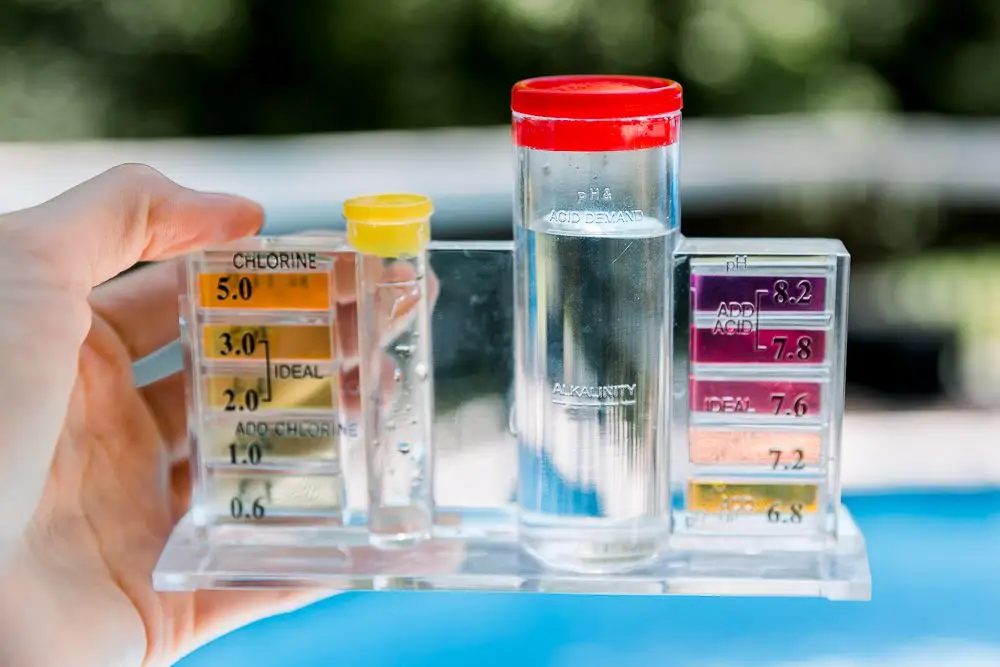
- During summer or extended sun periods, test free chlorine, total chlorine, pH, alkalinity, and CYA 2–3 times per week, sometimes daily when heat is extreme. Swimmer Living+2floridadetail.com+2
- In mild periods, weekly testing may suffice.
- Maintain proper CYA
- Keep CYA in the 30–50 ppm range (or site-specific ideal).
- Avoid over-stabilizing; high CYA forces you to raise free chlorine to overpower it.
- Add chlorine in the evening
- Dusk or after dark is ideal because the chlorine can distribute before daylight hits. Swimmer Living+1
- Use stabilized chlorine forms
- Some tablets and products already include CYA, helping maintain long-term protection.
H3: Shield from Sun and Reduce Evaporation
- Use a pool cover or solar cover when the pool is idle. Studies show covers can reduce sunlight exposure and evaporation significantly. Swimmer Living+2floridadetail.com+2
- Install shade features — umbrellas, shade sails, or landscaping that block mid‑day sun (10 am–4 pm).
- Use automatic water levelers to prevent water levels dropping below the skimmer and disrupting pump function.
H3: Boost Circulation & Filtration
- Run pumps during cooler hours or overnight, when circulation helps distribute chlorine.
- During heat waves, extend run times to ensure turnover and help dilute local depletion zones.
- Clean filters often — clogged filters reduce circulation efficiency and increase chlorine demand.
- Consider upgrading to variable-speed pumps, which operate more efficiently and maintain better flow.
H3: Shock Strategically & Use Complementary Systems
- Shock after storms, heavy use, or when chlorine drops. A strong oxidizer helps break down combined chlorine and organic waste, reducing ongoing demand. floridadetail.com+2floridadetail.com+2
- Consider non-chlorine oxidizers or secondary sanitizers (UV, ozone, mineral systems) to reduce chlorine burden. Swimmer Living+2M&M Pool & Spa Services+2
H3: Monitor pH, Alkalinity & Other Balancers
- Keep pH between 7.2 and 7.6 (ideally around 7.4) — if too high, chlorine becomes less effective. Sunny Florida Pools+3Swimmer Living+3floridadetail.com+3
- Total alkalinity (80–120 ppm) helps buffer against pH swings.
- Watch for metals, calcium hardness, and total dissolved solids (TDS), especially as evaporation concentrates water.
H2: Local Realities & Seasonal Considerations
H3: Summer Heat & Storm Season
In Charlotte County summers, it’s common to see prolonged days over 90 °F, frequent thunderstorms, and high humidity. That combination is a recipe for chlorine challenges. poolcenturion.com+2floridadetail.com+2
Storms can dilute chlorine and introduce organic matter (leaves, runoff, dust) into your pool. After storms, test and rebalance quickly.
H3: Winter & Off-Peak Periods
Even in winter, Port Charlotte sees ample sun. However, with fewer swimmers, chlorine demand drops. It’s still wise to maintain stabilizer, monitor chemistry weekly, and keep circulation consistent.
H3: Snowbirds & Seasonal Absence
Many homeowners leave for weeks in winter. In those cases:
- Use a solid cover or solar cover.
- Raise your chlorine to a safe, stable level before leaving (taking into account stabilizer and loss) — but be careful not to overshoot.
- Ask a local pool service provider to check and adjust while you’re away.
H2: Common Mistakes That Undermine Efficiency
- Relying solely on chlorine tablets without supplemental liquid or shock doses.
- Ignoring CYA levels (too low or too high).
- Testing chemicals infrequently (only once a week in summer is risky).
- Letting pool water drop below skimmer level due to evaporation.
- Neglecting filter maintenance and pump efficiency.
- Waiting too long after a storm to rebalance chemicals.
H2: Local Example: Port Charlotte Pool Owner Testimonial
“Last summer, our Port Charlotte pool’s chlorine was dropping so fast I was adding chemicals daily. After Florida Detail increased stabilizer, changed our pump schedule to evening, and added a solar cover, we cut our chemical cost by nearly 35%. No more midday surprises.”
That’s the kind of practical result you want when battling Florida’s harsh sun.
H2: Implementation Checklist
Here’s a concise action list for Port Charlotte-area pool owners:
- Test chemicals 2–3× per week (more when hot).
- Maintain CYA between 30–50 ppm (or site-specific ideal).
- Add chlorine after dusk.
- Use a pool cover when not swimming.
- Install shade features around the pool.
- Run pumps during cooler hours, extend run time in heat.
- Clean filters often to maintain flow.
- Shock after heavy use or storms.
- Monitor pH, alkalinity, hardness, and metals.
- Schedule professional weekly service in Punta Gorda, North Port, Rotonda, or Charlotte County to maintain consistency.
H2: Why Florida Detail Recommends This Approach
At Florida Detail, we care deeply about keeping pools in Port Charlotte, Punta Gorda, North Port, and Rotonda running efficiently. Our weekly service includes water testing, chemical adjustments, brushing, filter care, and equipment checks—all aligned with battling Florida sunlight. Visit our Services page to learn more.
We also invite you to explore our Home page for general pool-care philosophy or check out other blogs on how we tackle seasonal challenges. And if you’d like help now, head to our Contact page to request a consultation.
H2: Final Thoughts & Call to Action
Florida’s sunshine is one of its greatest gifts—but for pool owners in Port Charlotte and Charlotte County, it’s also one of the biggest maintenance challenges. Understanding how UV, heat, evaporation, and organic load erode chlorine efficiency is essential.
By combining good chemistry habits, shade strategies, smart pump scheduling, shock dosing, and regular professional upkeep, you can keep your pool sparkling even under Florida’s fiercest rays.
Don’t let the sun undermine your pool day after day. Visit Florida Detail now at https://FloridaDetail.com to explore our resources, dive into our blog library, or schedule a local pool service provider to assess your system. And for marketing or local business insight, check out UnlimitedManiac.com as a useful resource.


