
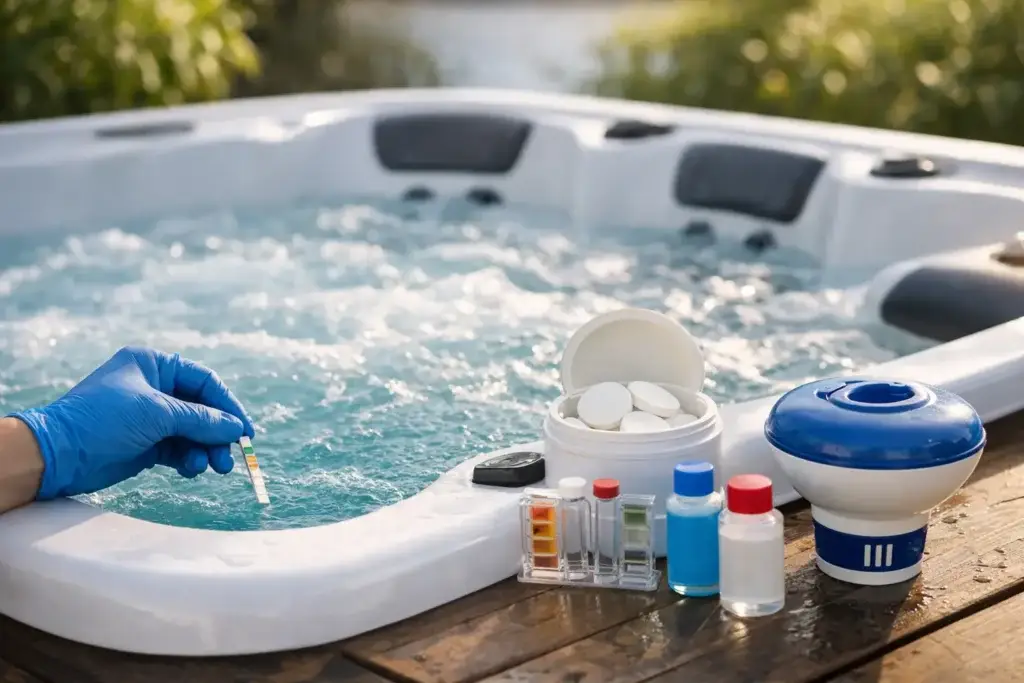
You usually notice bad spa water too late – when it turns dull, starts to smell off, leaves foam on the surface, or feels rough on your skin. Good hot tub water maintenance prevents that slide before it starts. If you want your spa ready when you are, the water has to stay clean, balanced, and circulating properly week after week.
In Southwest Florida, that takes more attention than many owners expect. Heat, heavy use, sunscreen, rain, and long stretches of humidity all put extra pressure on spa chemistry. A hot tub is a small body of warm water, which means things change fast. A minor chemistry issue on Monday can become cloudy water, scale, or sanitizer loss by the weekend.
Why hot tub water maintenance matters more than people think
A hot tub is not just a smaller pool. The higher temperature makes sanitizers work harder and contaminants build faster. Body oils, lotion, sweat, leaves, and fine debris all get concentrated in a compact water volume. That is why spa water can look fine one day and be frustrating the next.
When maintenance is inconsistent, the problems stack up. Low sanitizer can open the door to bacteria and algae. High calcium can lead to scale on tile, shell surfaces, and heaters. Poor pH control can irritate skin, damage equipment, and make sanitizer less effective. None of that helps a spa stay inviting.
For homeowners, the goal is simple – clear water, safe soaking, and fewer surprises. For rental properties or commercial settings, the standard is even higher. Guests and residents expect clean, fresh water every time, and any lapse becomes obvious fast.
The basics of hot tub water maintenance
At its core, hot tub water maintenance comes down to four things: circulation, cleaning, testing, and chemical balance. If one of those gets ignored, the rest have to work harder.
Circulation keeps water moving through the filter so fine debris and contaminants can be removed. Cleaning means skimming debris, wiping buildup at the waterline, and keeping the shell free of residue. Testing tells you what the water is actually doing, not what it looks like it is doing. Chemical balance keeps sanitizer effective and protects surfaces and equipment.
A lot of spa issues start when owners rely on appearance alone. Clear water is a good sign, but it is not the whole story. Water can look decent and still be out of balance.
Sanitizer has to stay consistent
Sanitizer is the front line. Whether a spa uses chlorine or bromine, the key is consistency. If levels drop too low, contaminants gain ground quickly. If levels stay too high, the water can become harsh and uncomfortable.
This is one area where timing matters. A hot tub that gets used regularly often needs more frequent checks than owners expect. A quiet week and a busy weekend can produce very different readings.
pH and alkalinity control everything else
If pH is too high, sanitizer becomes less effective and scale becomes more likely. If it is too low, water can turn corrosive and irritate skin and eyes. Total alkalinity helps stabilize pH, which is why these numbers should be managed together rather than one at a time.
This is where people often get stuck. They add one product to fix one reading, then another reading drifts, and the water becomes harder to manage. Good testing and measured adjustments matter more than guessing.
Calcium and dissolved solids build up over time
In Florida, calcium hardness can be a factor depending on your source water and refill habits. Too little calcium can be aggressive to surfaces and components, while too much can create scaling. Warm water speeds that problem up.
Dissolved solids also rise over time from chemicals, sweat, lotions, and environmental debris. Once that buildup gets too high, water becomes harder to balance and may start looking flat, tired, or foamy even when sanitizer is present. Sometimes the best fix is not another chemical. It is draining and refilling the spa.
Common signs your spa water needs attention
Most hot tubs give warning signs before conditions get worse. Cloudy water is one of the most common. It can point to poor filtration, low sanitizer, heavy use, or balance issues. Foam usually means oils, soaps, or residue are building up in the water. Strong chemical smell often suggests the water is not truly clean, even if sanitizer has been added.
Scaling along the shell or jets can signal high calcium or pH. Slimy surfaces can suggest low sanitizer and early biofilm issues. If the water starts causing itchy skin or eye irritation, that is also a sign chemistry may be off.
These problems are not all solved the same way. That is why testing matters. Throwing extra shock into every issue may help sometimes, but not always. In some cases, it can make balance worse.
A realistic maintenance routine for homeowners
For most residential spas, a light but steady routine works better than occasional overcorrection. Water should be checked regularly, especially during periods of heavy use. Debris should be removed before it breaks down in the water. Filters should be cleaned on schedule so circulation stays effective.
It also helps to rinse off before getting in. That one habit can reduce oils, cosmetics, and lotions entering the water. It sounds small, but it makes a noticeable difference over time.
Shock treatments can be useful after heavy use or when water starts drifting, but they should be part of a plan, not a panic move. The same goes for defoamers and water clarifiers. They can help in the right situation, but they are not substitutes for correct chemistry and clean filters.
Don’t overlook the filter
A dirty filter quietly creates bigger problems. When flow is reduced, debris stays in the water longer and sanitizers have more to handle. The result can be cloudy water that keeps coming back.
Regular rinsing helps, but filters also need deeper cleaning and eventual replacement. If the water never seems to clear completely, even with chemistry adjustments, the filter deserves a closer look.
When DIY works and when it doesn’t
Some owners stay on top of spa care just fine. If you are testing often, keeping records, cleaning filters, and making careful adjustments, you can maintain stable water. But many people do not want another weekly task, especially when they are already juggling pool care, home upkeep, or managing a seasonal property.
That is where professional service earns its keep. A trained eye can spot trends before they turn into costly issues. A service visit is not just about adding chemicals. It is about checking water quality, confirming circulation, cleaning what needs cleaning, and catching small equipment concerns early.
For homes with both a pool and spa, combined service can also simplify everything. Instead of trying to keep track of two different water systems, you have a consistent maintenance plan built around how your property is actually used.
Hot tub water maintenance in Florida comes with extra challenges
Southwest Florida conditions are tough on outdoor water features. Afternoon rain can dilute chemistry. Heat accelerates sanitizer demand. Wind and vegetation can introduce debris. Vacation homes may sit unused for stretches, then suddenly get heavy use when family or guests arrive.
That swing makes consistency harder. Water that looks fine at the start of the month may not stay that way without regular attention. Seasonal residents face this often. They leave, assume the spa will be fine, and come back to water that needs more than a simple adjustment.
That is why dependable routine care matters here. It protects the water, the finish, and the equipment. It also protects your time. Nobody wants to spend a Saturday trying to fix a spa that should have been ready to use.
What professional spa care should actually include
Good service should cover more than a quick chemical drop. It should include water testing, chemical balancing, filter attention, surface cleaning, and a close look at circulation and overall condition. If a problem is developing, you should know about it before it becomes expensive.
That level of care is especially important for properties that need to stay guest-ready. Clear, balanced spa water supports comfort, appearance, and confidence. It also reduces the chance of emergency cleanup right before a weekend gathering or renter check-in.
For local homeowners in Port Charlotte, North Port, Punta Gorda, and nearby communities, working with a detail-focused maintenance team can take the guesswork out of spa care. Florida Detail handles hot tubs with the same hands-on consistency that keeps pools clean, safe, and ready to enjoy.
Hot tub ownership should feel relaxing, not like another chemistry project. Keep the water balanced, keep the filter clean, and pay attention before small issues grow. If staying ahead of it all is not how you want to spend your week, having a reliable local pro handle it is often the smartest kind of maintenance there is.