If you own a pool in Port Charlotte, Punta Gorda, North Port, Rotonda, or anywhere in Charlotte County, you’ve likely heard the term “hard water” in relation to your pool care. But does hard water actually damage your pool pump and filter? In this article, we’ll explore that question in depth, explain the mechanisms of damage, give you local Florida examples, and show how to protect your pool system for years of reliable performance.
This guide is brought to you by Florida Detail, your local pool service specialists dedicated to water clarity, equipment health, and peace of mind.
What Is Hard Water — And How Common Is It Locally?
Hard water refers to water containing high concentrations of dissolved minerals — primarily calcium and magnesium. In Florida’s groundwater and municipal supplies, hardness levels can vary, and in many places they tend to be moderate to high. Over time, those minerals can accumulate, causing scaling and deposits.
In local pools, especially in North Port or Rotonda, homeowners may notice white “crusty” lines along tiles or equipment — that’s often calcium scale forming.
Key points:
- Ideal calcium hardness in a pool is often in the range of 200–400 ppm; above that, scale becomes a risk. Taylor Technologies+1
- High hardness makes it harder to maintain balanced water chemistry (pH, alkalinity, etc.). Taylor Technologies+2Intec America Corporation+2
- Mineral-laden water often goes unnoticed until damage occurs.
So yes — hard water is not just a theoretical concern; it’s something local pool owners should monitor carefully.
How Hard Water Can Damage Pool Pumps & Filters
1. Scale Build-Up Inside Components
Calcium deposits tend to precipitate out of hard water and cling to internal surfaces. Over time:
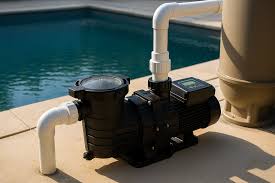
- Inside the pump housing, impellers may get coated, reducing flow.
- Within filter cartridges, sand beds, or DE grids, scale can clog pores and reduce filtration efficiency.
- Scale on plumbing surfaces increases friction and pressure drop.
- In heater coils (if you have a heated pool), scale acts like insulation, reducing heat transfer.
These effects reduce water flow, raise pressure, and make pumps and filters work harder. Taylor Technologies+2poolwaterrecycling.net+2
2. Restricted Flow & Overpressure
As flow becomes restricted by scale or clogged filters, a pump may struggle to pull water. This can cause:
- Cavitation (air bubbles forming inside the pump)
- Higher stress on seals and bearings
- Overheating of the motor
- Shorter service life
3. Corrosion & Chemical Damage
Iron and other metals in pool plumbing, pump shafts, or filter grills may corrode if the water is imbalanced (acidic, low alkalinity). Hard water itself isn’t directly corrosive, but when combined with unbalanced pH, it can worsen damage. Taylor Technologies+2Supreme Pool Tile Cleaning+2
4. Increased Maintenance Needs
If scale is forming, you’ll find yourself backwashing more frequently, cleaning filters, or descaling pump parts. More wear and tear equals more repairs and more downtime.
5. Reduced Equipment Lifespan
Eventually, constant stress, clogging, and heat cycles degrade the pump’s motor, seals, and filter media — forcing replacement earlier than expected.
Real-Life Florida Examples & Seasonal Factors
Florida Sun & Heat Accelerate Scale
In hot months, water temperature rises, making calcium carbonate less soluble. That accelerates scale formation on hot surfaces like heater coils or inside pump impellers — especially in areas like Punta Gorda or near coastal zones.
Storms & Rainwater Dilution
Heavy rainstorms can temporarily soften your pool water by diluting mineral content. But then evaporation and refilling bring in fresh hard water. This cycle can cause periodic stress on your system.
“Snowbird” Swings
When seasonal residents leave in summer and return in winter, there may be periods of lower usage. When pumps run less often, scale deposits have more time to set. On startup, you might find filters clogged or pumps under strain.
Algae & Mineral Lock
In Charlotte County climates, algae blooms can interact with mineral deposits, making it harder to manage water balance. Algae can attach to scale, making cleaning even harder.
Detecting Hard Water Damage Early
Here are warning signs to watch for:
- Rising filter pressure despite regular cleaning
- Reduced flow from returns or weak jets
- White scale deposits or film on pump housing, pipes, or filter housings
- Cloudy or milky water, especially after chemical dosing
- Elevated energy consumption for same pump runtime
- Strange noises or vibrations in pump motor
If you notice any of these, it’s wise to have a technician inspect your pump, filter, and plumbing.
How to Prevent & Mitigate Hard Water Damage
✅ Regular Testing & Monitoring
- Test calcium hardness, pH, alkalinity monthly (or more often in summer).
- Keep saturation index (SI) in balanced range — avoid water trending toward “scale mode.” Taylor Technologies
✅ Use Sequestrants / Chelating Agents
These chemicals bind minerals (calcium, iron) to prevent them from precipitating and forming scale. Use them periodically as preventative treatment. Intec America Corporation+1
✅ Partially Drain & Refill
If hardness gets too high, dilute your pool with lower-hardness water. Many Florida pools do this annually or when needed. Just be cautious with water restrictions.
✅ Install Pre-Treatment (Softeners or RO)
In extreme cases, a water softener or reverse osmosis (RO) system can treat the source water before it enters your pool. This adds cost but can save equipment down the line. poolwaterrecycling.net+1
✅ Descale & Clean Equipment
- Use acid washes or specialized scale removers
- Clean filter grids, cartridges, DE elements regularly
- Inspect pump internals during service calls
✅ Good Circulation & Filtration
Running your pump enough hours per day, ensuring no blockages, and maintaining good filtration helps prevent stagnation and scale concentration.
✅ Professional Maintenance
Let a trusted local team (e.g., Florida Detail) perform seasonal inspections of pumps, seals, O-rings, baskets, and filters.
Comparison: What Happens When You Do Nothing vs. Smart Maintenance
| Scenario | Consequences | Benefits of Proactive Approach |
|---|---|---|
| Do nothing / neglect hard water | Clogged filters, failing pumps, equipment replacement, high energy bills, downtime | Saves money long term, fewer emergency repairs, stable water clarity |
| Smart maintenance & mitigation | Occasional chemical cost, periodic partial drains, small descaling jobs | Long equipment life, predictable costs, reliable pool performance |
In communities like Rotonda or North Port, where many homes have pools, experienced service providers see the difference between neglected and well-managed systems every season.
Local Context & Service Notes for Port Charlotte Area
- Many homes in Port Charlotte are on well or municipal water with moderate hardness — proactive measures are needed.
- Some older communities may have legacy plumbing that is more susceptible to clogging with minerals.
- When storms or tournament seasons hit (e.g. in Punta Gorda), increased usage stresses pumps more — clean systems perform better.
- Our service routes across Charlotte County, North Port, Rotonda, and Punta Gorda let us spot neighbors’ problems and apply preventive care.
At FloridaDetail.com, we prioritize equipment health and water balance. Read more about our Services (link to Services) and our Home page (link to Home) to see how we protect pumps and filters. Consider contacting us via our Contact page (link to Contact) for detailed pool audits.
You may also find useful local marketing and pool service insights via UnlimitedManiac.com, especially when promoting service offerings in Port Charlotte and Punta Gorda. And some neighboring firms like PortCharlottePoolService.com or NorthPortPoolCompany.com confirm the same equipment damage risks in our region.
Summary & Action Plan
- Yes, hard water can damage your pool pump and filter via scale build-up, restricted flow, corrosion, and increased wear.
- The hot, humid, storm-prone climate around Charlotte County accelerates risks.
- Early detection (rising pressure, reduced flow, scale deposits) helps avoid catastrophic failure.
- Preventive strategies include chemical sequestrants, partial drain/refill, softened source water, and regular inspection.
- Use a certified local service like Florida Detail to maintain your system — we’ve seen how small issues escalate across Punta Gorda, North Port, Rotonda, and Port Charlotte.
👉 Call to Action:
Don’t wait until your pump or filter fails. Explore our Services now or head back to our Home page to learn more about pool care. Reach out via Contact to schedule an inspection in your neighborhood (Rotonda, Port Charlotte, North Port, Punta Gorda, or elsewhere in Charlotte County). Stay ahead of hard water — keep your pool equipment strong and your water sparkling.


