
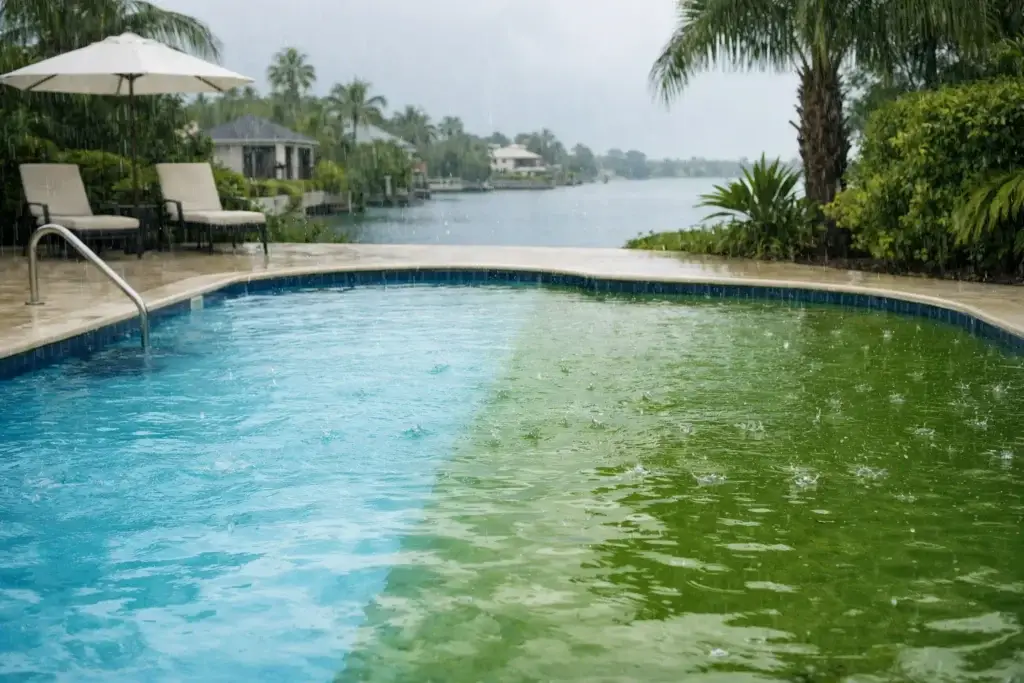
A heavy Southwest Florida storm can leave a pool looking completely different by the next morning: leaves in the skimmer, cloudy water, low water chemistry readings, and sometimes a faint green tint. So, can rain turn pool green? Not by itself in most cases. Rain creates the conditions that allow algae to grow quickly when sanitizer, circulation, and debris control are already under pressure.
That distinction matters. If the water turns green after rain, simply waiting for the sun to come back will not correct it. A prompt cleanup and proper chemical check can often stop a small issue from becoming a full green pool restoration.
Can Rain Turn Pool Green Directly?
Rainwater does not contain a magic ingredient that instantly turns clear water green. The green color is usually algae, though metals such as copper can occasionally create a greenish cast. After a storm, algae is the more likely culprit, especially if the water is dull, cloudy, slippery on the steps, or developing green patches along the walls.
Rain affects pool water in several ways at once. It dilutes chlorine and other balanced chemicals, changes pH and alkalinity, adds organic material, and can fill the pool with contaminants washed from the deck, screen enclosure, roof, and surrounding landscape. Add Florida heat and sunlight, and algae has a favorable environment to multiply.
A brief shower may not create a problem in a well-maintained pool. Several days of rain, a tropical downpour, or a storm that knocks out power can be a different story. The answer depends on the pool’s condition before the weather arrived and how quickly it receives attention afterward.
Why Storms Create a Green-Pool Risk
Chlorine is the pool’s main defense against algae. When rain adds a large amount of untreated water, it can lower the concentration of available sanitizer. At the same time, wind blows in pollen, grass clippings, leaves, insects, and dirt. Those materials consume chlorine as it works to break them down.
This is why a pool can test as if it has chlorine but still begin to lose clarity. The available chlorine may be working hard against debris and contaminants rather than maintaining a strong residual in the water. If that residual drops too low, algae can gain a foothold.
Pool circulation is the other half of the equation. Storm debris can clog a skimmer basket, block a cleaner, or restrict flow through the pump and filter. Stagnant areas near steps, corners, ladders, and the waterline are often where algae first appears. A pool does not have to be packed with leaves to have a circulation problem. One overloaded basket can make a noticeable difference.
Heavy rain can also cause overflow. When water spills over the edge, it may carry away treated water and alter the pool’s chemistry. Once the water level returns to normal, the pool still needs testing. Adding chemicals based on guesswork is how a manageable post-storm adjustment becomes a frustrating balancing problem.
What to Check After Heavy Rain
The best time to inspect a pool is after the storm has passed and it is safe to be around the equipment. Start by removing debris from the surface and emptying the skimmer and pump baskets. Leaving wet leaves and organic debris in the system gives algae more fuel and places extra strain on circulation.
Next, make sure the pump is running normally and that water is moving through the returns. If the water level is too high, lower it only as appropriate for your pool and local conditions. If the level is too low, the skimmer can pull in air and the pump may lose prime.
Then test the water. The priority readings are free chlorine, pH, total alkalinity, stabilizer, and salt level for saltwater pools. A salt pool still relies on chlorine, and extended rain can lower salt concentration enough to reduce chlorine production. If you use a test strip, treat it as an initial check. A more complete test is often needed after a major storm, particularly when the water looks off.
Do not forget the filter. A dirty cartridge, full DE filter, or neglected sand filter may have been working at the edge of its capacity before the rain. Once storm debris enters the pool, it may no longer keep up. Proper cleaning or backwashing, according to the equipment’s requirements, helps restore the flow and filtration that clear water depends on.
How to Keep Rain From Turning Your Pool Green
The most reliable protection is not a last-minute chemical dump after every shower. It is steady weekly maintenance that keeps sanitizer, circulation, and filtration ready for bad weather. Pools that are consistently brushed, vacuumed, tested, and cleaned recover much faster from storms.
Before a major weather event, remove as much visible debris as possible and confirm the water level is normal. Make sure baskets are empty and the equipment is operating correctly. If a storm is expected to bring high winds, secure loose patio items that could end up in the pool or damage the enclosure.
After the storm, run the circulation system long enough to filter the disturbed water, assuming the equipment is safe to operate and power is stable. Brush the walls, steps, and floor to break up early algae growth, then vacuum the settled debris. Brushing is often skipped because the pool may still look clear, but it is one of the simplest ways to prevent algae from attaching to surfaces.
Maintain chlorine at the proper level for your pool’s stabilizer level and current water conditions. There is no single chlorine target that works for every pool because stabilizer changes how chlorine performs. This is one reason routine professional water testing is valuable. The goal is not to add the most chemicals. The goal is to add the right correction based on what the water actually needs.
When Green Water Needs More Than a Quick Treatment
If the pool is lightly hazy with a green tint, quick action may restore it before the algae becomes visible. But if the water is dark green, the floor is hard to see, or the walls feel slick, expect a more involved cleanup. The pool may need a controlled algae treatment, extended filtration, repeated brushing, vacuuming, and filter cleaning as dead algae is removed.
Avoid swimming in a pool when you cannot clearly see the main drain or bottom. Poor visibility is a safety issue, and active algae can make surfaces slippery. Strong chemical treatments also need time to circulate and return to safe swimming levels.
Metal staining is another situation where a standard algae treatment may not solve the problem. If the water turns green immediately after adding chlorine but remains clear rather than cloudy, copper or another metal may be involved. That calls for accurate testing before adding more products. Treating the wrong cause can waste time and create a bigger chemistry imbalance.
A green pool after rain is also a warning sign if it happens repeatedly. It may point to weak circulation, an undersized or dirty filter, a failing salt cell, an incorrect stabilizer level, or a maintenance schedule that is not keeping pace with the pool’s use and exposure. Rain may have exposed the problem, but it is rarely the only reason it exists.
A Better Post-Storm Routine for Southwest Florida Pools
Florida pools deal with more than occasional rain. They face long wet seasons, intense sunshine, warm water, windblown organics, and periods when owners are away. Seasonal residents and rental-property managers can be especially vulnerable because a small post-storm problem can sit unnoticed for several days.
That is where dependable recurring service makes a practical difference. A trained pool technician can remove debris, test the full water balance, inspect circulation, clean filters as needed, and catch early algae before guests or homeowners see a green pool. For properties in Port Charlotte, North Port, Punta Gorda, and nearby communities, that consistent attention helps protect both the appearance of the pool and the equipment behind it.
Florida Detail Pools approaches storm recovery with the same standard used for regular maintenance: clean the pool thoroughly, correct the chemistry based on testing, and make sure the system is doing its job. Clear water is not luck after a rainstorm. It is the result of details handled before, during, and after the weather changes.
The next time a hard rain rolls through, look beyond the water color. Clear the debris, check the flow, test before treating, and act early if the water starts to lose its sparkle. That small window of attention is often what keeps a stormy week from turning into a green-pool problem.